A Happy New Year to one and all and hope that at least some of the New Year resolutions have not yet fallen by the wayside!
It hardly seems possible that this year we are celebrating the 80th Anniversary of the Fourteen production. Ten years since the 70th Anniversary has gone with the wind.
Following the previous Post, arrangements are well in hand for the Anniversary Celebrations to be held with International Alvis Weekend, 19th-21st June so if you have not yet booked save the date.
The main hotel is almost full but there is usually an overflow hotel.
We shall be having a Fourteen dinner table for owners who wish to mix with other elite diners at the Gala Dinner on the Saturday. Diners and Sunday attendees are encouraged to go in period dress but it is not essential. TA 21 owners and others may be in 1950s costume but for Fourteen owners and aficionados, post war 1940s would be appropriate. So shake the moths from your demob suit, unpack the full skirted Dior New Look and you will be fine.
On the day we shall have pride of place grouped together in the display area with the TA 21s. We do hope to have the presence of 3L3, the last remaining prototype for the TA 21 and based upon a stretched Mulliners Saloon with 3 litre engine. Also we have hopefully scheduled a talk on this iconic car by her present owner who is in the process of restoring 3L3 to her former glory in The Netherlands. Much depends on restoration progress so fingers crossed.
In addition we hope to have a Q & A Session and discussion with Colin Newby, our TA/TB 14 technical advisor and maybe a fellow fettling expert.
More details of the event will be added to as we get closer to the date so keep an eye on this site and also the Alvis Owner Club Bulletin for communications.
We have still not been able to trace the whereabouts of Red TB 14 MTV 550. We know she is out there so can anyone help to reunite a former family member with the car to relive happy times. She was in the Lincoln area a few years ago and the logbook was last updated on the 9th April 2023.
Several of our cars have emerged back into the world following long term storage and hopefully they will not be the last.
Carbodies 22884 was sold at Auction late last year and is already reaping the benefits of an extensive recommissioning programme. Despite having been stored for over 40 years she seems remarkably sound and complete.
Tucked away on the Isle of Thanet she should be reappearing on the roads later this year and maybe in time for the 80th Anniversary?
Photos of the car cleaned.
Another Carbodies, chassis 23224, has surfaced after a restoration lasting several years. Now living in Herefordshire where she has eschewed her original glossy Black paintwork. Inspired by a certain Tickford known to many (my own Aunty May), she has chosen the attractive Ivory/Grey colour combination.
Hopefully in the Spring she maybe driving around and may make her way to the 80th.
Back in 2017 a rather sad looking Gaze Woodie, chassis 20628 went up for Auction. Hopes were not high that she would or could be restored to her former glory. She did find a purchaser who decided to realise the idea of constructing a Special inspired by the Vanden Plas bodied TA 14.
After years of hard work the project was finally completed and this very attractive Special emerged
Unless you have been through a restoration project it is difficult to appreciate the sheer slog and hard work involved, often in somewhat difficult and cramped conditions. There is reward at the end as all the owners of these restored cars can vouch for. All being well this car is aiming to come to IAW and will be an interesting car to see.
This schedule below is a synopsis of the project and will no doubt sound familiar to those who are on or have been down the same path.
TA 14 Restoration
I always mend things to keep my hands busy while I think about computers, banking, and so on.
LPF 914 was on Ebay, Gaze bodied and in a dreadful mess, but fairly complete.
I consulted extensively with Eileen Goddin at the AOC. She told me who could help.
The body was entirely rotted. I took it off , stored the parts for later re-use, and started on the chassis.
The engine was silted up, had broken piston rings and poor big ends. The mains and bores were good.
I cleaned it all. Mick Fletcher found me some new pistons and the rods were remetalled. Then reassembly.
The water pump was rebuilt, valves reground, and a new timing chain fitted, also a new starter motor.
The carburetter and petrol pump were rebuilt by my son Nick. The petrol tank was flushed out and relined.
The gearbox and back axle were cleaned and inspected. various oil seals were renewed.
The brake rods were seized Chris Prince provided replacement cranks. Drums were OK, shoes relined.
I rebuilt the steering box, shimming it for zero play. New shock absorber struts and track rod ends came.
A new wiring loom came from Red Triangle and was fitted. The radiator was rebuilt.
I now had a drivable chassis that I could test up and down my 400 yard drive. It seemed OK.
The engine pulled well and sounded sweet, but the clutch dragged very slightly.
Now to the body. I admired the Vanden Plas works tourer and drew a similar body for construction.
At this point I visited John Wheeley in Norfolk, obtaining a lovely radiator shell and a restorable boot lid.
Keith Catt, a retired coachbuilder from Dennis, built the body, using most of the original stored wood.
Better front wings and a louvered bonnet cover came from Chris Prince.
Duncan Gill skillfully covered the body in steel sheet, and then started the paintwork.
The car then went to Devon where Dick Griffiths completed the painting simply beautifully
The upholstery, hood and side screens were done by Larry Rose, a friend for 40 years.
The electrics were completed using mostly LEDs. This enables multifunction lights so you don’t get the ‘christmas tree’ effect with lots of tiny lights everywhere. Also the battery load is tiny.
The car is now being run in on the highway.
Just for reference the Vanden Plas bodied Fourteen, chassis 22110.
Chassis 22883 HAS 197 formerly DST 18, surfaced recently and was sold at Auction. A nice well specified Mulliners she only achieved a hammer price of £5 500, someone got a bargain.
The car below’The Duchess’ has just been identified as Chassis 23631 Body No. M1624 Originally shipped as a new car from Birkenhead to Singapore on the SS Cyclops.
Whereabouts unknown until recently. Now moving to join a new owner’s classic car collection.
An invitation has been extended to Alvis Tickford owners to join East Anglia Technical Day in Suffolk on the 1st March. For details telephone 01787 211221. This includes an invitation from The Chairman of the Tickford Owners Club for Tickford bodied cars to come along. Tickfords continued to body cars long after they finished robing Alvis cars but later in life were best known for the rally cars they clad for the Metros.
At first glance one could be mistaken for thinking this Tickford Barn find could be an Alvis but the Rover badge gives away the marque. A 1939 Rover so perhaps Tickford too had a bit of a change from body design during the war and popped out a post-war design based on the last pre-war efforts.
Two Mulliners remain for sale on carandclassic.com and hopefully they will soon find new owners.
Just for good measure we are also celebrating the 75th Anniversary of the end of Fourteen production. The last car, a Black Mulliners with fawn trim left the Alvis factory on the 10th January 1951. She was chassis number 23829, body number M1764 and was delivered to Bryce Motors, Birmingham Road, Stratford upon Avon, Warwickshire. Her fate is unknown.
FBHVC is reminding AOC Members that they can sign up to utilise their large website and there is no cost. Just go to fbhvc.co.uk/register, enter your name and your email address, choose AOC or AAT from drop-down list and create your own password. Interesting items including an indication that dogs may require seatbelts or restraints in classic cars in 2 years time at classic car events. Maybe might help the dogs with Driving Tests!
Finally, half way across the Atlantic on the QM2 enroute to New York, the daily Activities sheet was dropped off at the cabin. Amongst the myriad of activities there appeared the words Classic Car meeting. Duly attended the meeting the next day to find 30+ people already there and the room so full some owners could not get in. Much of the interest in classic cars was the ownership of 1960s/1990s ‘muscle cars’ 7 litres etc. but there were a few owners with more traditional cars. The virtues of Alvis were propounded including those of chassis 21830 and after the meeting a foreign gentleman expressed interest in finding out more with a possible addition to his stable of British classics.
The message here is that anyone going on a cruise could ask to have a slot for a classic car meeting and probably find it well attended and enjoyable.
Unbelievably next year will see the 80th Anniversary of the start of TA 14 production and the first car sales in November 1946. A real Anniversary for the most successful model ever released by Alvis. Also TA and TB 14s will be celebrating the last of these cars to leave the Alvis factory 75 years ago.
International Alvis Weekend, 19th-21st June 2026 provides the ideal opportunity to come together and celebrate the 80th, a major achievement.
The main event on Sunday 21st June will be held at Kenilworth Castle, Warwickshire and we have our own allocated area of the field to display our cars. Coachbuilders will be grouped together so we can highlight the bodies and styles of the various Coachbuilders. Adjoining our display will be our successor model, the 3 litre TA 21 so it will be very interesting to compare the 2 models in close quarters.
Between the 14 and 21 models came 3 prototype models built to help develop the TA 21, one now remains,3L3, she lives over in The Netherlands and is currently undergoing a painstaking restoration. Now at the stage of receiving her new gloss black paint and installation of new tan interior she is a one off stretched Mulliners Saloon body with a 3 litre engine. When finished she will be continue to be the unique car with a Special place in Alvis history.
She may not make it over to the 80th due to the time yet to be taken to finish the restoration but there will be information available.
As an aside, Alvis originally considered offering a 3 litre version of the TA 14 but post war economics precluded that idea going forward.
The hotel for the weekend with 100 rooms will be the Woodland Grange hotel between Leamington Spa and Kenilworth. The whole hotel has been allocated to Alvis Owner Club Members who will already have received booking details from the Club. Bookings can be made now and in the event of a full hotel it is likely an overspill hotel will be negotiated. Non Members can stay locally and attend the event on Sunday. So in the immortal words ‘Book it Danno!’
Hopefully a goodly number of Fourteens will make it to the event, either on their own 4 wheels or these days with a little help from a comfortable trailer to undertake most of the journey and not miss their party.
We hope to have a technical seminar/ Q & A session during the day and more to be announced. Those who missed out on purchasing the 70th Anniversary bottled beers just might have the opportunity to purchase 80th Anniversary bottles and of course there will be the cake.
More to announce over the next few months but just to whet the appetite when did you last see a 5 1/2 litre supercharged TA 14 in lovely condition? All being well you will next year at the celebrations. The President of the Alvis Owner Club is also hoping to bring along his TA 14.
Another potential attendee is the Mulliners restoration project, chassis 23827, one of the last TA 14s to be built. This car has recently been saved and moved to Wales where restoration is already underway. As with many cars emerging from long term storage she is pretty complete and already specialised joinery has been undertaken. She is the car that was owned by Society photographer Adrian Flowers in the swinging sixties as mentioned in the April 2025 Post.
Carbodies, Tickfords and Mulliners are already intending to come along but the more the merrier.
Anyone whose car just cannot attend has the opportunity to bring a photo board with information as to current situation.
Hopefully we can also have some spares tables full of interesting goodies.
Should you need any spares to prepare for Kenilworth Castle then look on ABAY above for a good selection and the opportunity to buy at sensible prices.
For those who like a bargain a free TA 14 gearbox is available in Whitstable, Kent just so long as the buyer collects. Sale due to future sale of lock up garage next year.
2 TA 14s, Barnard Woodie and 2 tone Mulliners Saloon are currently available for sale on carandclassic.co.uk. Both came up for sale shortly after being sold previously. Also a nice Special, located in France is also advertised on that site.
The blue Woodie, chassis 20953 was originally constructed by Barnard of Norwich, a munitions and coach building company. This company was where the automation of wire netting production was achieved. The photo shows the machine responsible for miles upon miles of wire netting that was sold all over the world.
The Company made a few coachbuilt buses and private vehicles after the 2nd World War, the latter for only 3 years. For more information about the company go to myntransportblog.wordpress.com.
The whole area of Woodies is a fascinating topic with a wide range of Coachbuilders and bodywork. The following Article gives a good insight into these cars and may tempt buyers to look more closely at these attractive and practical vehicles.
‘One of the most often overlooked aspects of the history of the shooting brake in Britain is the role it played supporting Allied forces during World War II, both on the home front and in a number of overseas campaigns. Britain had begun preparing for hostilities as soon as the war clouds darkened over Europe in the late 1930s, and, as new vehicles were ordered for use by the armed forces, so ended the founding chapter in the role of the shooting brake.
No longer used primarily to service the needs of the landed gentry, these wooden-bodied vehicles now adopted a general purpose utility role, to which they were ideally suited. Production records are sketchy in some areas, but the main manufacturers of these wartime Woodies used by British forces were Ford, Humber, and Standard. A few General Motors-based Woodies were photographed in action in North Africa and the Middle East, but no records have yet been found on models and numbers produced.
Humber began military Super Snipe MkII production in the summer of 1939, with body styles ranging from staff car, open tourer, light truck, and the utility car. It is believed that a total of 1500 four-door utility bodies were constructed by the Rootes Group’s specialist coachbuilder, Thrupp & Maberley, sporting mesh grilles instead of chrome and the same 900×13 wheels and tyres as Canadian-built Fords. A small number of two-door variants were also produced and used primarily by the Royal Air Force.
The Dunkirk evacuation of 1941 played a big part in shaping the role that Ford of Canada was to play in the supply of utility-bodied vehicles for the British army. With 84,000 allied vehicles left behind in France and on Dunkirk’s beaches, and the Luftwaffe mounting round-the-clock attacks against British industry, British forces were running short of resources. A large number of Humber utility wagons were lost at Dunkirk and, as the design was ageing fast, most of those that survived were removed from frontline service, instead, mostly taking up support roles in the UK.
The success of the Canadian-built 30HP Ford V8 utility wagon introduced in 1937 had shown the way forward, and a small number, fitted with huge, 900×13 tyres for off-road use, were ordered by the British army. These were followed in 1938 by the model 81A, and bigger orders for the 1939 model.
So, while the industrial might of the US was in the early stages of gearing up for war, much of Britain’s requirement for trucks and staff cars was destined to be met by the Canadians. The need for a heavy utility car was fulfilled by variants of the standard North American 1941 station wagon as a result of contracts – termed ‘Supply Mechanical’ – from the British War Office.
The heaviest version was the C11ADF, Canadian-assembled 1941 model Woodie with an 85bHP motor. It was specified with a heavy duty rear axle, large 900×13 sand tyres, and right-hand-drive. Militarised versions of the 1941 (C11AS) and 1942 (C21AS) station wagons with standard suspension neatly filled the gap and did a superb job, although they were often known to overheat in convoy situations; many period photographs show extra air vents, air scoops and louvres cut into bonnets to try and overcome this problem. Many of these Fords were used in various North African campaigns. On arrival at the battle front, many had hatches crudely cut into the roof above the front passenger, and some even had the top removed completely and the doors bolted shut. These modifications were mostly for aircraft observation purposes, although sometimes the bodywork modifications were a direct result of enemy action.
While the exact number of C11ADFs produced is uncertain, the first contract ‘Supply Mechanical number 2027’ was placed during the summer of 1941, and was for a total of 498 vehicles, of which at least 442 were delivered. The rest, perhaps, were lost at sea during a perilous North Atlantic crossing.
The second contract, number 2044, dated 4th August 1941, was for 998 station wagons, all of which seemed to have been delivered by August 1943. Ultimately, the Ford C11ADF was by far the most popular passenger transport in North Africa campaigns. After the war, those that survived and made it back to British shores were demobbed in around 1947, and immediately pressed into civilian use by the car-starved population.
The Standard Motor Company also played a small part in supplying Woodies to the War Department; ‘square cut’ vehicles which were based on Standard 12 running gear, with bodies by Remploy. It is doubtful if any saw active service and were most likely used in support roles, such as a non-stretcher case ambulance – a role to which Woodies were ideally suited. In addition to the Woodies that were ordered direct from chassis manufacturers, a great many large British and American saloon cars were converted to wartime utilities, a number specifically constructed to fulfil the role of non-stretcher case ambulances.
The Chassis Makers While just about every conceivable make of British car and light commercial chassis received wooden shooting brake bodywork at some stage, most Woodies were built in small, sometimes very small, batches by specialist workshops or commercial body builders who had honed their skills constructing van, truck, and bus bodies. Most of these companies, often because they were working as a sub-contractor to a garage or car dealer, were never allowed to put their name to the bodywork, with the result that there are many Woodies in existence in Britain today for which the body builder is unknown. Some of the most popular types of post-war Woodies in Britain were built on Alvis, Austin, Ford, and Lea-Francis chassis. However, whereas both Austin and Lea-Francis sold factory-approved vehicles, those available on Alvis and Ford chassis were constructed by numerous independent coachbuilding firms.
Allard Victory in the 1952 Monte Carlo Rally must have made Allard a familiar name in many markets in which sports cars were not of great interest but where fast, roadworthy and large-load capacity cars were required. So Allard saloon and convertible models were supplemented in spring that year by the Safari – a six seater, two-door estate car version of the P2 saloon, with the lusty side valve Ford V8 motor as the standard power option. The model was, supposedly, only available for export, and was discontinued in 1955 after only 10 had been built.
Alvis Alvis was a popular choice of chassis during the 1930s, and many shabby saloons got a second lease of life with a wooden utility body. The post-war TA14 proved exceedingly popular as a shooting brake, although there was no official Alvis version. Records show that 145 chassis were supplied to known coachbuilders, whilst a further 120 are listed as being delivered as utilities – coachbuilder unknown. In addition, Alvis records show a further 465 TA 14 chassis listed as body type unknown, so it’s possible that many of these also ended up with shooting brake bodies. Most of the new chassis that were delivered to coachbuilders were shipped complete with front bulkhead, dashboard, and front seats – which explains why so many ended up with luxurious leather front seats and utilitarian rear seats. Most numerically significant were the cars bodied by Gaze Limited, believed to have been based in Kingston-upon-Thames, and also responsible for many Lea-Francis Woodies. However, Gaze is not thought to have sold cars under its own name, and was sub-contracted by Alvis dealerships such as Brooklands of Bond Street, Vincents of Reading, and Reliance Garage of Norwich. All these companies attached their own nameplates to the bodywork, helping to create the myth that dealers had bodied the cars themselves.
The second most numerous Alvis coachbuilder was the Jones company. As with Gaze, little is known about this company, although records show that it also bodied a number of Rolls-Royces. At the height of TA14 popularity, companies such as Abbotts of Farnham, AC Cars, Barnards, Black & White, Caffyns, and even Carmichael, produced Alvis Woodies. In most cases, either a car or an old photo survives to record what each Woodie design looked like, with one exception: it seems that quite a few Alvis utilities are listed as being bodied by High Elms, but these are a mystery in Alvis circles as there are no photos or records of any survivors.
Austin Whilst Austin can’t lay claim to building the first or last Woodies in the UK, few realise that Austin was actually one of the most prolific builders of wooden-bodied estate cars during the Woodie’s heyday.
Despite not previously having offered a full-scale production utility, Austin was keen to add a shooting brake to its vehicle line-up in the immediate post-war period, as this was a great way to help achieve the government export quota, and Woodies required much less steel in their construction.
History was in the making when Frank Jordon – former head coachbuilder for the London General Omnibus Company, and later head of the carpentry workshops at Papworth Industries in Cambridgeshire – turned up at Austin’s Longbridge works. Frank had heard that Austin was looking for a company to build shooting brake bodies on the Austin 16 chassis, so he went to Longbridge, knocked on the right door, and walked away with an order to build 250 Woodies.
The fact that Papworth Industries built the 250 Woodies faster than expected, and to a higher than anticipated quality, so impressed the bean counters at Longbridge that they ordered 250 more. These 500 Austin 16s were designated by Austin as BW1, and were the first in a major Woodie-building programme that was to continue until 1954. It seems likely that the Countryman name was born with the Austin16 Woodie, as, whilst an early brochure describes these vehicles as shooting brakes, the most common version of the same brochure calls them Countryman.
Austin was so pleased with the quality of the Countryman vehicles bodied by Papworth Industries that, when the Austin 16 was replaced by the post-war-designed A70 Hampshire, orders for more than 900 Countryman Woodies, designated BW3, were placed. These were all based on the Austin BS2 Hampshire A70 saloon chassis and body, so retained the car’s 16 inch wheels, high ratio differential, and steel floor of the saloon body.
The car-derived Austin A70 Hampshire pickup chassis cab also proved particularly popular during this time, and a number of body builders emulated the design of the A70 Countryman BW3. While almost 90 per cent of BW3s went for export, London-based Austin dealer, Car Mart, sent 200 A70 pickup chassis cabs to Papworth Industries to be bodied as shooting brakes, and these were ultimately used as everything from TV outside broadcast units to support vehicles for motor racing teams, as well as in the traditional role of carrying hotel guests and their luggage to and from railway stations and ports. The A70 Hampshire was replaced by the A70 Hereford at the end of 1950, and, within a few months, the A70 Hereford BW4 Countryman Woodie had been designed and was being built at Papworth. The BW4 went on to become the most popular of all Austin Woodies, with more than 1500 built before the A70 went out of production at the end of 1954. It was replaced by the unitary construction Austin A90 Westminster, though, sadly, it was not possible to build a Westminster Woodie.
Steel shortages eased in the early 1950s. Wood-framed bodies had grown costly to build, were very labour-intensive to maintain, and, in many cases were not able to withstand the harsh treatment they received on the poor road conditions of many export markets. However, the demise of the separate chassis also heralded the end of the Woodie; Austin never built it again.
Ford Ford entered the utility car market in the UK during the mid 1930s by supplying V8-powered station wagons that were assembled at Ford’s Windsor, Ontario plant in Canada. The wooden bodies were constructed at Ford’s bodywork facility at Iron Mountain in Michigan, USA, and shipped to Canada for assembly on V8 chassis.
The cars were mostly complete when they arrived in the UK, receiving final finishing at the Ford plant in Dagenham, where some trim items and the UK specification wiring loom were fitted. By the late 1930s, UK-built sidevalve V8 engines were also being installed. These were the only ‘official’ Ford Woodies sold in the UK, as, although a large number of 10HP Ford car, and even Fordson van chassis, were bodied by UK coachbuilders during the 1930s, Ford never offered a factory-built small Woodie.
While Ford had helped establish the utility car market in the UK during the 1930s, it didn’t re-enter that market after the cessation of hostilities at the end of WWII, though did supply a number of E71C Pilot commercial chassis to dealers and individuals, who had them bodied as estate cars. A number survive today, and yet it is rare to find two that look the same, such was the diversity of building styles and techniques employed in their construction.
Lea-Francis Lea-Francis tooled up for the production of its first post-war model, the 14HP four-door saloon, in 1945. The new car was essentially a modified version of the 12.9HP saloon, produced in limited numbers between 1938 and 1940, and mostly bodied by Avon Bodies of Warwick. The body was constructed by a local Coventry sheet metal factory, A P Aircraft (APA), from a combination of steel and aluminium, and formed the backbone of Lea-Francis production until the company ceased volume manufacture in 1954. The Coventry-based company was also one of the first to see the potential of the wooden-bodied utility in post-war Britain, and, during 1946, commissioned Riverlee Bodies of Birmingham to construct its first ever Woodie van.
Lea-Francis then commissioned the Southern Caravan Company of Yapton, near Chichester, to build estate cars; by the end of 1946, 74 Woodies had been built by a variety of coachbuilders, including Southern Caravans.
As Woodies were designated commercial vehicles (thus avoiding the payment of purchase tax on the list price of new cars), the new Lea-Francis estate car was described as a ‘utility model’ in the company’s literature, and a further 44 were built at Yapton during 1947. Records also show that at least 80 chassis were supplied to individual coachbuilders that year – most ending up as Woodies – although one or two were actually built as ice cream vans.
A number of coachbuilders found that the Lea-Francis 14HP chassis was absolutely perfect as the basis of a shooting brake, with companies like Jensen Motors, Gaze, and Frank Grounds building bodies for both Lea-Francis and rival Alvis. While there are no accurate records of exactly who built Woodie bodies on Lea-Francis chassis, factory records do show that almost 500 ‘chassis only’ units were supplied to builders of estate cars and vans during 1948/49. It was during this time that the contract to build the ‘factory’ Woodies went to APA – the company already building the saloon car bodies for Lea-Francis.
One of the most interesting aspects of Lea-Francis Woodie production was the range of vans it produced alongside the estate cars. In essence, these were utility cars without the rear seats and plywood panels where the side windows would normally be. They also had rear doors as an alternative to tailgates, and, in many cases, side rear doors that could not be opened. Whilst they were cheaper to produce than the estate cars, they were still much more expensive than the mass-produced ‘metal panelled’ vans available from the likes of Austin, Bedford, Ford, and Morris.
In 1950, a Lea-Francis estate was an unlikely entrant in the Monte Carlo Rally, with an Isle of Man-registered vehicle starting from Glasgow and finishing in 103rd place without any trouble. The same year the company sold 123 utility estates and 67 vans. By now, however, the cars’ pre-war styling was beginning to look a little dated; without the financial resources necessary to design a completely new car, Lea-Francis restyled the front of the car only – the headlamps were incorporated into the front wings – for 1951. The 1951 season did see a slight upturn in sales, with 175 estates but just 2 vans sold. Prices for all models increased considerably for that year, which further contributed to a drop in sales.
Sadly, like so many car makers of the day that could not afford to build the stylish new models the public wanted, the writing was on the wall for Lea-Francis. Sales of estate cars suffered badly in 1952, with only four sold – the last of which went to Tasmania. The Lea-Francis 14HP estate car continued, alongside the saloon, right up until production ceased in 1954 – curiously enough, the last two chassis built (10064 and 10066) were fitted with a handsome new estate car body by Papworth Industries, which was also building wooden bodies for the much more modern Austin A70 Hereford. Whilst no precise figures exist, it is estimated that around 1000 Lea-Francis Woodie estate cars and vans were built between 1946 and 1955. Survival rate has been poor, unfortunately, with just 30 estate cars and vans in running or restorable condition known to the Lea-Francis Owners Club. These figures compare very closely with the Lea-Francis’ closest rival, the 14HP Alvis, also built in Coventry and clothed in saloon and estate car bodywork of similar design.
Morris Whilst the coachbuilt Woodie was slowly, but surely, heading for oblivion, a new twist in the tale was provided by Morris Motors. In 1952, the company launched a wooden-framed estate car version of its popular unitary construction Morris MO Oxford sedan, which had been launched in 1948. Dubbed the Traveller, the new Morris was intended for a completely new market for Woodies: the travelling salesman, and those that needed to carry goods, passengers, and even livestock in the same vehicle.
It was the company’s first foray into the dual-purpose market, and, remarkably, the MO Traveller was not based on the van/pickup chassis, but used a reinforced version of the saloon’s mono-construction floorpan. Thus, the wood was a structural part of the car’s assembly, which probably accounts for why few survive today. Construction of the timber-framed rear section was undertaken at the Morris Bodies factory in Coventry, where it was assembled with painted aluminium panel and full glazing, and then shipped, as a complete unit, by road to the main assembly lines in Cowley.
The logistical problem of marrying the wooden back section to the main cab and floor was overcome within a special area at Cowley called the ‘loft.’ This was located above the assembly lines, and it was here that the back sections were stored, prior to being lowered to the main assembly area, where, in a complicated operation, they were joined to the painted chassis cab. Records show that 5500 MO Travellers were built between summer 1952 and spring 1954, and exported to a number of European countries as well as Canada, though it seems that the majority were shipped to Australia and summarily shaken to bits on Australia’s outback roads!
Curiously, when Morris merged with rival Austin later in 1952 to form the British Motor Corporation, there must have been some interesting boardroom discussions about the various advantages and disadvantages of the large Austin A70 Countryman versus the medium-sized Morris Oxford Traveller. In the end, it was Morris that was destined to fly the Woodie flag into the future, though it was not the part-timbered Oxford series II or Isis Traveller that would conclude this emotive chapter of British motoring history, but the humble Morris Minor Traveller launched in 1953.
A prototype Minor Traveller had been built in 1951, but it wasn’t until the BMC A-series ohv engine was installed that sales began to take off. It is estimated that a quarter of a million Morris Minor Travellers were built before production was finally halted in 1971, and one of its many claims to fame is that large numbers were sold to the British army in 1968, many of which were used in Germany.
While Ford in the UK made various attempts during the 1950s and 60s to revive the Woodie look on estate cars, the Minor remained true to ash-framed construction right to the very end, and can fairly and squarely lay claim to being the world’s last production Woodie.’
Getting back to matters other than woodies.
There is an option to purchase a TB 14 currently living near Worcester. Not yet on the market the car, chassis 23575 is in very long term ownership but it is time for her to find a new owner. She is red with a cream interior, one of the most popular colour combinations. A good runner and in need of some cosmetic tidying up. Offers are invited and the car can be inspected. Remember only 100 made of this iconic model.
Suppliers and Services, Heading above is a useful place to look when needing spares or services and recommendations are always welcome to add on when a good product or service has been supplied.
Recently in a quest for a horn trumpet, now met, an owner came across Meteor Spares who specialise in spares for pre 1950s Rover cars. When our cars were built many spares would fit quite a lot of cars manufactured by other companies as they were bought in. Meteor delivered the goods to the satisfied customer and can be contacted at meteorss@hotmail.com, they are based in Nottingham.
We are still searching for a lost Special, chassis 21490. The son of a former owner is looking for the car, he missed being born in the car by 2 minutes!
Our cars have always had a global reach and back in 1976 the Alvis Owner Club received an application for Membership from a gentleman in Japan wishing to enroll with his Tickford TA 14 chassis 21960, English registration MPH 48.
Recently the car has been spotted in Japan and it is believed that the owner is up for receiving serious offers to purchase the car. From the photos below she looks to have been kept in very good condition and with a very nice group of classic English cars. Tickfords of course are the rarer of the 2 major Drophead Coachbuilders with Carbodies being the major supplier of bodies to Alvis for the Fourteen model. Carbodies about 401, Tickford about 77.
Bonhams recently offered a very rare TA 14 for sale, chassis 20691, JMB 933. A sad day for her owner as they had been together for many years. The bodywork was by Knibbs and Parkyn of Manchester who it is believed put bodies on 8 TA 14 chassis. With only 2 known cars remaining she was sold for £11 111 including buyers premium.
eBay continues to be a useful source of second hand spares. Mulliners offside front door skin, £95, nearside front door skin £150, both new old stock from Red Triangle. These parts are in the hens teeth category when you need them. Also from RT and again new old stock are the Dunlop Brass Tyre Valve tool/key, £12 + p&p. Nice period addition to the tool box. More TA/TB 14 spares to browse on eBay.
Red Triangle continue to offer high quality Alvis Christmas cards. In addition the Alvis tool roll at £74-95 is a very useful addition to the boot. Browse the Shop on their site redtriangle.co.uk for other possible ‘presents’. Ken Day’s beautiful book, The Story of Red Triangle 4th and last edition is a great buy at £44-95 and the facsimile copy of the TA 14 Drivers Manual at £34-95 is a good buy so that you can keep a pristine copy in the glove compartment.
Corresponding with former owners and their family/friends often brings out some brilliant stories, this one recently sent over from Australia was a truly delightful reminiscence. Mulliners Saloon chassis 21490, JLN 523 is the star of this story. Does anyone know where she is now? The writer of the Article would love to catch up with her. Is she slumbering in a garage or has she become a Special.
The Memories of a 6 Year Old
My father bought his Alvis JLN 523 in London in 1958 from a surgeon in London. It was my father’s first car, but on the drive home (to Ash, in Kent), he found it lacked power. Rather disappointed, he pressed on, and suddenly there was a muffled bang, with black smoke pouring out of the tail pipe. After that, her performance improved immeasurably. (A mechanic later told him that the car had probably only been driven slowly around London and was ‘clearing itself out’.)
In September 1960, my father drove my 9 month pregnant mother at high speed to Folkestone hospital, where I was born 2 minutes later. On the way, part of the opening sun-roof panel flew off the car. Consequently my father slowed down to retrieve it, whereupon my mother apparently stated in no uncertain terms that he was to press on at full speed to the hospital. (That night he went back and retrieved the part from a field nearby.)
The car was kept in an old horse stable (we lived in an old farm house) – the entrance was very narrow and there was literally less than an inch each side of the entrance to get the Alvis in. One day, the pop-up indicator near the door failed to return to its slot and was bent backwards against the narrow entrance. We found this highly amusing. My father, no so.
Around 1965, during a storm, a tree fell onto our chicken coop. So we temporarily relocated the chickens to the horse stable. One day, one of us accidently left a door of the Alvis open and the chickens, quite wisely, decided to spend the night in the Alvis surrounded by its luxurious smell of wood and leather. The next morning, my father, in a rush, ushered the reluctant chickens out of the car and drove to work. Unbeknown to him, at the time, two chickens were still hiding in the car. He parked the car outside his office in the town square (in Sandwich) and went to work. The chickens then decided to sit in the front seats to enjoy the view – much to the huge amusement of the locals.
The floor pans leaked. In the rain, if my father shouted “puddle” we lifted up our feet to avoid getting them wet. The Alvis was like a big toy to us, we could clamber all over it, sitting on the roof and on the wings, and we dearly loved it. I used to suffer from hay fever, but I found that I could escape it simply by sitting in the car for some reason. In the summer, I’d even sometimes have lunch in the car.
On occasions, whilst driving along she’d suddenly lose power. My dad would then tell us to call out words of encouragement to the Alvis – and power would be miraculously restored. I now realise that she was simply running low on fuel and that my father was simply switching to the reserve fuel tank!
On the bonnet, she sported an eagle with outspread wings. We were very upset when this was stolen one night and it was temporarily replaced, by our local mechanic, with a wooden ‘stopper’ so that the car could still be driven. In a traffic jam one day it popped off like a champagne cork – much to the amusement of the family. (In the end, it was replaced with a plain one.)
In 1972, she was sold for £15. Replaced with a Renault Caravelle (Floride). It took only a few days for the family to fully realise that we had parted with more than just a car.
I’m now 65, and I had always hoped I might rediscover her abandoned in a barn somewhere. Eileen (Alvis Archive, AOC) has been so incredibly helpful discovering more about her. Sadly, it seems she was recently used for donor parts for another Alvis. So, the dream is gone; but the great happy memories survive.
Anyone who wishes to put their memories down on paper can send them through and they will be kept with the Alvis Archive Trust papers. Also they can be sent to the Alvis Owner Club for publication in the bi monthly Bulletin.
Many readers will already have seen the sad news of the recent passing of Nick Simpson, a giant in the Alvis world.
Nick was a true Alvis enthusiast and a great supporter of Fourteens. He held several posts in the Alvis Owner Club, finally becoming the Club’s Patron.
Previously as overall Technical Advisor to the AOC he demonstrated a wealth of technical knowledge and could be relied upon to come up with an answer for most technical problems. His extensive collection of Alvis information and photos was one of the best and he willingly shared the information and knowledge he had.
He will be very much missed.
Finally the clocks have changed, the gardens have just about stopped growing
All good Fourteens should be tucked away out of the weather with doors shut and curtains drawn tightly, it’s All Hallows Eve when the spirits cross over!!!
What a summer it has been! Global warming is increasing the temperatures for summer and some Fourteens can struggle in the higher temperatures.
Many of the Fourteens sent for export were fitted with 8 bladed fans to help with the higher temperatures they might experience in places such as Australia, Egypt, India, Portugal and the USA. 8 bladed fans were also fitted to cars going to countries such as Switzerland to assist with climbing the mountain passes before the excellent network of tunnels were developed.
Tickford were quite forward thinking and provided 2 good sized horizontal bonnet louvres to be opened at the first increases of temperature.
In the 1960s and 1970s when many cars were doing quite considerable mileages some owners installed electric fans to help with the heat.
For the rest the summer drive would be ‘enhanced’ with the opening of flaps, if any, then putting the heater on full with the occupants of the car to emerge lobster pink at the end of the journey. Those with a hood could dissipate the heater’s output but be roasted by the sun. Happy Days! Currently most of us are now experiencing comfortable summer temperatures but time is ticking and soon we shall think fondly of the heat. Winter time for our cars often meant putting the muffler on the radiator and for those wishing to recreate those halcyon days there is one for sale in the new quantity of spares detailed above on ABAY. Quite rare to find one these mufflers now and if the condition is not good enough it can be used as a pattern for a new one to be made.
Should the above bring back memories the following is a story of how it was back in the days before Health and Saftey!
Touring in Europe can produce some interesting stops that are not on the mainstream tourist route.
Classic Remise 2 in Düsseldorf is one such attraction and has even had visiting Alvis and Alvis for sale as can be seen on their website, remise.de.
Housed in an amazing conversion of a huge locomotive turntable shed it houses around 300 classic cars for sale and in storage together with professional workshops. One of the best features is that you can store your car in a glass box so it can be seen but not touched. Just the thing for a fine Fourteen to spend time in on display. Sure beats the rented lock up down the road.
More details are on the website and one of the best features is that it is free to visit and spend the day there.
No Alvis at this one but the Red Bull exhibition area near Salzburg offers another very good free outing for car enthusiasts. Sadly no bottles of ‘Red Bull’ polish to acquire as a souvenir.
Restoration projects for Fourteens continue and when considering an interior retrim one could be in good company using a firm or company with a Royal Warrant from His Majesty King Charles III as leather tanners and curriers. Pleased to see animal welfare standards now come into the consideration for the finest leathers.
Connolly, so long the Rolls Royce of leathers is now reborn with the 4th generation Jonathan Connolly. The selection of leathers is quite mind blowing and if price is no barrier your Fourteen could be trimmed with the crème de la crème of leathers. The website is connollybros.co.uk and this will open to show the various high quality hides and services available to his Majesty and Fourteen owners. It is probable that the Vaumol range would be appropriate for Fourteens. Going to connollyengland.com will show details of the Connolly Shop in Mayfair that will allow the discerning owner to acquire beautiful elegant British clothing and leather goods.
Should some of the above be a trifle costly, a real treat can be acquired from Leathercare Limited of Knutsford, website leathercaredirect.com. This company has a close relationship with Connollys and as well as high quality trimming offers a good selection of cleaning and treatment products. Topping off the product range is a bottle Leather Aroma concentrate for only £8. One for the Christmas List!
An attractive Carbodies has been seen in France and it would be nice to put a chassis number to the car, can anyone help with this?
A long time Carbodies owner near Cambridge has finally got round to creating more space in his garage to reveal quite a large quantity of surplus spares including the radiator muffler as mentioned above. Go up to the ABAY header and browse through what’s on offer. Could be an an opportunity to stock up with spares at a reasonable price and they are quite well located in Cambridgeshire. Also there is a gearbox for sale in East Kent.
The stock of cars for sale had reduced and on carandclassic.com was down to a nice looking Mulliners Saloon and Barnard Woodie. Added on 30th August is a Duncan pillarless saloon, price on application from Ashridge Automobiles Ltd. in Bedford. Duncans were rated by Autocar back in the day.
‘This elegant sports saloon is at once outstanding, its handsome contours creating the impression of silent speed, superb acceleration and excellent road manners”.
According to the Dealer, a Duncan cost about £1 000 more than an XK 120 at the time.
The inspiration for the Alvis TA 14 Duncan is reputed to have come from the Healey Duncan, a little known model, 27 built but from the photo the connection is clear to see.
Yet another long term family car is seeking a new home but from a little further afield. Mulliners Saloon chassis 21315 was originally exported to Australia in 1947 and has been in storage over there for nearly 40 years.This Article from Alvibatics, posted with kind permission of the Alvis Car Club based near Sydney, gives background information on the car. One bonus for any British buyer is that the car is right hand drive. An interesting Restoration/Refurbishment project.
Also note that should you wish to become a Member of that Club you can, details to join are on their website, alviscarclub.au to see what is going on down under.
Back closer to home is a very nice sound Mulliners Saloon, available in Wales, looking to move on after over 50 years with 2 generations of the same family. Cannot put a price on such provenance and the car is very cherished and well cared for.
To the drum roll of ‘and still they come’ from War of the Worlds’, more Fourteens, having disappeared without a trace, have emerged into the light.
Over the Pond in America a Mulliners Saloon, chassis 23216, KLY 933 reappeared in Ohio and has been whisked off to Michigan for where a full restoration has already started. Last heard of in Yorkshire in the 1970s she was purchased and shipped over to America where she was driven quite a bit and then parked up. After over 50 years the owner sadly passed away and the car was offers for sale by his daughter. From the photos she looks very complete and an excellent base for a restoration project.
The car had not disappeared but delighted to confirm that the Raine TA 14 chassis 21865, mentioned in previous Posts, has found a good home up in the North West with a long term aficionado of Fourteens so she will be well cared for and seen around the Northern circuit.
A TA 14 that has gone off the radar is a red TB 14 MTV 550, chassis 23542, a former owner would love to meet up with the current owner and chat about times he enjoyed with the car. Does anyone know of her current whereabouts?
Finally VJ Day and the anniversary of the end of the 2nd World War (15th August) is coming up and probably cars that celebrated VE Day will reappear in their celebratory finery. One such car (Iris) chassis 23008 was seen celebrating VE Day in fine style. Her proud owner stood in the style of Douglas Bader and wore the uniform representing his father who served as a radio operator in the RAF during the war.
Hoping everyone was up early to wash their faces in Morning Dew and then get their turnips planted in the ground, as one does.
The half way house between Spring and Summer, a lovely time of year to enjoy our cars.
Just in case the Fourteen wants to go for a May Day Spin, don’t take it too literally.
Back in the day, in the USA, the Barnum and Bailey Circus put a new slant on taking a car for a spin as this poster illustrated! You work it out!!! Maybe a bit of artistic license. Certainly, in the immortal words of Blue Peter, don’t try this at home!
Having looked further into this topic it appears that there are actually Guinness World Records for the largest loop done in a car and there might be a slot for the first Alvis to Loop the Loop but it will not be a certain TickfordTA 14 that I know.
As this is not so far away from April 1st here is the contact for the You Tube Loop the Loop car record holder just to prove it is real. Google- Largest loop the loop in a car Guinness World Records. Nice to see it was a British Jaguar and it looked somewhat exhilarating!
With the Drive It Day just behind us, many will have turned out for a local tour. The Alvis Archive Trust laid on a very interesting ‘weekend’, actually Sunday/Monday and provided the rare opportunity to visit 2 quite exceptional private classic car collections and a personal tour around the Battle of Britain Flight Museum. The cars in the 2 collections were stunning with Rolls Royces and Bentleys running the displayed Alvis a very close second.
Keep an eye open on the Alvis Archive Trust website, alvisarchive.com site for notifications about other events.
Whilst on that site you will see the opportunity to acquire an Alvis related book on the development of the iron lung, the lifesaver for many victims of polio. Not many people are aware of the fact that it was designed by Captain G.T. Smith-Clarke, Chief Engineer for Alvis Ltd for over 30 years. Fascinating story and the book can be acquired from the Alvis Archive Trust for the cost of postage and packing and perhaps a small donation.
Back in 1950, 2 TA 14s were some of the last of our cars to leave the Alvis factory. Chassis 23797 is in fact the possessor of the last Mulliners TA 14 Body number M 1782 but she was not the last Mulliners bodied TA 14 out as she left the factory on the 24th July 1950. It is good that she still continues as a cherished car in fine fettle. Her former owner recently found the fine J & M Classics model that had been commissioned for the car and very kindly wanted to pass the model onto the current owner.
Photo of model car, ‘ notice something’s missing?
A few weeks before, our own tidying up had produced the original box for the Carbodies model we have. Sadly J &M did not produce a Tickford TA 14 Model but most non Alvis people can’t tell the difference. Tucked up in a little piece of paper inside the box were the original wing mirrors so now reunited with our model after many years.
Contact with the owner of 23797’s Model produced the checking of a scrap of paper inside the box and there they were! The model including wing mirrors is now with the current owner so a happy ending.
So if you have one of the J & M Models check you have the wing mirrors attached or check inside the box for a scrap of paper!
Do keep an eye out on the internet if you do not have one of the J & M Models, they are beautifully made and always a few for sale. Currently a Black Mulliners Saloon, Fixed and Drophead Duncans, Woodies and a fine TA 14 Van by Raine. It was sad that J & M ceased trading some years ago.
As we only know of 2 TA 14 Drophead Duncans that were made they have not sold very many of that model.
This rare historic photo below shows a Tourer and Drophead Duncan together
.
Back in the day, many of our cars were home fettled and there was a wealth of technical knowledge that was shared for the benefit of other owners. The advice was usually very practical although possibly not totally compliant with today’s Health and Safety
The Article below is from 1962 and helps the other owners along with a practical guide to re wiring a classic car.
As always the purchase of the Disc of old Alvis Owner Club Bulletins up to 2014 cannot be recommended too highly if you do not have the paper copies. Go to the header at the top of this site, click on Articles index and have a good scroll down to see the headings of information that cross references to the old Bulletins as compiled over many long dark winter evenings!
The disc of old Bulletins can be obtained for under £30 from the Alvis Archive Trust, go to the website, alvisarchive.com or email fox@alvis100.plus.com. Keeping up with the times the information can now also be transferred using WhatsApp App.
Alvis Owner Club Members will have recently read the Article in the Bulletin about the participation of 2 Alvis TA 14s in the Gordon Bennett Irish Classic Car run. Quite amazing that a car made in 1995 is now considered a classic and may enter in the Run. The local car registration ZV 37699 on a TA 14 is not currently linked to a chassis number in our records so if anyone can help with the identification of the car this would be most appreciated. All Alvis car records have the 5 digit chassis number starting with 2 as the core piece of information. For TA 14s the number is stamped on the front chassis member as shown in the Drivers’ Manual.
It is a good idea to take a photograph of your number and keep a copy with the car’s papers. Particularly useful to do this if the car is to be resprayed.
Another chassis number for a car living overseas is required for AE 13 28. A lovely car and beautiful for weddings we should like to tie up her chassis number, do you know it?
Some of the bodywork of our cars has deteriorated to the point whereby only a great labour of love, dedication and deep pockets has been the route back. Another future was seen many years ago with the development of custom built Special bodies and sometimes a different engine.
One such car, chassis 22096, was recently sold at Auction by H & H Classics for £38 812, including buyer’s premium. Buyers could be of any size as the steering wheel has a quick release system so no worries after a large Sunday lunch.
The days of the original DIY bodged up bodies are long gone and some of the TA 14 Specials are now some of the nicest Specials around.
Tempted? There is a very nice one available in France on carandclassic.com and they sure are fun to drive!
At the other end of the TA 14 speedy Spectrum, on offer by Brightwells , a very nice Woodie by Jones Brothers, chassis 21188 found a new owner recently.
Sadly the price does not appear to reflect the quality of the car but it is more of a buyers market these days, £5824 including 12% buyer’s premium has got the purchaser a lot of car for the money.
Good to have the original makers plate on the dashboard even confirming her body number.
Another Woodie has recently been included in the list of available TA 14s.
Offered by Auction with Bolesworth Castle Classic and performance Car Auction on Sunday 4th May. She is chassis 20953, GVF 535 and sports a body by Barnards of Norwich. There is no reserve so this might be a good opportunity to acquire one of these charming cars that has already been restored.
As always eBay has a selection of original and copies of Alvis Advertising for sale, often at quite reasonable prices. One caught the eye recently and offered the prospect of matching cars to owners?
During World War 2 Alvis continued to advertise to keep remind their customers that one day they would be back in business, so promising cars to match their owners? Should you feel this matches you the original from 1943 is offered for sale through eBay for under £6.
Later some artistic licence showed a slightly elongated line to the cars we know and cherish.
Spare parts are another good offering on eBay and thoroughly recommend looking at the offer of 4 nave plates for about £80. At times they can be like hens teeth to acquire and as they can fall off and be lost spares are a good buy even to squirrel away until needed.
The Original Drivers Manual is also a good buy at £70 and you can even fill in your car’s details in the front. Do remember though that Red Triangle’s shop offers high quality facsimile Drivers Manuals for £34 + p & p.
An additional Spare Wheel cover is another handy item to tuck away to avoid the worry of the rear wheel shunt with 2 of them currently on offer with eBay.
The Alvis Society, A century of Drivers by Dave Culshaw, is a beautiful coffee table book and details the many famous (and infamous) people who have owned Alvis cars, quite a few with Fourteens.
Alvis car provenance and research continues to shed light on new information.
Researching a car for a new owner threw up the details of an early ‘Celebrity’ owner including profession and address.
A postcode of SW3 triggered the thoughts of Royal Borough of Kensington and Chelsea and the profession was photographer. Chassis 23827 had come into the possession of Adrian Flowers in the 1960s. Whilst not as well known as David Bailey, Adrian was right there in the ‘Swinging Sixties’ living and working in Chelsea, photographing the famous faces of the day. Twiggy, the McCartneys, Vanessa Redgrave and many many more. His work was shown in the major fashion magazines of the day. Adrian owned several Alvis cars but the TA 14 is believed to have been his first Alvis. We do know that he also owned a TD 21, chassis 26590, 738 BYK. So far no photos of the TA 14 taken by him have been found. The car was one of the very last TA 14s to leave the Alvis Factory on the 7th December 1950. One did manage to make it into leaving the Alvis factory in 1951 on the 10th January 1951
Finally should you want a drink after all this information about Fourteens then look no further than a glass of Alvis Soda as advertised by a striking poster on Ebay (unfortunately not available to copy) Alvis just gets everywhere!
The years roll by and it’s unbelievable that the sporty young 2 seaters can be reaching such a grand old age.
Particularly apposite that December’s appeal for information about the red TB 14 photographed in Barnes, Middlesex in the 1960s should have been answered by our North American guru and confirmed as JVC 458, chassis 23500. This is the first production TB 14 and we now have the only colour photo of that car and confirmation that she was in London in the 1960s.
The Motor Show prototype that came before remains a TA 14.
Chassis 23500 was given body number 1001 and produced in one of the classic colour combinations, signal red body, cream hide, red carpets and no cocktail cabinet! So in Barnes in the 1960s she looked as though she retained the original paint and trim.
Much is known about the early days of this car although sadly we do not know her present whereabouts or fate. Let’s hope she is tucked up in storage somewhere reminiscing about her early exploits across the USA.
Upon completion she was transferred to the Alvis Works Department and then lent to an intrepid pair who travelled around the USA promoting the car and gaining material for a book about Post War America and the differences between the USA and Britain/Europe. Needless to say the book showed vast differences in favour of the USA.
‘For Americans mindful of buying a British Sports-car in 1950, they had the opportunity to see a bright red TB 14, chassis 23500, body no. 1001 as she toured the USA. This car was the very first TB 14 of the production line. Upon return to England the car went to the Sales Department, never to be heard of again unless a reader knows otherwise?
The trip was to research the comparisons between the ordinary people in the United States and those in Britain and Europe after the War. Edward Ward (7th Viscount Bangor) was the author and he was accompanied by photographer Marjorie Banks who later became his 4th wife. The outcome of the tour was a book ‘U.S. and US.’
The conclusions of the book were that Americans had a higher standard of living than Europeans at the time and a lot more cars and consumer items. For those requiring more than the above potted summary, a copy of the book is held by the Alvis Archive Trust. The car was loaned by Alvis and there had been hopes that the loaned Alvis might have been a larger vehicle to cope with all the camera equipment etc.. Nevertheless less the ‘little’ red car was well received even if sales did not materialise. For Doctor Who fans, their daughter starred in an early Dr Who series and married Tom Baker, the then Time Lord’. Some very good photos of the car appear in the book showing life on the road in 1950.
A.P.Metalcraft, the Coachbuilders for the TB 14, bodied other post war cars and an evidence of their styling is shown on this rare post war Riley RMC. The drop down doors and style of boot has similarity.
Another mystery has come to light courtesy of the buses! Our sources of information come via fascinating routes.
A friend of a TA 14 owner is a bus enthusiast with publications about buses to his name. He is currently working on a book about Associated Coachbuilders of Sunderland. In the course of his research he came across phots of cars that had been bodied by this Company. This is where fellow enthusiasts really help. He sent it through to his friend who passed it on.
We had a note that this company may have bodied TA 14 chassis so now we have proof they did at least one and we have our first photos. Now the question is what happened to 20807, registration unknown and was she the only one they bodied on a TA 14 chassis?
Look back to last month’s Post and there is a photo of Woody 20826, so near yet so far!
Another car we are looking for is a Carbodies chassis 23377, GDK 922. The car passed from father to daughter in the 1960s and was sold on in the 1980s. Do you know if she is still around or where she is now, the former owner would love to know. She still shows up on the DVLA site as a white car and was last heard of in the Abingdon, Oxfordshire area.
With early owners. B/W photo of Eric Moon. Colour photo with subsequent owner Pippa.
Down at the end of ‘Lost Cars’ is an appeal from a gentleman in Toronto. He is looking to find a Mulliners Saloon, JYV 697 that he used to own in London in the 1968 and probably sold that year. Any information about this car’s fate would be much appreciated together with any information you may have on the other Lost Cars listed there.
Although the selling market is rather sticky at present good cars are able to find new homes. The unique Raine Saloon, shown in my penultimate Post and an attractive Mulliners Saloon, chassis 21399, LVT 346 (after 40 years with the same family) now have new homes. 5 cars remain for sale on the carandclassic.com site including the very attractive Special and 2 nice looking Mulliners. The Irish car was up for sale for £15 950 originally but is now open to offers.
eBay sell far fewer Alvis cars but there was a Duncan restoration project up for Auction this week with a ‘Buy Now’ offer of £6250 and unlikely to reach the Auction reserve. No Auction bids to date when only 6 hours left for the Auction. May pop up again for sale but not for the faint hearted!
When you were ready to put your Alvis up for sale in 1986 you no longer had to valet and prepare your car yourself if you were selling from home. Step forward the new Vehicle appearance conditioning operative. How had we ever managed without one?
Whilst the Miss Universe competition is still going strong and trying to adapt to the 21st century it should remembered that we had our own Miss Alvis in the past. Alvis were quite ahead of their time and the lady was elected by popular vote by the Alvis female employees.
The 1962 Miss Alvis, Miss Eileen Buddy, graced the front cover of the 1962 AOC Bulletin. During her term of office she performed several publicity duties and the Miss Alvis title meant that she was entered for the Coventry City Competition for Miss Godiva for the year. Did we ever have a Miss Alvis in the Parade as Lady Godiva?
Around the same time, owners of Alvis cars frequently benefitted from wise fettling advice from ‘Clink’. Based at Pump Farm in Colchester he could be relied on to always have a few old Alvis cars around the premises and a wealth of fettling knowledge that is invaluable to this day.
In 1962 he dispensed his wisdom on the topic of taking the head off your Alvis car and it makes interesting reading today.
The final paragraph of page 7 commends 2 jobs to do whilst the head is off, all wise words until the final sentence, just don’t try this at home!
The above Article shows the benefit of having the old Bulletins or they can be obtained in digital form from the Alvis Archive Trust up to 2014.
The search is on for paint shops to recommend for an owner who has reached that stage but back in the 1960s an intrepid Mulliners Saloon was driven from Northolt, Middlesex to Crystal Palace, National Alvis Day but the route was a little circuitous. A ‘slight’ deviation en route took the owner to the home of the then AOC Honorary Northern Secretary in Wigan whereupon the owner proceeded to paint the car in the street. Cut throat in those days to win a Concours prize. Sadly the painting did not produce a Concours trophy but a reasonable performance in the Driving Tests. Fast forward 2025 and she is still going strong under a new registration and following 50 years in storage until 2019.
Interest in Alvis cars has always been global and recently the Alvis Owner Club has been strengthening the service overseas. The AOC Bulletin highlights the growing number of countries with their own Club representatives. Australia, Germany, France, Ireland, Netherlands, North America, Switzerland, New Zealand. The International Director, Jan-Peter is based in Germany but covering the Globe. All contact details to be found in the AOC Bulletin. Useful for overseas owners to make contact and I can supply non Members with the relevant contact details for their country.
So wherever our Fourteens are all over the world we wish them and all Fourteen enthusiasts the very best wishes for 2025 and happy motoring.
Finally, if there were arguments as to who should drive the car this may have been the answer.
So much to do, the garage to be decorated and a nice present to be sourced for the occupant(s) of the garage.
With the usual whirl around Christmas preparations, the world of Fourteens continues apace with new information and items of interest (to most of us) continuing to surface.
Recently we were approached by a lady with items of interest. Now available to the first owner of a Fourteen to come forward! You may think ‘what on Earth’ but in reality they are rare and rather charming.
Five spares bags used by Alvis Limited to send out items in the post to Alvis owners. These bags were probably almost always thrown away eventually but now form part of our Motoring history. It would be a shame if they were lost so if anyone would like them, no cost and p&p free please email the address below.
In any event they bring back memories of the wonderful packaging by the Alvis Spares Departmemt, perhaps you will also be reminded of the du Maurier red cigarette packets containing small items that were sent through the post. One can only surmise that these packets were highly sought after by the Spares Department being almost crush proof having contained cigarettes of appropriate quality. No items ever arrived in a Woodbine packet!
Connected to the above bags, we should like to trace the whereabouts of the TA 14 Carbodies Drophead that carried some spare parts in those bags in the late1960s/early 1970s, frightening to think that is over 50 years ago!
She is chassis 23377, GDK 922 and was last heard of residing in Abingdon, Oxfordshire around 2010. DVLA has a SORN and shows that the car is still around and is white in colour. We hope to get some photos soon from an early owner but if anyone knows her whereabouts please use email below to contact us.
It has been a month of finding photos of lost cars.
When one enters TB 14 in Search engines, somewhere near the top comes the entry on Wikipedia. Does anyone know the identity of the red TB 14? Photo taken in The Limes, Barnes London. Any clues to help identify the car would be most welcome.
Some new early photos of 3 cars have now been put up in the Galleries. The first one is the only known photo of chassis 23331 and was found due to diligent checking of a donated album supplied to our man Clive in New Zealand. Able to assist with research in that the car was exported to New Zealand privately and probably with a Presbyterian Minister. The registration AV 8166 was not as first thought from Aberdeenshire but the New Zealand registration plate given to the car. We still need to identify the original British number plate and chassis number so any information welcome.
The second car now to have a visual identity is chassis 20826, ARC 314. No trace exists of this Shooting Brake having survived and in 2023 her number plate was put on a Volkswagen. This photo came to us from the family looking their old photo album and taking the time and trouble to send the photo through. The lady is likely one of the happy children in the photo.
The third photo comes via our man in America, Wayne and shows chassis 22076, ECO 727. This intrepid Mulliners Saloon had made her way to Reno, Nevada so maybe she is tucked away somewhere and surviving. Hopefully she is not entombed in a concrete overcoat somewhere in the desert. No trace of her environmentally friendly registration exists with DVLA.
Back in the day many Alvis owners were the font of practical self help information.
In 1966, the late President Emeritus of the Alvis Owner Club, Ken Day returned home from a long trip away and became concerned that his Alvis might suffer the dreaded winter sticking clutch. This was the experience of many owners with cars that did not have the good brick or heated garages of today. Cars had to be cars in them days! The usual remedy was to start the car in gear and let the clutch out.
Another remedy however was put forward by a fellow Alvis owner to the former President Emeritus as follows.
‘ connect a large tractor to Alvis with locked clutch, put car into second or third gear and pull-start car; then cast off tractor and alternately accelerate and brake until either clutch frees or car disintegrates’! Do not try this at home!
Should the above focus the mind on the approach of winter below are the Alvis Company recommendations for winterising your Alvis including the obligatory warning to avoid the risk of mice and rats enjoying a cosy and well fed winter at the expense of your Fourteen. Now an electronic rodent clicker is a good deterrent for the furry friends, they do not like the noise.
So now the run up to Christmas is hotting up and perhaps give thought to a less hectic time.
Whilst taking a break back in 1948 what could be nicer than to pick up a copy of Country Life and take a considered view as to what your next new car purchase should be. Alvis would be one of the makes that had a strong following before the war and was to be considered. Life was getting back to normal after the war and a new car was confirmation of back to life as it had been known. There was still the consideration of soft top or hard top but the numbers produced show the prevalence of a hard top for the TA 14 market.
This Article would have been studied carefully to help with the decision making process.
The above would have perhaps reinforced an earlier visit to the 1948 London Motor Show, the first after the war.
Many of us are familiar with the Pathe News film of the show including Norma Raffles demonstrating the TB 14 Cocktail shaker. Whilst of interest the buyers would have wished to see the ‘mainstream’ Alvis cars on offer and be looking to see them up close and discuss with the sales team. Also at the show were the BBC outside broadcast team and for those who could not make the show their film gave a good review of the cars on offer.
So enter the Tardis and back to 2024, what to suggest for a Christmas present for the Alvis enthusiast who has absolutely everything.
In addition to various items of clothing as described in the past one can now add a further item to the sartorial elegance of being top to toe in Alvis.
These boots come in various colours and whilst not the best for double declutching from 2nd to 1st do complete the Alvis wardrobe.
Search Alvis boots on the internet to acquire, many sites offer them for under £100, ladies or gents to wear with trousers or skirts.
A surprising newcomer to the Alvis Christmas present market comes with a browse on the Etsy website. Put in Etsy Alvis and quite a lot comes up much of which can be personalised. Metal signs and posters are particularly popular and the posters for framing can be very striking as this example for a yellow Ford shows. Pictures of your car can be customised into very striking modern Art.
There is even the opportunity to snuggle up under the iconic brand name.
Should something a little larger be on Santa’s list there are still 2 TA 14 Saloons available with superb provenance and a rare opportunity to acquire well maintained Saloons. They have been mentioned in previous Posts and are the red Mulliners, HHP 703, chassis 22464 and Black one off Raine, KPT 873, chassis 21865. Contact email address below for further details. When they are gone they are gone!
A further car with top rate provenance is definitely not for sale. Many will recall ‘Ron Buck’s car ARB 14. Now sporting her original numberplate PRF 865 is happily living in North Yorkshire and still looking superb. A recent photo of her engine shows standards are being maintained and setting an example to us all. Memo to self put polish on Christmas List.
Ron gave us an insight into the origins of his polishing enthusiasm and it reminds us that standards were standards in those days.
Tomorrow is the first day of winter, the first day of Advent. As the year draws to a close time to focus on the past year. The theme song of the Return of the Likely Lads gives pause for reflection.
‘Tomorrow’s almost over, today went by so fast, It’s the only thing to look forward to, the past’.
But, but, but, we can reflect for December as the night’s shorten and then we are on the up ready for another year of Alvis TA and TB 14s. Amongst other things as we shall enter the second quarter of the 21st Century. Before we know it we shall be entering 2026 and the 80th Anniversary of production of the TA 14
So finally from Eileen, Terry and of course ‘Aunty May’, chassis 21830, we wish one and all the Very Best for Christmas 2024 and thank you for reading these Posts. As our French friends would say.
How about displaying your car on the Alvis Owner Club Stand at the NEC, Birmingham in a few days time, starting on the 8th November. Just for once, this opportunity is limited to Saloon TA 14s as there will be Dropheads joining the stand. The car does not have to be concours or pristine and can even be a work in progress that arrives on a trailer as an example of a Saloon is all that is required. Plenty of exposure for the right car and if sale thoughts are on the horizon what a good opportunity. Contact email address at end of this Post should your car wish to be the star?
TB 14s are well known for the fact that many owners have installed a cocktail cabinet in the near side door along the lines of the Motor Show model.‘The Man Cave’ at The Broadway in The Cotswolds has another version that can be enjoyed by all classic car owners. A ‘jerry can’ converted into a cocktail cabinet was on sale for £145. When shut the only giveaway was the lock installed in the outside. Immediately after the photo was taken the can was snapped up by a keen customer and removed from the counter. Quite likely the shop can obtain more. What a novel idea for a Christmas present for the car that has everything.
Speaking of the upcoming festive season, have a browse through the section Brochures and Publications, see above header. Plenty of tempting reads. Anyone who has not yet purchased a copy of Dave Culshaw’s beautiful coffee table book ‘Alvis Society, A Century of Drivers’ will have the added bonus of a complete listing of every Alvis Car ever made throughout the book.
Plenty of other books of interest including ‘Young Ron’ and the Carbodies book by Bill Munro.
Also consider an original sales brochure, still available for reasonable prices and not just in English, eBay is a good place to look.
To purchase books go to the Alvis Archive Trust, and also Red Triangle, redtriangle.co.uk. At Red Triangle there are other items including a 13 piece tool roll designed for classic cars.
Ebay now does not charge a selling fee to private vendors selling classic car parts. Some good items available at the moment are the 4 Nave Plates ‘Hub Caps’ in America for 124.99 dollars. They are rare items and if you lose one you need one. Other chrome parts for sale see above on ABAY.
For another idea for the festive season, how about a personal painting of your car(s). A visit to the Midland Hotel, Morecambe, Lancashire will enable a sight of this lovely Art Deco style painting of a TA 14. For once the correct number plate was used by the artist. The owner was alerted and he purchased the original with a copy remaining in the hotel. The Artist is Linda Page of Morecambe and expect she would undertake commissions. It is an excellent painting and quite different from the more usual style of car paintings. The Midland Hotel has, not surprisingly, featured in the Hercule Poirot series.
Sadly there is no longer the opportunity to have your car painted by Michel de Alvis, a fashionable Parisian painter who sadly passed away in 2019. His rather unusual style would have produced striking car portraits if this painting of a French barge is anything to go on.
In the event a commissioned artwork is not required there are excellent software packages that can turn a photo of your car into an impressionist painting or various styles, works very well.
The Fourteens for sale on carandclassic.com remain mostly about the same. The buyers market continues and a good time to buy as some very nice ones available. The Raine Saloon remains available with an asking price of £18 000. How many good and unique TA 14 Saloons with one family ownership since new remain available? As they say, when it is gone it is gone.
The exception to the cars for sale remaining about the same is the fine Special for sale in France with an asking price of 60 000 euros. Originally a Mulliners Saloon, chassis 23412 went on to become a rather basic Special. What a transformation since then from an ugly duckling to a swan. The current body is most attractive and the car has appeared in a film. The French certainly know how to do Concours D’elegance, perhaps why they gave it the name.
Recently a TB 14 has been searching for a TB 14 choke cable. Fortunately the problem is now solved to the extent a new one can be made now that the missing bits have turned up. Specific spares for TB 14s can be a particular problem for TB 14 owners as thankfully not many are broken up! There must be many Fourteen owners who have had to have replacement parts made and it would be useful if details could be retained for possible future use by Fourteen owners. Records can be maintained by the Alvis Archive Trust, alvisarchive@btinternet.com is the email address.
There is a Suppliers and Services Section shown on the header above and all the businesses there have been recommended by Alvis owners. Happy to add/amend this list and also the Alvis Archive Trust can retain blueprints/details of the work done. Material can be sent through by contacting the email address at the end of this Post.
Another batch of TA 14 spares has been listed under ABAY above. The spares include head lamp shells and bumpers and so could be very useful additions as back up spares for your car. A further batch of TA 14 spares located in the Cambridge area will be listed soon on ABAY above and will include photos.
As winter fast approaches for us, the Southern hemisphere has the development of Spring and start of the new driving year for many. Alvis cars were exported after the Second World War with the intention of bringing in much needed export money. The majority of our cars went to the traditional main Commonwealth countries and in particular Australia and New Zealand. To encourage buyers and show off their new cars the Motor Shows were supported by Alvis and a selection of Fourteens took the long sea journey down under. Mulliners Saloons were the predominant early exports but they were up against other British cars, the Americans and in November 1948 the first Australian made Holden rolled into view. Styling wise slightly more modern in appearance!
This black-and-white photograph shows Australian prime minister Ben Chifley at the launch of the Holden FX, the first mass-produced Australian-made car, at the General Motors-Holden’s factory at Fisherman’s Bend in Melbourne, Victoria, in 1948. Chifley is shown standing next to the first FX Holden to come off the factory’s assembly line.
Closer to home, it is good news that Tilly, the Shooting Brake mentioned in the previous Post, now has a new owner and the intention is to restore Tilly to the fine Shooting Brake she has been , such good news, the 1940s/1950s Shooting Brakes are becoming quite iconic now.
As well as Shooting Brakes, a few Fourteens were pressed into Service to tow a caravan, a job they appeared to be quite good at for their families.
One conundrum that hopefully never materialised for a Fourteen owner was what to do if your caravan rolled over? Fortunately expert advice was available and a resourceful owner would soon have the caravan back on its wheels albeit with possibly a little broken crockery to clear up.
The main Alvis Archive Trust site has now spun off a further 2 separate sites and these are well worth a visit. See alvisarchive.com and click on the Links heading. Then there is the 4.3 website and the Alvis vehicles showcasing much material about the Military vehicules produced by Alvis.
Many remember the television advert of the 1960s with an urbane Frenchman offering a sophisticated tipple, Dubonnet. Not many British remember the actor but he was a very famous French comedian and film star called Fernandel. Tucked away in an advertisement for a Mulliners TA 14 with Les Anciennes is a statement that this car is believed to have been owned in the past by Fernandel himself. Dubonnet is one of the few drinks to have received a Royal Warrant as it was part of Queen Elizabeth’s favourite drink, two parts red Dubonnet and one part Gordon’s London Dry Gin.
youtube.com/watch?v=pF2miCuhRTs
The car was exported to Switzerland as a new car, chassis 21171, and never heard of again until this year so nice to find another Mulliners has survived in such good original condition. In the photo she looks very original and well cared for and she is right hand drive from new. Same owner since 1991 and priced at 15 500 euros.
Another ‘lost car’ emerged from many years of storage this summer. Carbodies KYC 401, chassis 22877 is seen here looking remarkably sound as she is hauled out of her dry garage. The family of the late owner intend to undertake a slow recommissioning of the car as she appears to be in quite good condition. The hood looks original, retaining the chrome surround. Amazingly a local Alvis enthusiast spotted the car on the trailer as he went down for his shopping. Not a sight you see every day.
Reunions are a nice part of the old car world and this summer has seen three early owners or family members reunited with the cars of their earlier years. Many times it is sad to confirm that a car is no more or has been lost to our knowledge so all three around has been great. A version of ‘Long Lost Family’ but with cars, move over Davina McCall!
The first one was a former owner of 22077, AVV 207, who owned the car in the 1960s; as mentioned in the last post Slight problem of distance between them between Cumbria and Kent but I hear they had a short natter on the phone lasting nearly an hour.
The second one was a gentleman who remembered his father owning JMB 933, chassis 20691 and having adventures. Driving down to the West Country and back from Bradford was much fun. The car was sold in the 1960s, a low point for many Fourteens. The purchaser was a youth who wrote in white all over the car’s two tone grey paintwork. Fortunately the car survived and has been cherished in the West Country sporting her green paintwork. His father owned a garage near Bradford that prompted memories of National Benzole.
The 3rd and latest one is Tickford Drophead, chassis 21623, JYL 705. A lady made contact with some photos for the current owner. Her father bought the car in the 1950s when the car colour was Burgundy and Silver. She remembers the car being her father’s pride and joy and also that she spent hours polishing the car. JYL 705 is now located in Wales. Once the lady’s email address is obtained we can put her in touch with the current owner who is waiting to hear.
Anglia Car Auctions recently sold an attractive looking Carbodies Drophead by Auction and the sale price was £8 856 including buyer’s premium of 8% + VAT. Our records show that the chassis originally received a Tickford Body but the Alvis works record gives a Carbodies body number. This could have had an impact on the sale price that was somewhat below the estimate of £10 000-£12 000.
Also there is no doubt that most classic car prices have taken a hit in recent years.
JYF 56, the red Special mentioned in the previous post did rather better and achieved £38,350 through an on-line auction with car and classic.
Some cars available but not advertised include the rare Knibbs mentioned above that is looking for a new home after many years with the same family. She is one of only two Knibbs bodied cars known to remain.
Also it is likely that a TB 14 may come to the market in the not too distant future. Arnold Schwarzeneggers need not apply as the car has the benefit of power steering. In good condition and living in the Midlands she is a serious contender for anyone seeking to purchase one of these rare Fourteens.
Already up on carandclassic.com are several very nice Mulliners Saloons and if you wanted a matching pair there are two almost identical in red/cream that would fit the bill.
There is also an elegant Shooting Brake ‘’Tilley’ chassis 21954 now available for an asking price of £4350. A caring restoration would result in a charming car totally evocative of the era and perfect for summer picnics with the check tablecloth and wicker basket.
Over ‘The Pond’ it is always interesting to catch up with cars that are the subject of restoration projects. One such is chassis 21949, originally MNU 652, a Mulliners Saloon that has one of the swankiest full restorations as befits a car living in St. Louis, Missouri. With stone guards, plus custom gauges, blue tooth stereo and back up cameras (all discretely hidden away) she must be one of the techiest Fourteens around. Wonderful to see a Mulliners being the subject of such a restoration and doesn’t she look good.
Another ‘offshore’ Fourteen is currently now living in Luxembourg. Chassis 21020, JGH 536 was formerly a Mulliners TA 14. Eventually becoming in poor condition she has lived to drive another day by being transformed into a sturdy Special that looks like the Mulliners’ performance might have been somewhat increased.
A photo we are struggling to identify is the identification of this fine Tickford residing somewhere overseas at some time. With the registration 12-36 can you help?
This photo of KLT 916 with a rather interesting hood arrangement shows another car we are trying to identify.
We see many examples of pre and post restoration projects but always there are people on the journey to producing the beautifully restored Fourteens that are so admired. One such car is chassis 23486, a Carbodies, stored for over 40 years and emerged back into the light in 2019. Now with restoration well under way we can see how painstaking the work is and what a beautiful car we shall see in the future. To help the project move forward she needs 2 front Carbodies seats, preferably green but not essential, can anyone help?
On the main Alvis Archive site, alvisarchive.com a new photo album for 1989 has been put up showing the event 35 years ago when we were invited to attend the Alvis works in Coventry for a visit prior to the demolition and redevelopment of the site. Several Fourteens attended and you might see your car. Seems like yesterday and I remember a very kind man worked away at a wall and gave me a brick as a memento.
National Benzole is a brand of petroleum that disappeared from garage forecourts many years ago in the 1990s. The decline was probably assisted by the Smurfs campaign. It was the petrol always used by my father in our Tickford, nothing else would do.
National Alvis Day had a trophy donated by the Company and this photo shows Carbodies chassis 22470, JPO 900 being awarded The National Benzole trophy as the award for the best car in the car park. Now living in The Netherlands under the registration DE 12 42.
Enjoyment of our cars in the past is a pleasent rose tinted recollection(for the most part) and below is an amusing recollection of actually how it was and is.
” I bought my first Alvis TA14 DHC in 1973, paying £375 for her; my wife at that time was most underwhelmed, feeling that the money would have been better spent on a carpet. (Looking back, that may have had something to do with us no longer being man and wife, but that’s another story. Oh well). The Alvis was then 25 years old and was often pressed into daily service as an eminently usable second car. She could perform equally as well as most moderns of the time and was fully capable of holding her own on the roads and motorways of those days. Fifty odd years on however, whilst her performance is almost as good as ever, the rest of the world has moved on; nowadays dear old ladies in Nissan Micra’s frequently blow us away and 44 ton juggernauts leave us for dead. That’s progress I guess.
I always had a passion for straight six engines, and my only regret with the Alvis was that she had only four cylinders of just under 2 litres capacity, the 3 litre six cylinder post-war Alvis not appearing until 1950. Many a time I stood over her, tape measure in hand pondering if I could squeeze in the later Alvis lump. Although it is 2 cylinders longer and of 50% greater capacity, it is a modern engine compared to the old four, the design of which dates back to the 1920’s; it is therefore more compact, only some 6” longer and about 40lbs heavier. With a little surgery I could fit the six without making any changes to her outward appearance, which is important to me, since I think she looks just right as she is. When discussing my ideas with Alvis-owning friends and pundits, they often tut-tutted and shook their heads, “You’ll just finish up with a special that’s worthless”, was the verdict. In those days “special” was a term of derision, most of the ones around being dreadful concoctions of doubtful lineage and horrendous aesthetics. But just look at them now; the better ones look superb and can command eye-watering prices.
As the years roll by her engine is getting more and more fragile (I can’t get more than 5,000 miles between blown head gaskets – in period, did cars do that mileage on a head gasket, given that 2000 miles pa was the norm with decokes every 2 years?). The cylinder head is the Achilles heel (it leads a hard life) and the three in my possession are getting more and more porous, and hairline cracked. I bet all 14’s are the same, metal fatigue is an age related process. The rest of the old girl is built like a locomotive and will be good for another 70 odd years, so if she is to stay on the road, a different engine will be the only answer; better an Alvis 3 litre than a BMC ‘B’ series I think. As for her “diminished” re-sale value, that has become academic. After 50+ years the car has become a family heirloom with four successive generations growing to love her and I would never be allowed to sell; the problem of value will therefore become somebody else’s when I am dead. Will I care?
So who knows, this may be yet another project to add to my already lengthy list of “things to do before I die”. With luck, I’ll never have time to cross that threshold. My apologies to the grim reaper.”
When Fourteens were in production we were between the elegant style of the. Victorian/Edwardian periods and today’s rather more pressurised world. These communications remind us of the courteous style of correspondence undertaken in those years.
Most of us have the paper copy TA 14 Drivers’ Manual but there is an electronic copy at the top of the heading Technical Data and Diagrams that can be downloaded.
It has been very sad to hear that Ron Walton passed away at the age of 96. A true gentleman and well known to many as the Author of ‘Young Ron’ An Alvis experience, describing his early years working for Alvis including during the production of Fourteens. He joined Alvis in August 1944 at the age of 16 and later went through the Alvis apprenticeship scheme. A whole chapter of his book is devoted to TA 14s and upon retirement he purchased more than one. His reminiscences of road testing the Fourteen Utilities make good reading particularly about the failings of those made by woodworkers with limited experience of coachwork.
Some of us were privileged to sit down, at the 70th Anniversary of the TA 14 at International Alvis weekend 2016 and hear Ron’s personal reminiscenses of his time at Alvis.
Finally something to look forward to in the next Post.Follow the Scottish trip of an intrepid Carbodies owner up to and around Scotland. Purchased some years back by the son of a former owner, chassis 22695, GVB 143 was then carefully restored over a number of years and emerged as a car that boldly goes where not so many Fourteens now go!
As always for any further information required concerning anything in this Post contact
Tucked away in almost every household are the family photograph albums. Tucked away in those albums are photos of Alvis cars and Alvis people, many of which are unseen by other than family and close friends. These photos may already have become historic records and it is important that copies including electronic ones are preserved for the future. The Alvis Archive Trust has a role in bringing together photos and other Alvis material so that they can be preserved for the future and fill in gaps of knowledge. Electronic scans can be received, paper copies can be received and kept or copied and returned. Go to alvisarchive.com to see many of the Albums and material already made available for viewing. Another good reason is that Alvis people can be seen either with their cars or recorded as their owner in photographic form. What better project for the deck chair this summer than to go through the family albums and send material to alvisarchive@btinternet.com . Items for Fourteens can be sent there or to the email address at the end of this Post. Just to start the ball rolling, a dive into ancient family albums produced this ‘blast from the past!’
Recently a former Carbodies owner from the 1960s sent a photo of the car to us from his family album and enquired about her whereabouts as he had seen she still existed (DVLA check very useful for this). We were pleased to confirm chassis 22077 was indeed still going strong being with her current owner for over 51 years and much cherished by the whole family including two very enthusiastic great grand daughters. There was much to talk about when the old and current owners made contact.
Photo from the 1960s
Now
This contact revived memories and an Article written at the time by the current owner below shows how things were before our girls settled into a more gentle lifestyle as befits them in their older years. Reading this took me back to the escapades we had and could almost feel the chill in the bones before the warmth of the extractor fan.
DRIVING IT HOME
Whenever I have bought a classic car (or any other, for that matter) I have always driven it home, no matter how long the journey or impractical the car. To me it is a vital part of the “bonding” process, a bit like the matrimonial nuptials on ones’ wedding night! At the end of it one feels to be thoroughly at one with your new acquisition, having come to terms early with its petty quirks and foibles; if the journey was long and trouble free, you will also have built up a considerable level of confidence in her, such that otherwise may take months of little exploratory runs around your locality to familiarise yourselves with each other.
I bought my 1948 Alvis TA14 in March 1973 from Rochester in Kent, and drove her home almost 300 miles to our home in Lancashire; she never missed a beat but I almost did. I had travelled South by train, carrying a few vital tools in a rucksack and after the necessary transaction, headed back North at around 3.00pm. It was a fine spring day in Kent, sunny and warm. The vendor had owned the car for some seven years and boasted he had never raised the hood in all that time, and he was right. This was the “Garden of England” however and this Northerner was not over optimistic, so I attempted to raise the hood. Its seven years of dormancy however thwarted all attempts; it would not budge, so I set off alfresco. All was pleasant and well until I joined the M1 near Luton, my which time dusk was approaching, the temperature was plummeting and we were maintaining a steady 60+ mph. I was wearing my old denim jacket and turning up the collar made no difference at all. I took what would be the first of many a coffee and warm-up stop at Watford Gap and had another go at that wretched hood, but to no avail. I cracked on, frozen to the marrow; the only thing keeping me alive was the adrenalin. I reached the M6 and stopped again at Hilton Park, where I stood for 10 minutes in the warm blast of the kitchen extractor exhaust vents. Oh bliss!
Over another coffee I considered my plight. By now it was completely dark, thankfully dry but very chilly, and I was many hours from home. My skeleton tool kit did not contain penetrating oil, and unlike today, motorway service stations sold nothing other than food and drink. Then “ping” I had an idea; I bought a bottle of Coca Cola, the best penetrating fluid known to mankind – heaven knows what it does to your teeth! After a liberal dousing of the hood frame pivots and another coffee whilst it did its work, standing on the rear seat I was able to jiggle and haul the hood into the raised position – YES! The rest of the run (punctuated by more coffee stops, for this car had no heater) was uneventful, finally landing home, hyper on caffeine, sometime in the small hours.
The very next day I invited my underwhelmed wife of that time to inspect our latest treasure. Do you know, after running like a sewing machine all the way home the previous night, she refused to start! It turned out to be a ruptured diaphragm in the SU fuel pump; did it fail as I drove her into the garage, or was I one lucky boy? Whatever, we were thoroughly bonded and have remained so ever since.
We have another search in progress at present helped by an old photo from the from another family photo Album and would welcome any knowledge to try and find the car or indeed her fate if no longer with us. She is a Carbodies Drophead Coupe, FKW 903 and the most likely chassis number is 22873, known to have been a 2 tone Grey in colour. A gentleman, for nostalgic reasons, is hoping to find the car’s whereabouts as she was with the family any years ago. He recalls many trips away in the car with his father including Baildon, Yorkshire to Padstow and back, happy memories. It is believed she may have been put away in storage about 15 years ago prior to restoration and that possibly this was in the Bradford area. Something for the northern sleuths?
Another link between 2 owners has also happened recently with a rather unique twist between the opposite ends of the earth. An enquiry from ‘Down Under came through relating to a recent TA 14 purchase. Nothing special there except for the fact that there was already a Fourteen owner with the same name (including middle initial) in England who suddenly started to receive emails about his new acquisition! All was sorted to some amusement and wondering what the odds were of that happening amongst the small band of Fourteen owners. Anyway, with kind permission of the owner down under, a reprint of an entertaining Article prepared for the Australian audience.
There have been quite a few new Fourteens coming up on carandclassic.com recently, now up to 8 in number so good choice if you are looking and still somewhat of a buyer’s market. The latest to appear on the site is a Special up for Auction that looks like she will achieve quite good money. Chassis 22096, JYF 56, already bids have reached £19 500 and the Auction finishes 7th July.
Ebay has 2 for sale at present and one is of particular interest being the unique bodied car commissioned by Donald Monro in 1952. A fine looking car in her day and with plenty of oomph, improved performance originally with a 450 lbs. weight reduction from the original body. Although described as a Special she was rebodied in the early 1950s following the destruction of the original Utility body. Now she has the potential to be an excellent restoration project, priced reasonably at £1995.
Not all Fourteens make it to be seen on eBay or Car and Classic. Sometimes European sales occur particularly with high end Fourteens. 24th March this year saw the Old Timer Galleries of Toffen Switzerland auction a delightful Woodie (GSP 98, chassis no. 22391) that had been with the same family since 1975. The car had been discovered in a Sussex barn and shipped to Switzerland in 1975. After another 30 years storage she was then restored and looks a very tidy car. The hammer price was 19 000 Swiss francs, not sure if it was accepted as below estimate, time will tell.
Ebay seem to have tidied up their adverts for spare parts and it is now far less cluttered with non relevant items blanketing every make of car and of no interest to Fourteen owners. Also the seller is clearly identified. Red Triangle have some useful ‘new’ old stock items worth browsing for possible additions to the spares cupboard. Also other vendors are offering 2 spare wheel covers are currently available for £140 or £95, an essential spare to keep tucked away.. Put in Alvis Car parts and Accessories to see the full list.
Hot off the press is a new availability of chromed spare parts in the USA. Described as chromed to perfection and the asking price is 2000 american dollars to sell as a single lot. Should you wish to contact the vendor direct please use the email below and I can put you in direct touch with the vendor. Could save a lot of work for a restoration or a very useful set of spares.
So as we start the second half of the year, enjoy the summer and happy Alvising.
For most Fourteens the years of the 1940s, 50s and 60s were the days of their prime activity. This Article found in an American Tourist Guide reflects upon the world that was the norm for them and their owners both then and now. It’s another world, as they say the past is a foreign country
The Classic car market has slowed somewhat but as with all markets this may change and should not deter the purchase of a quality Alvis. Quite a few very tasty cars can currently be seen on carandclassic.com. In addition to those on show on that website some others are available elsewhere or are in the pipeline.
The cherished red Mulliners Saloon, chassis 22464 is still available for sale and well worth a look. Not a car that has been hawked around, she has been with the same family since 1971, rare to get a car with such provenance and you never need to save up for a new hood! Details are to be found on the AOC website alvisoc.org or I can put you in touch with the owner.
Another long term family saloon car may soon be available but this time it is not a Mulliners but by Coachbuilder H.Raine and Sons. A very cherished car that retains the original colour black she is believed to be the only remaining Raine built car in existence. Chassis 21865 remained with the family and this is a one off opportunity to acquire such a rare car. Genuine interested parties can let me know and I’ll put you in touch with the owner.
In addition to the above a lady will shortly put up for sale a black Mulliners Saloon in a cheaper price bracket but still a good looking active car, let me know if that might be of interest. Chassis 22964 is sadly for due to bereavement but again she has been with the same family for over 50 years and cherished.
For those wanting the wind in their hair there is a TB 14 likely to become available soon and looks to be a good option for those seeking one of these iconic cars. Chassis 23574 is well worth considering and one of the most fun models bearing the Alvis badge. TB 14s should come with a warning however as they are totally unsuitable for those who like to keep below the radar and have discreet motoring. It is impossible to park up without engaging in conversation with anyone around. ‘What is it?’ being the favourite introduction.
The only time the TB 14 might be outshone could have been if it was parked next to a Paramount with a TA 14 engine. The marketing literature for the book about Paramount cars is somewhat unflattering to the Fourteen as is shown below. Despite being known as The Pig, to some eyes it has a rather charming 1950s blowsiness to the styling and certainly shows what can be done with post war styling.
eBay is increasingly being used to sell classic cars. As well as cars, eBay often has useful spares including sell offs of spares from Red Triangle. At present there is a spare wheel cover and separately a nave plate available although you may have to scroll through some totally unrelated car dross to pick them out. You never know when spares like this may be needed. Also scarce items such as original sales brochures and driver’s manuals are still to be found at present.
Whilst on the subject of car sales, vendors need to be aware of the increasing number of time wasters drawn to cars up for sale on the internet on sites such as carandclassic.com and eBay. Warning signs can be an agreement to purchase without seeing the car or reading the advertisement closely. After loads of questions and time wasting sometimes for weeks they just fade away, it seems like a new hobby. Classic car Auctions do have the benefit of avoiding these people, speaking from experience!
Woodies are a charming example of Fourteens and very much reflect the age they were built. This J & M Classics montage shows 5 of them and how different they look with their different colour combinations.
Rarer than Woodies are the few Commercial Vans that were made.
This Model by J & M Classics brings to life the style that could be achieved in working van. Sadly the actual car, chassis 23236 has not survived.
Tickfords were an option for those with deeper pockets in the 1940s.
This marketing brochure of the time shows that only 4-6 weeks would secure delivery and of course from Mayfair, where else?
Finally at a foreign Motorshow what an elegant Display of Alvis Cars with even a usually staid dark coloured Mulliners Saloon sporting white wall tyres looking slightly racy?
So officially for some it is the first day of summer today. How time flies!


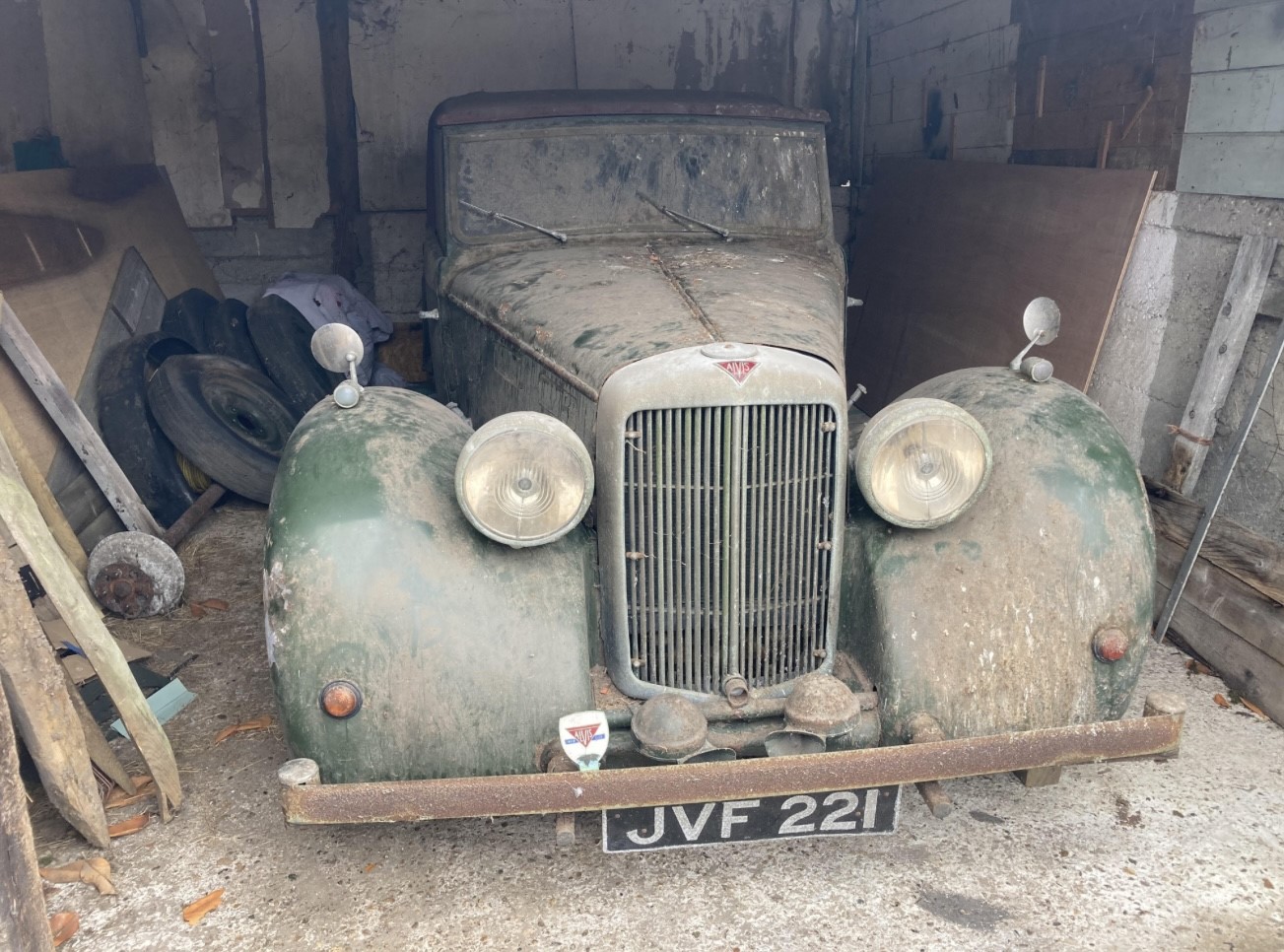
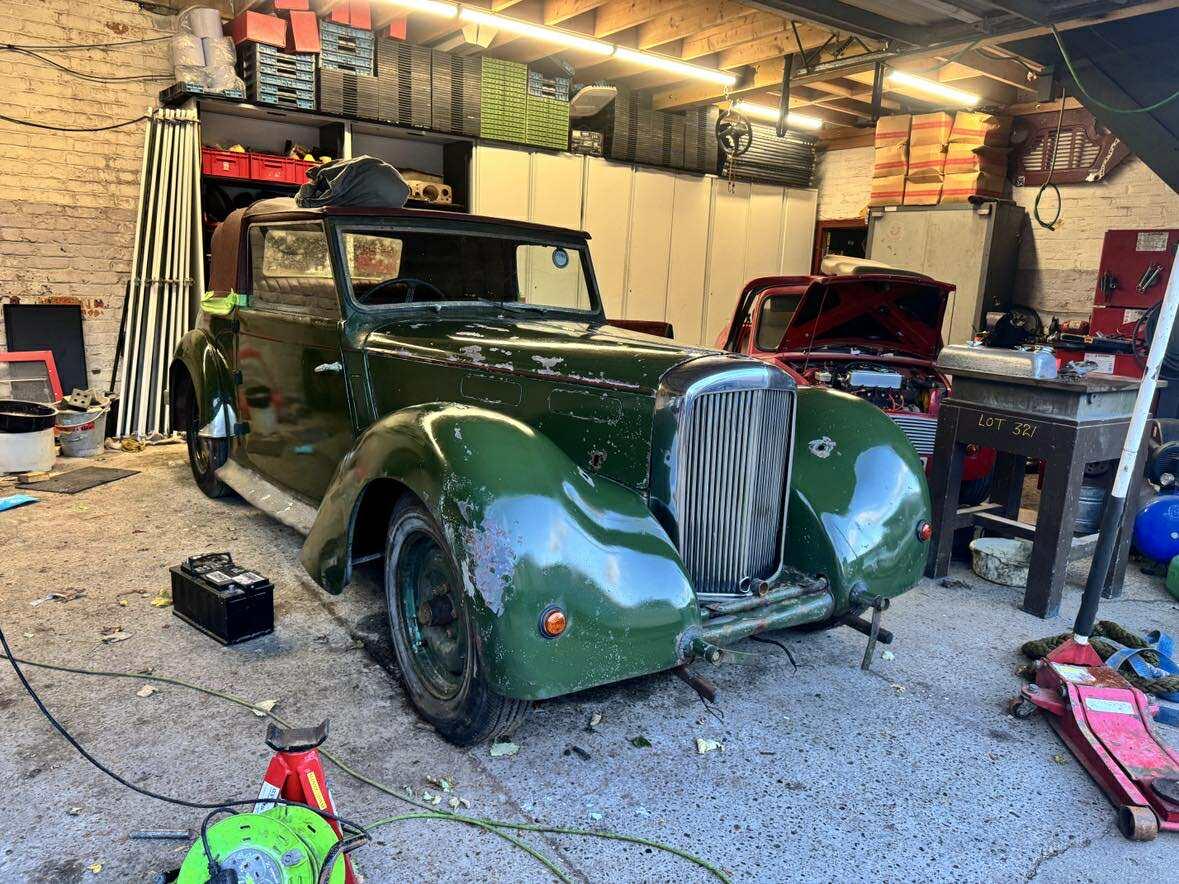
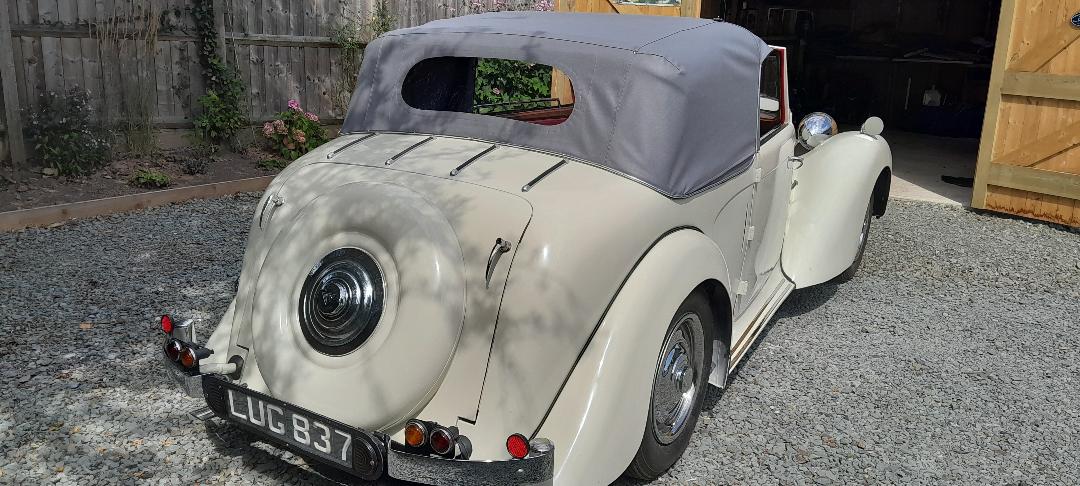
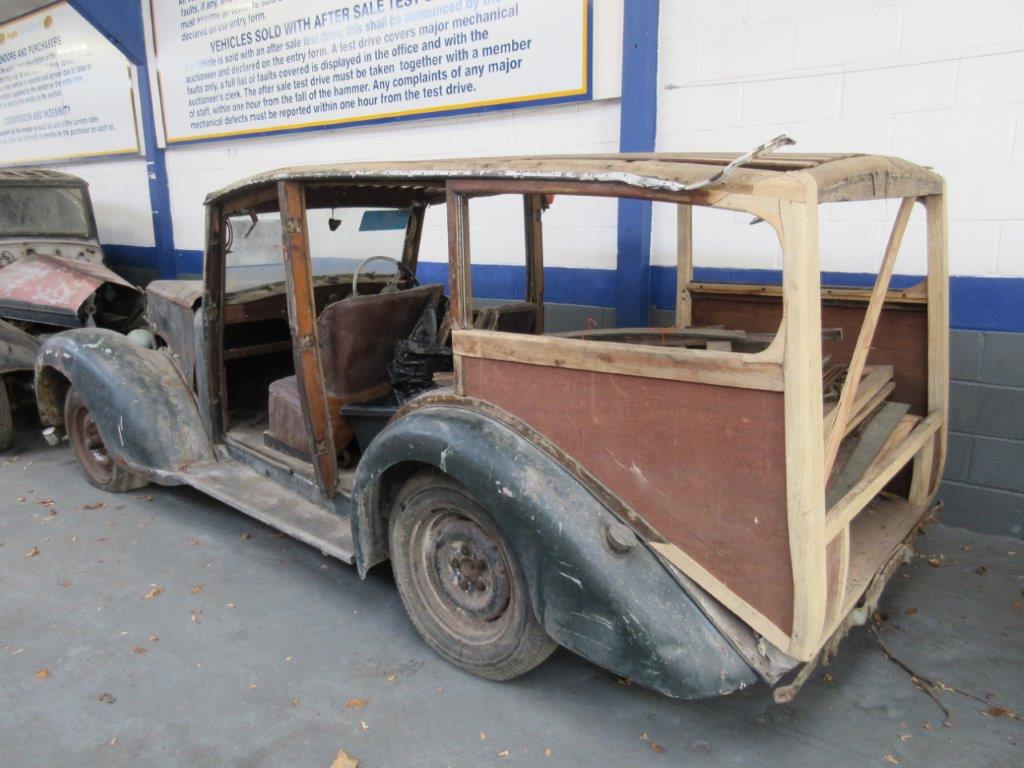
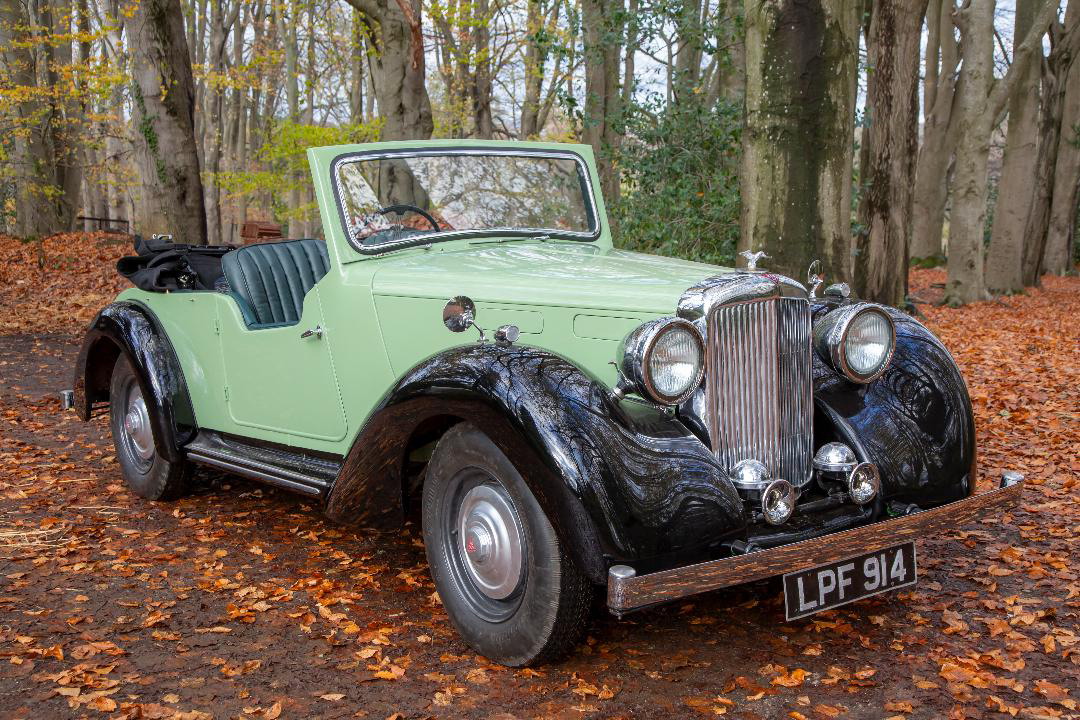
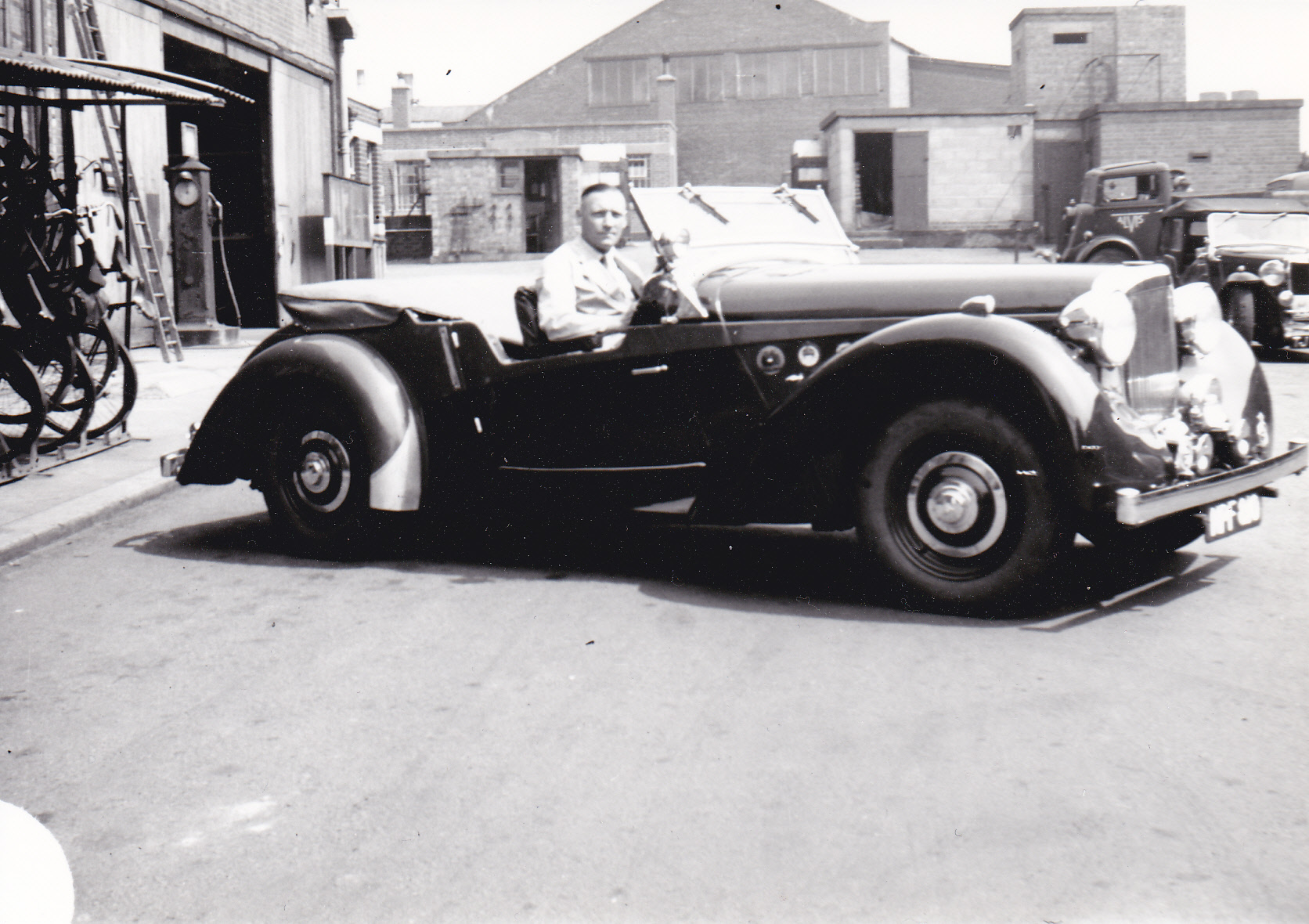
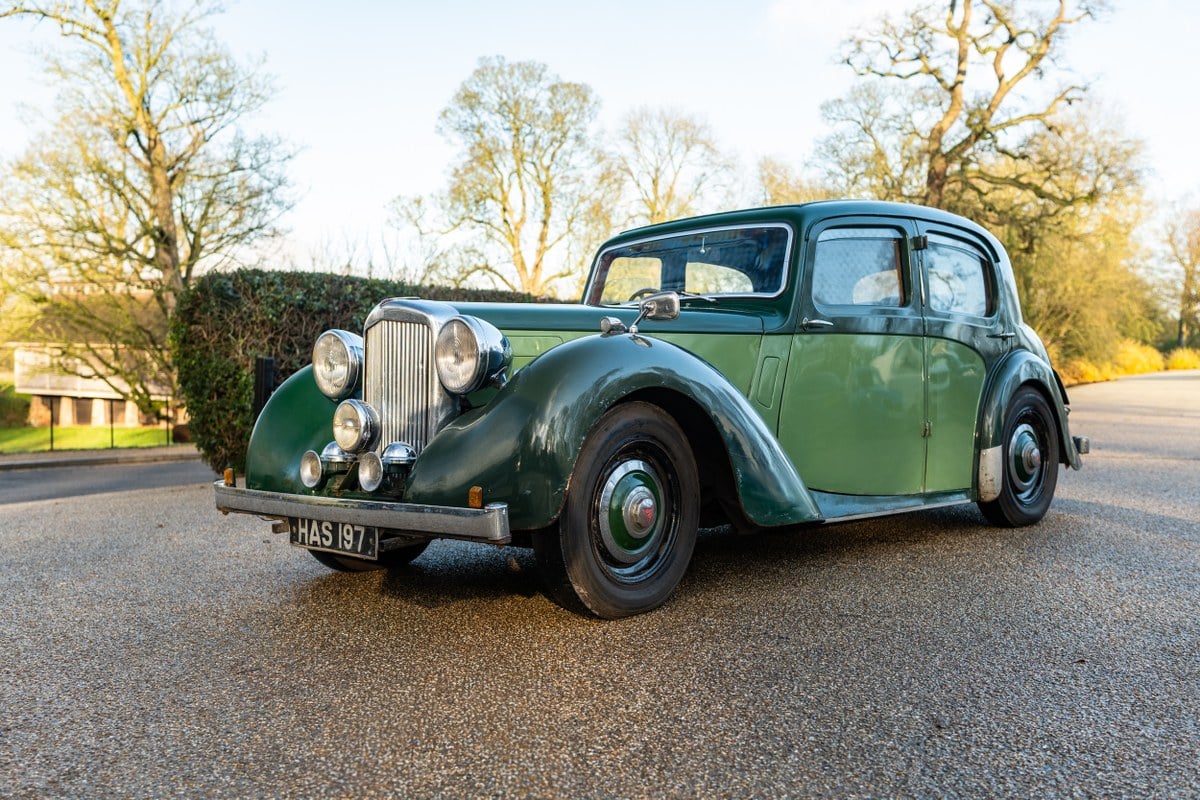

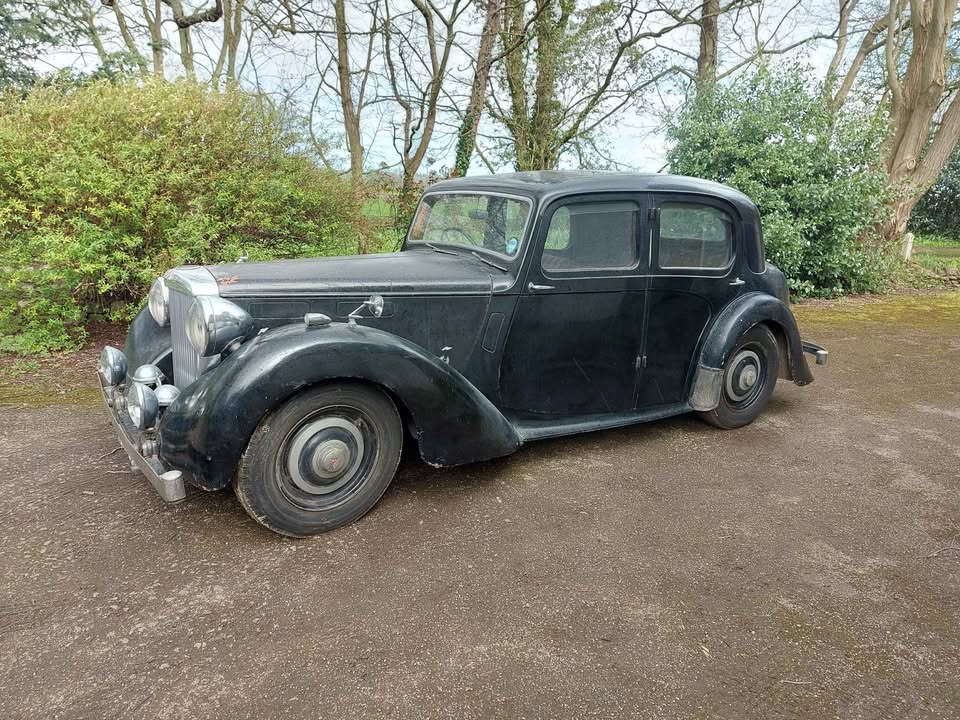
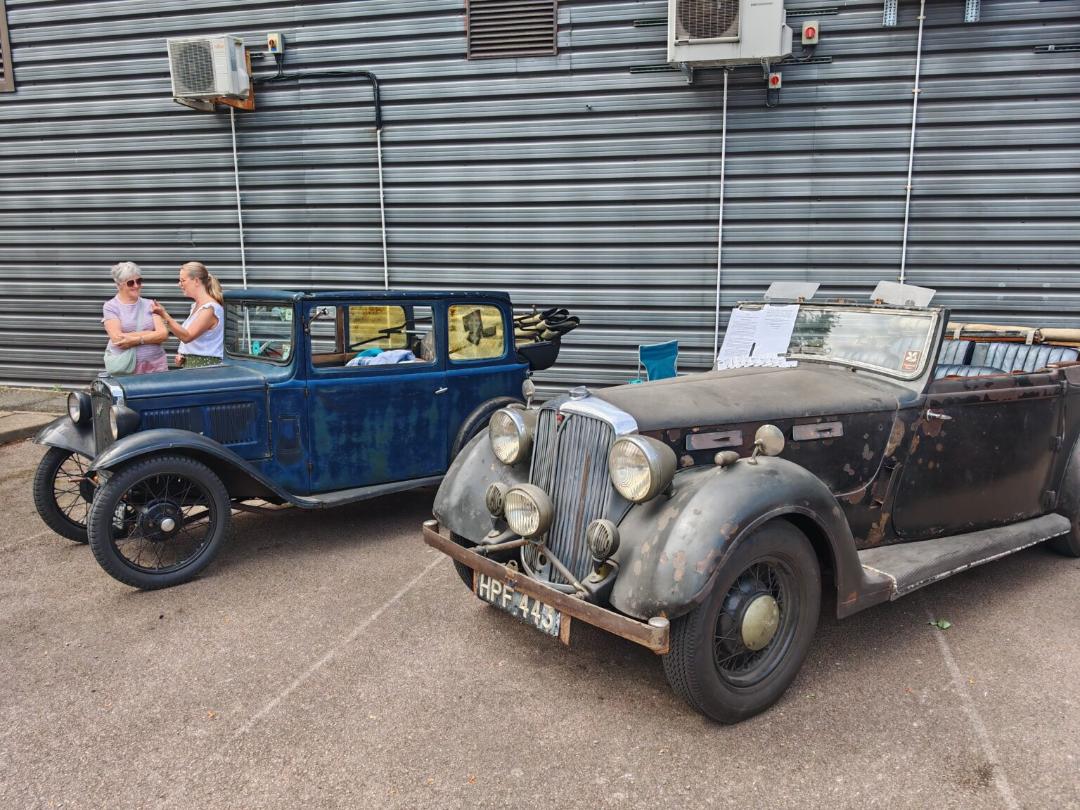
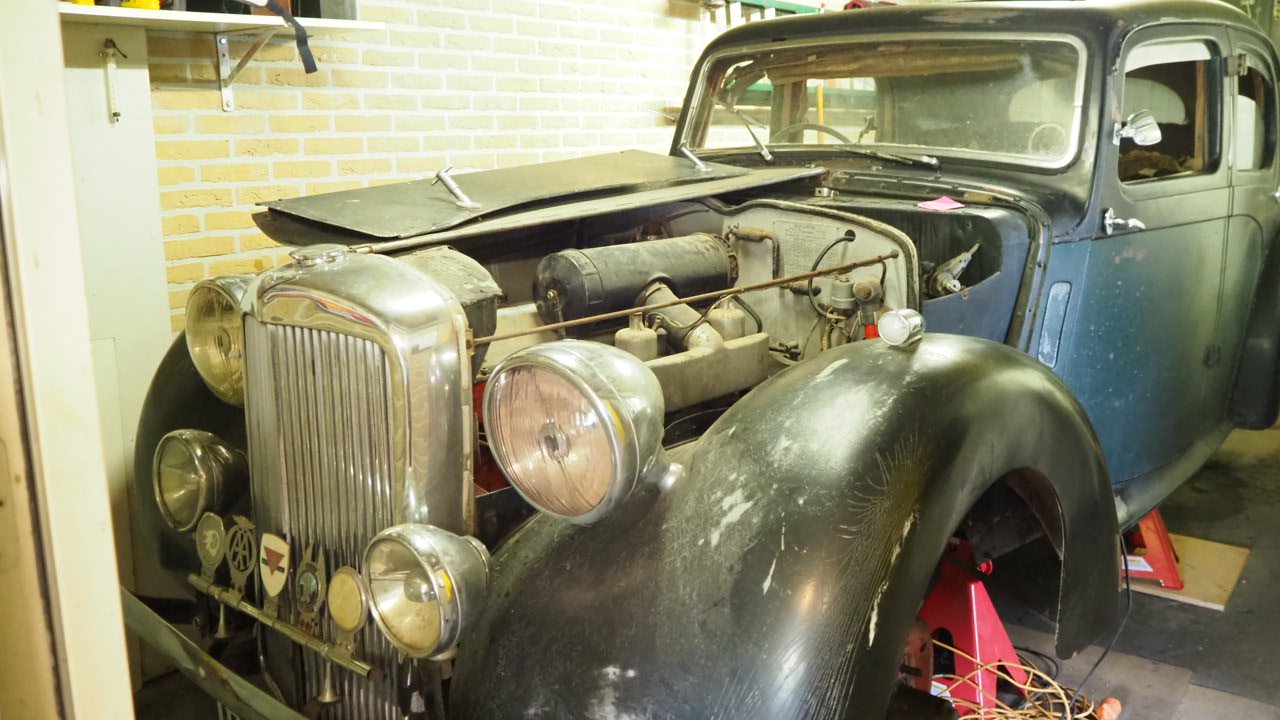


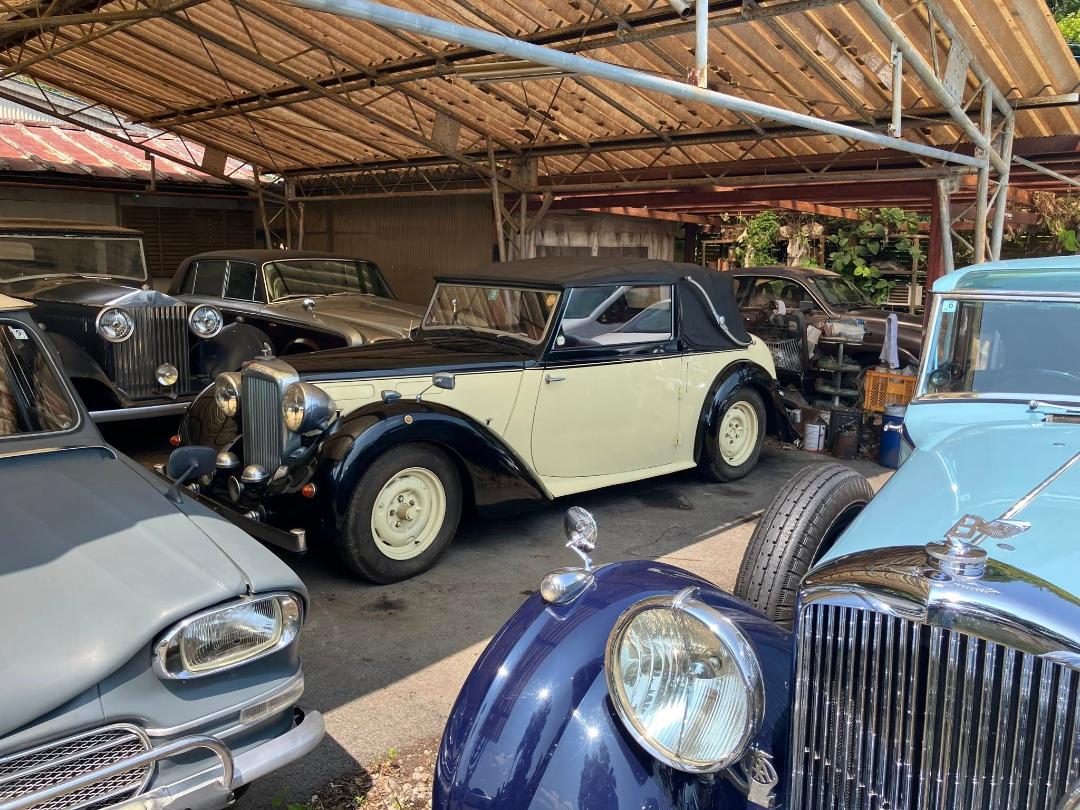


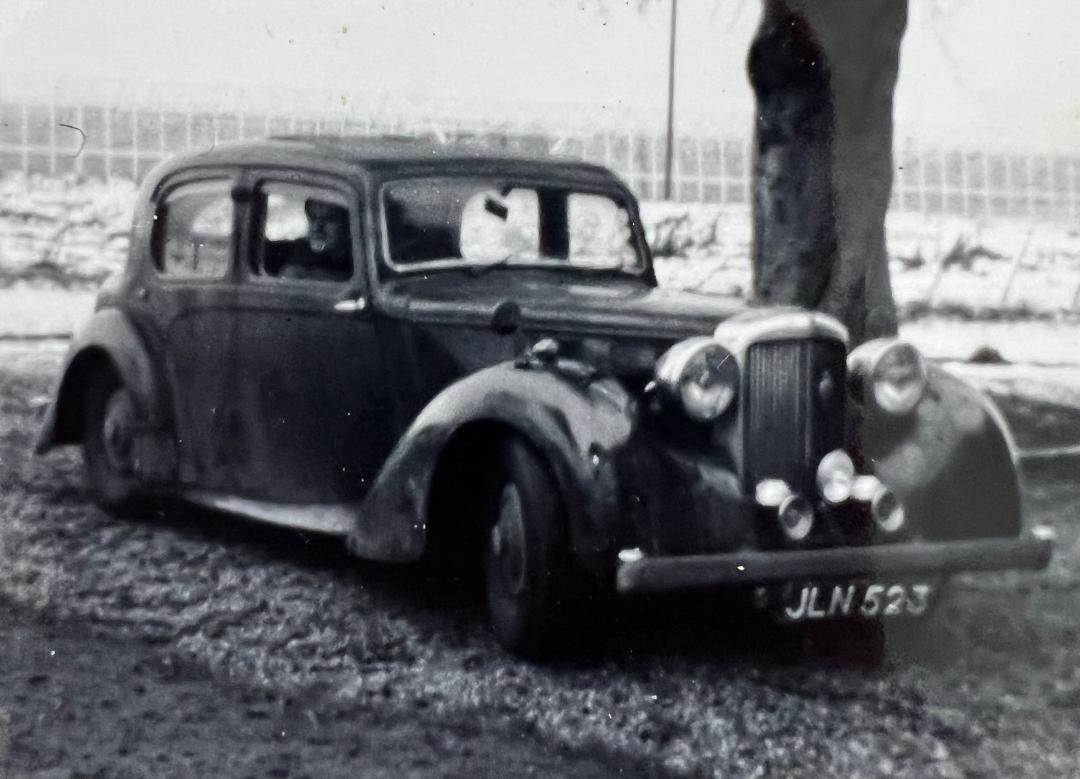
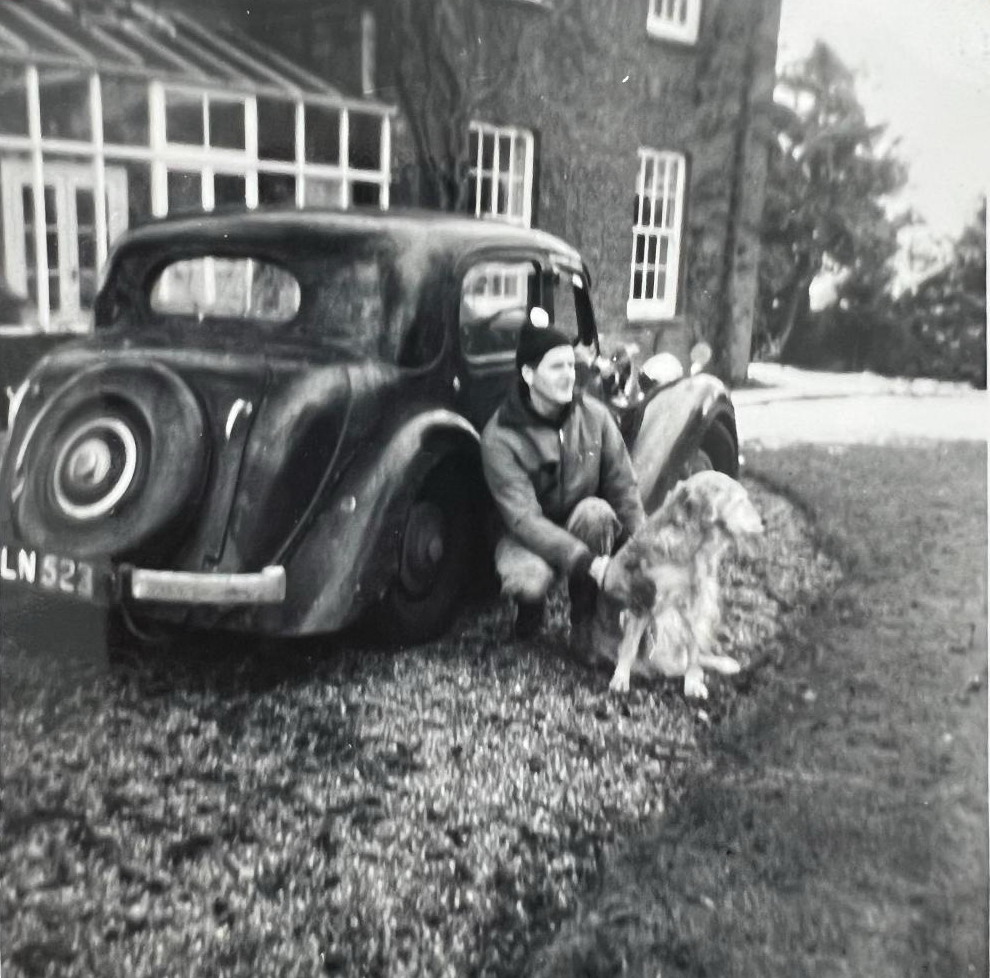


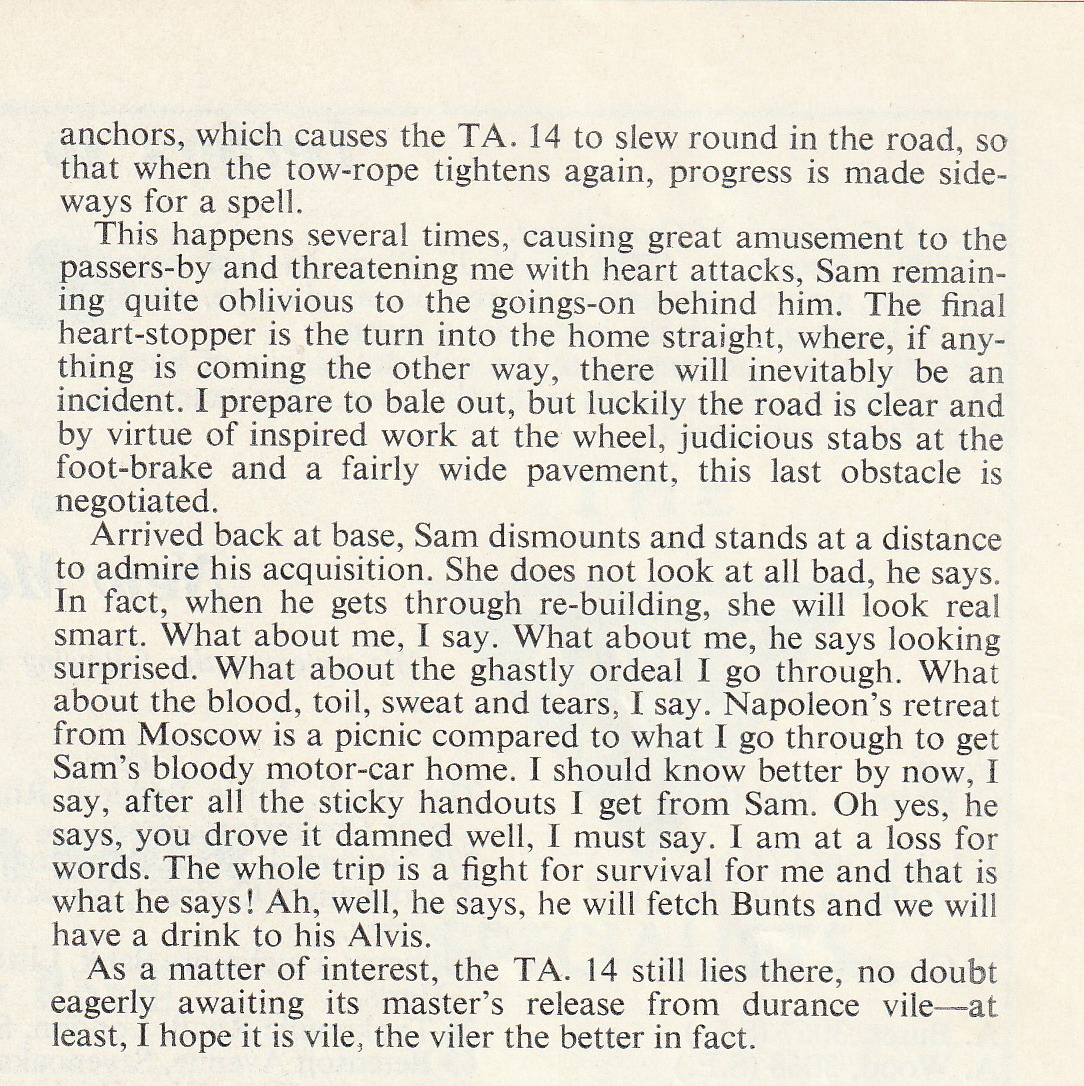
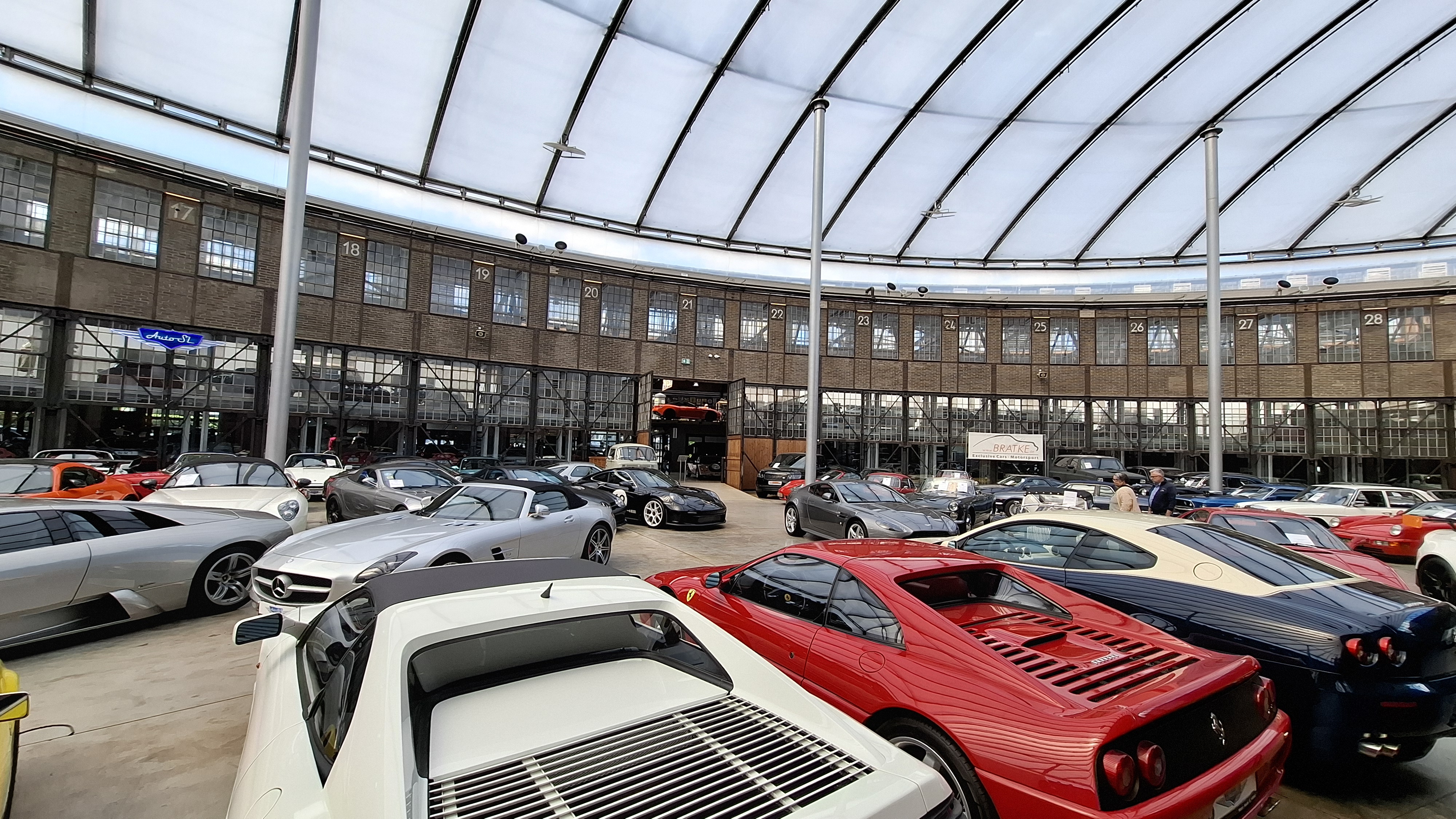
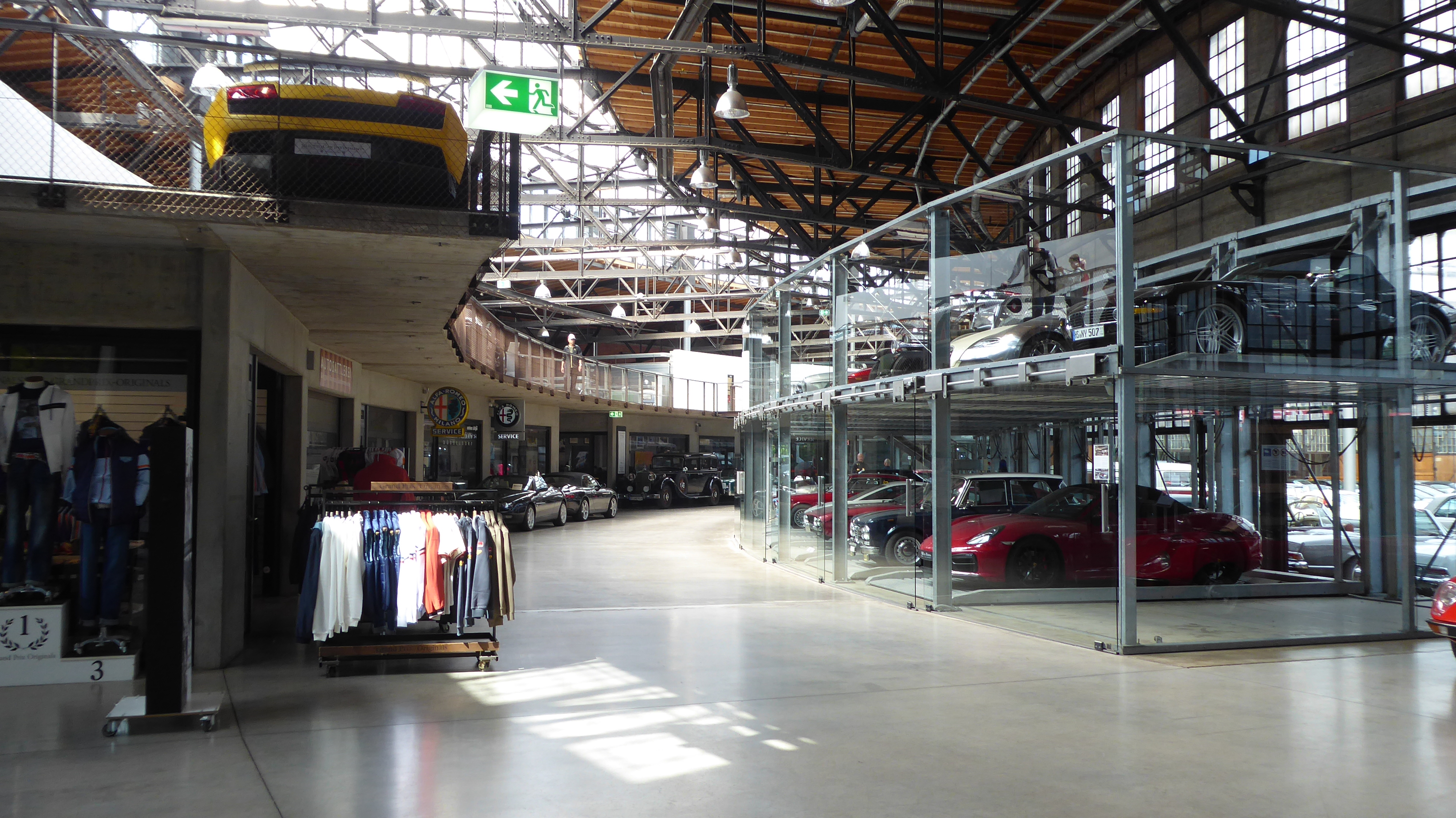
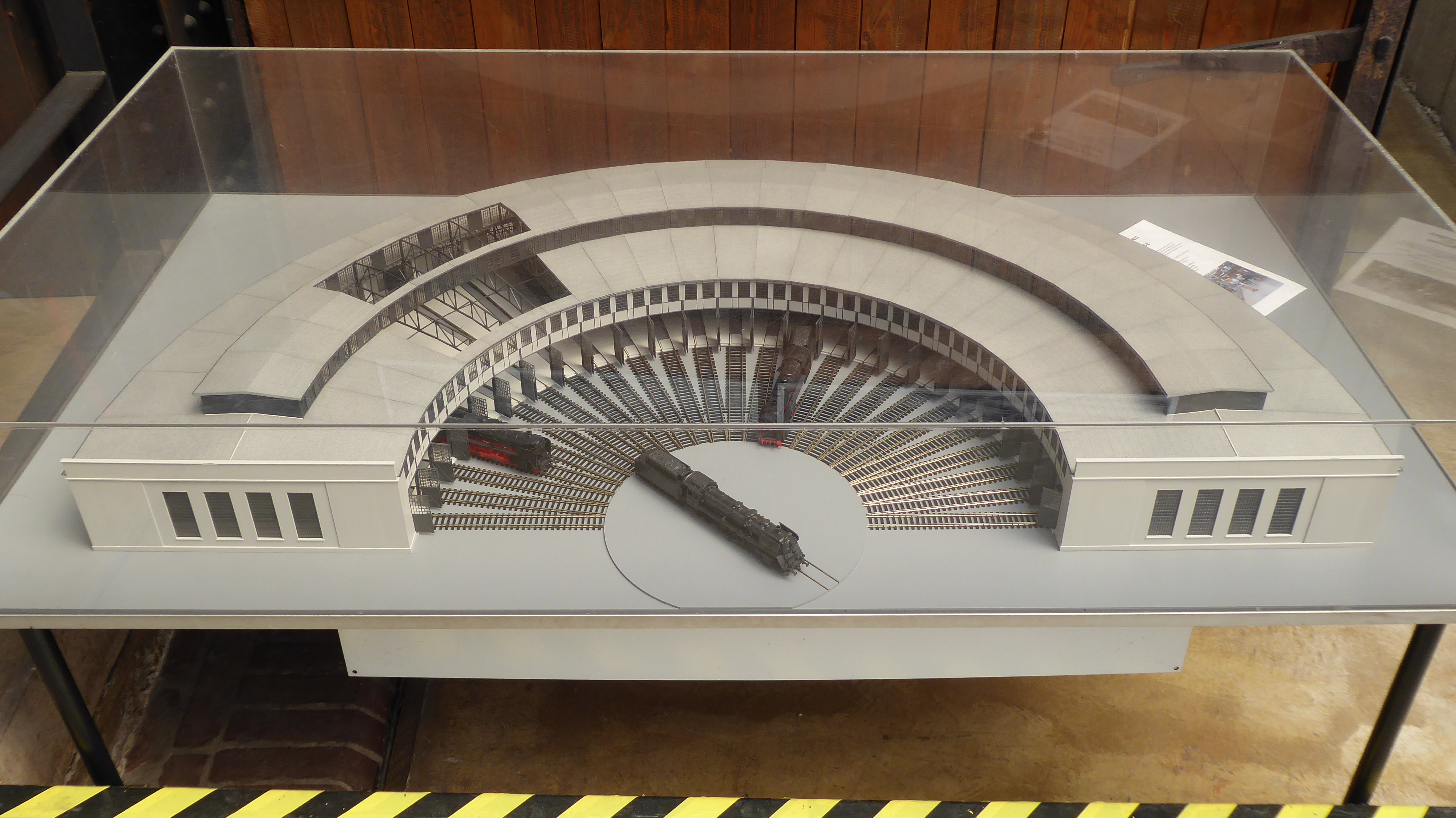


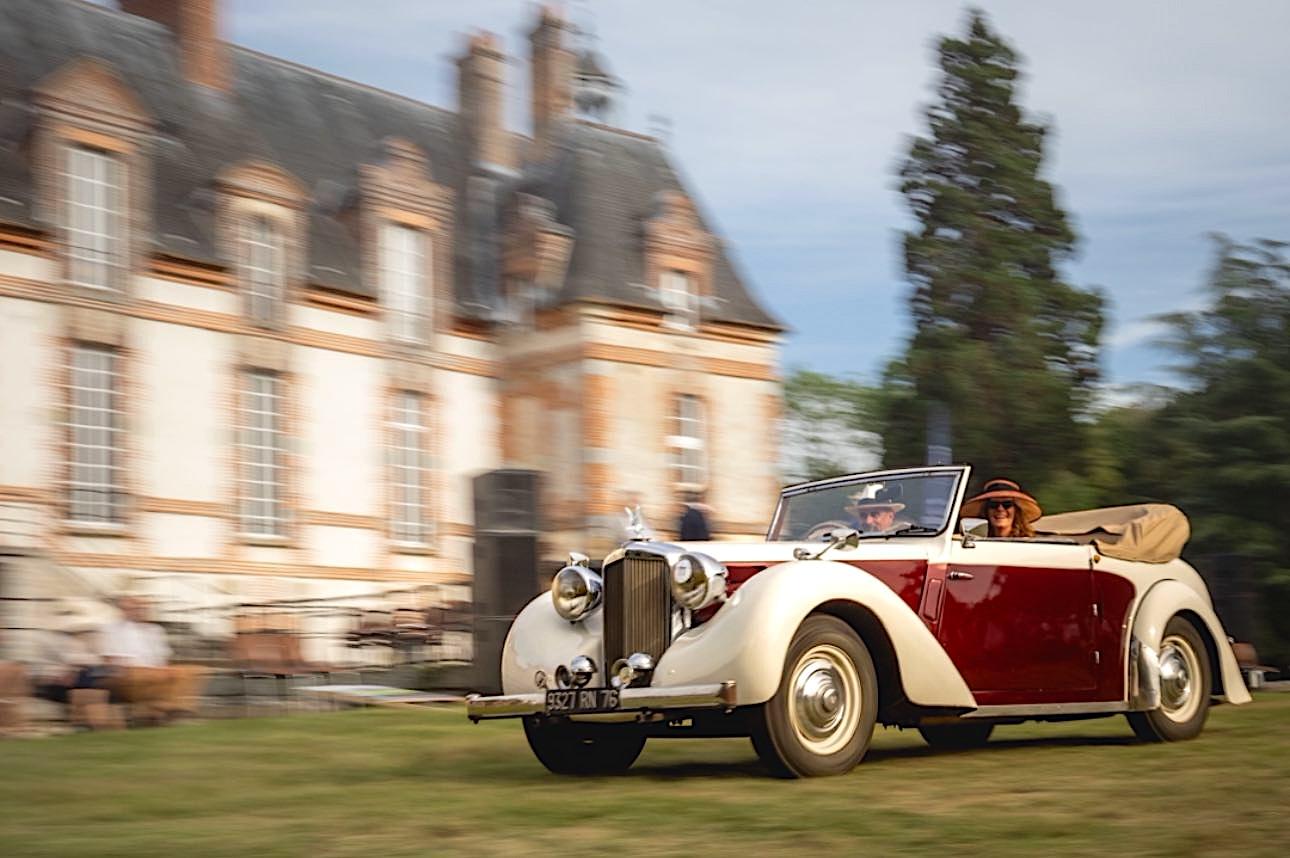


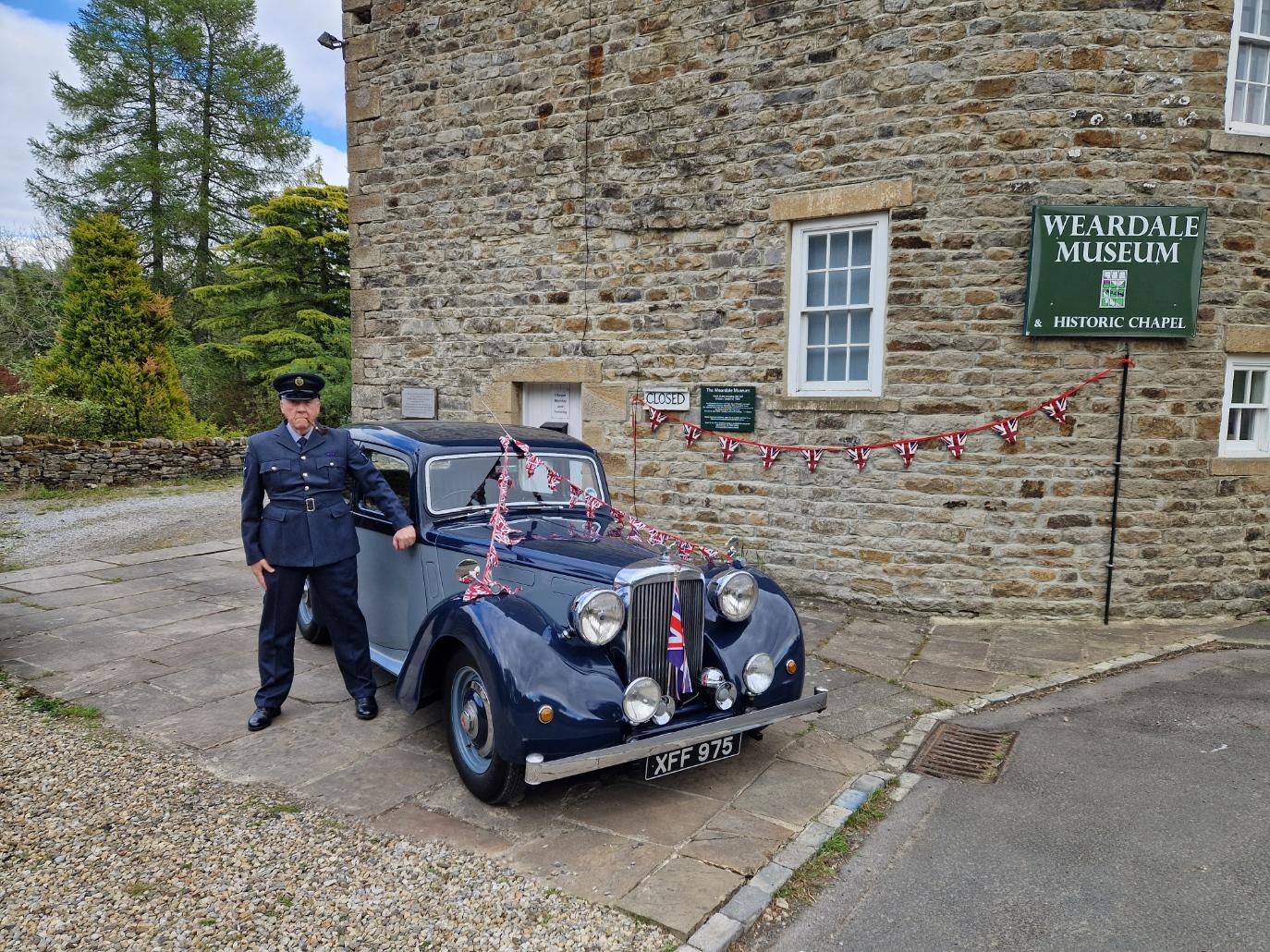
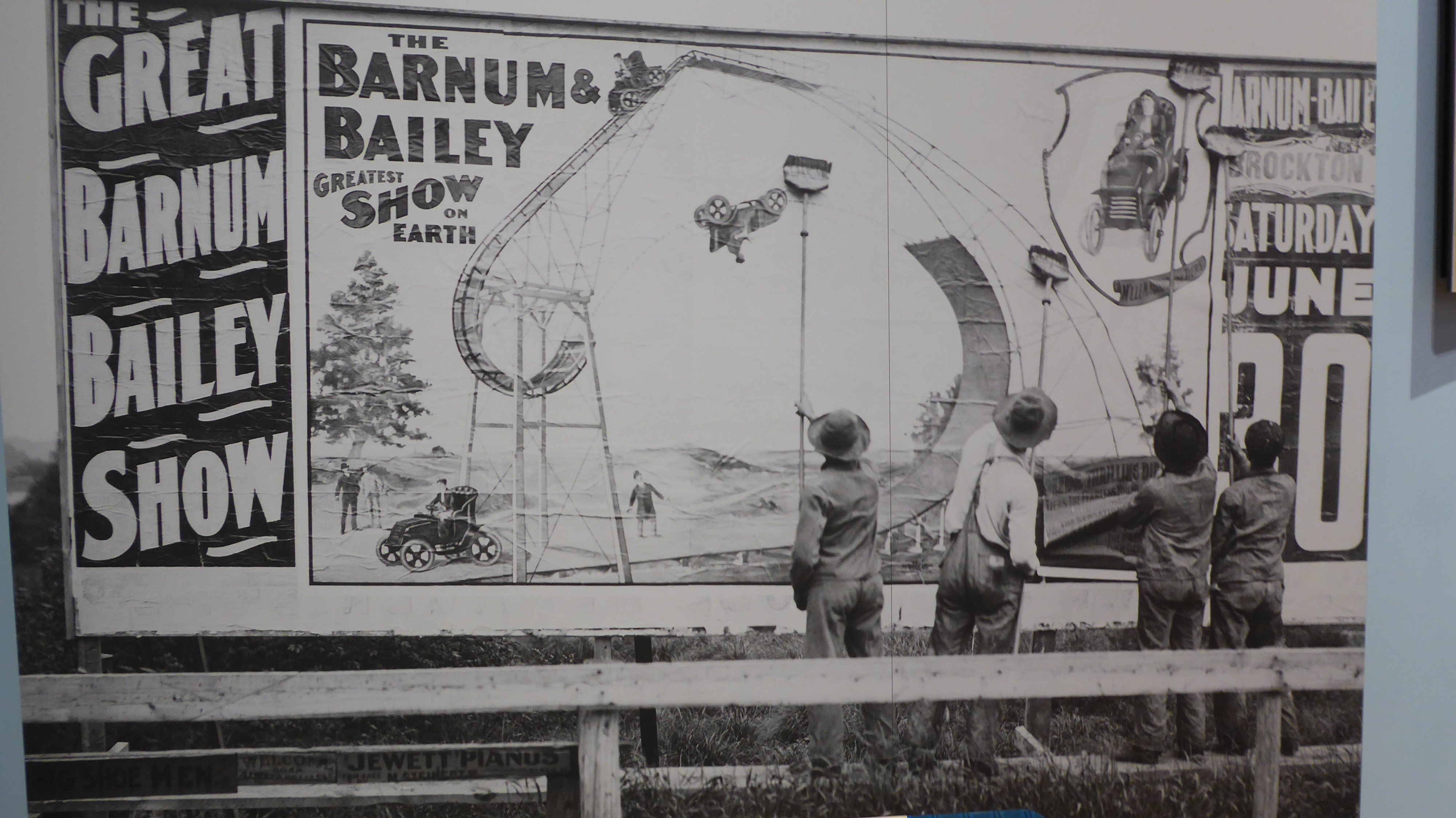
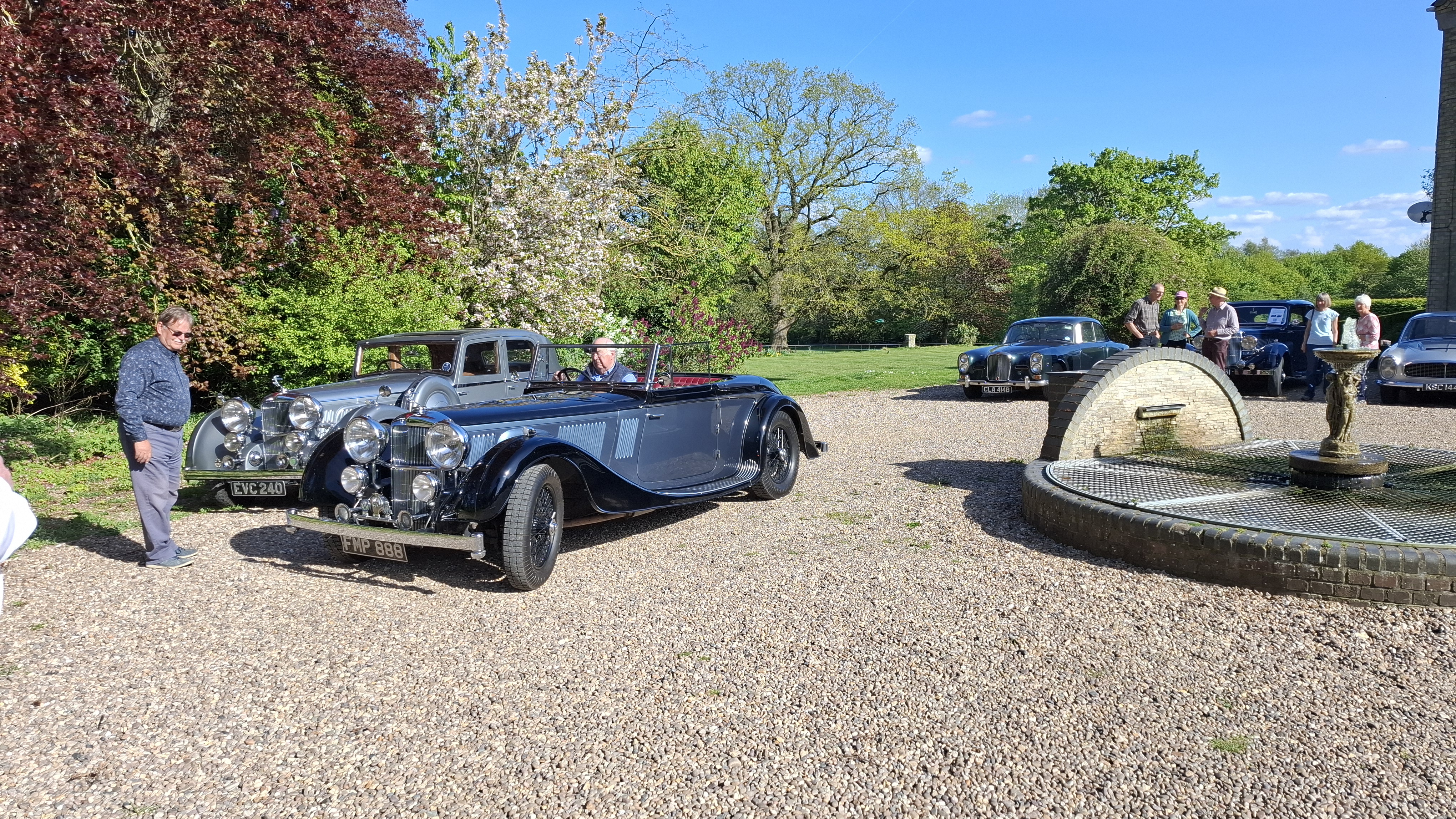


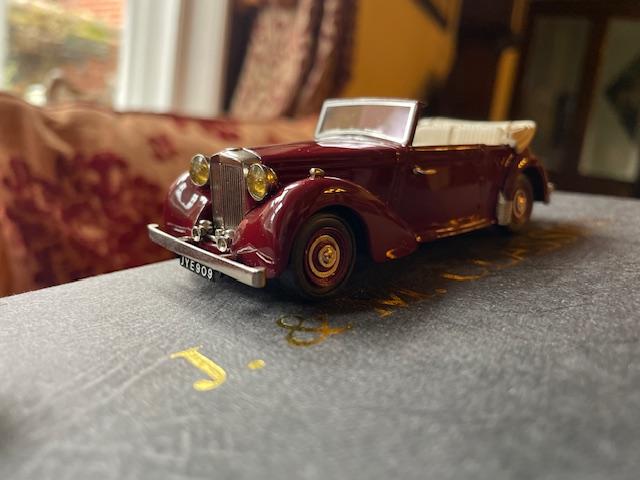


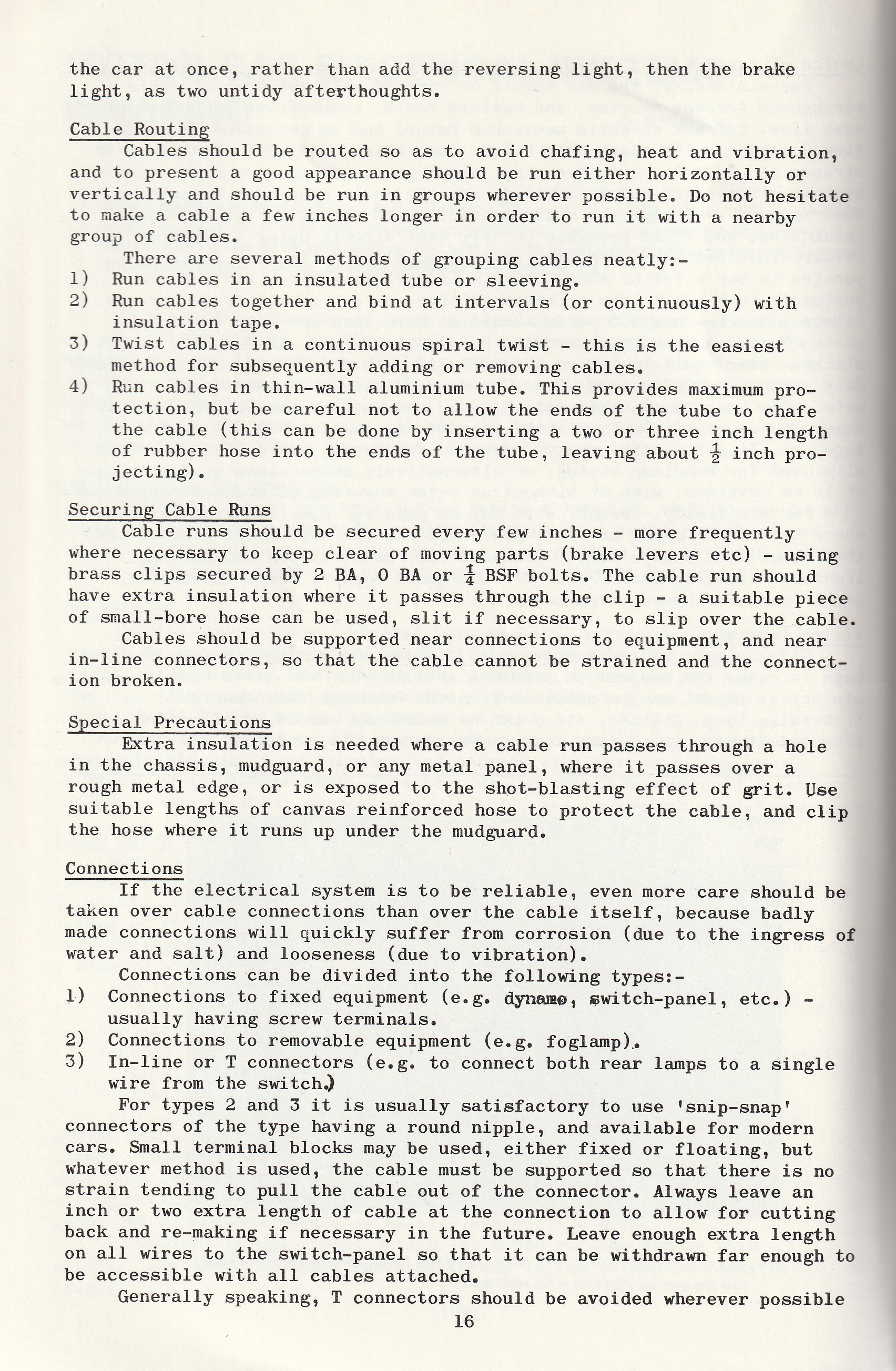
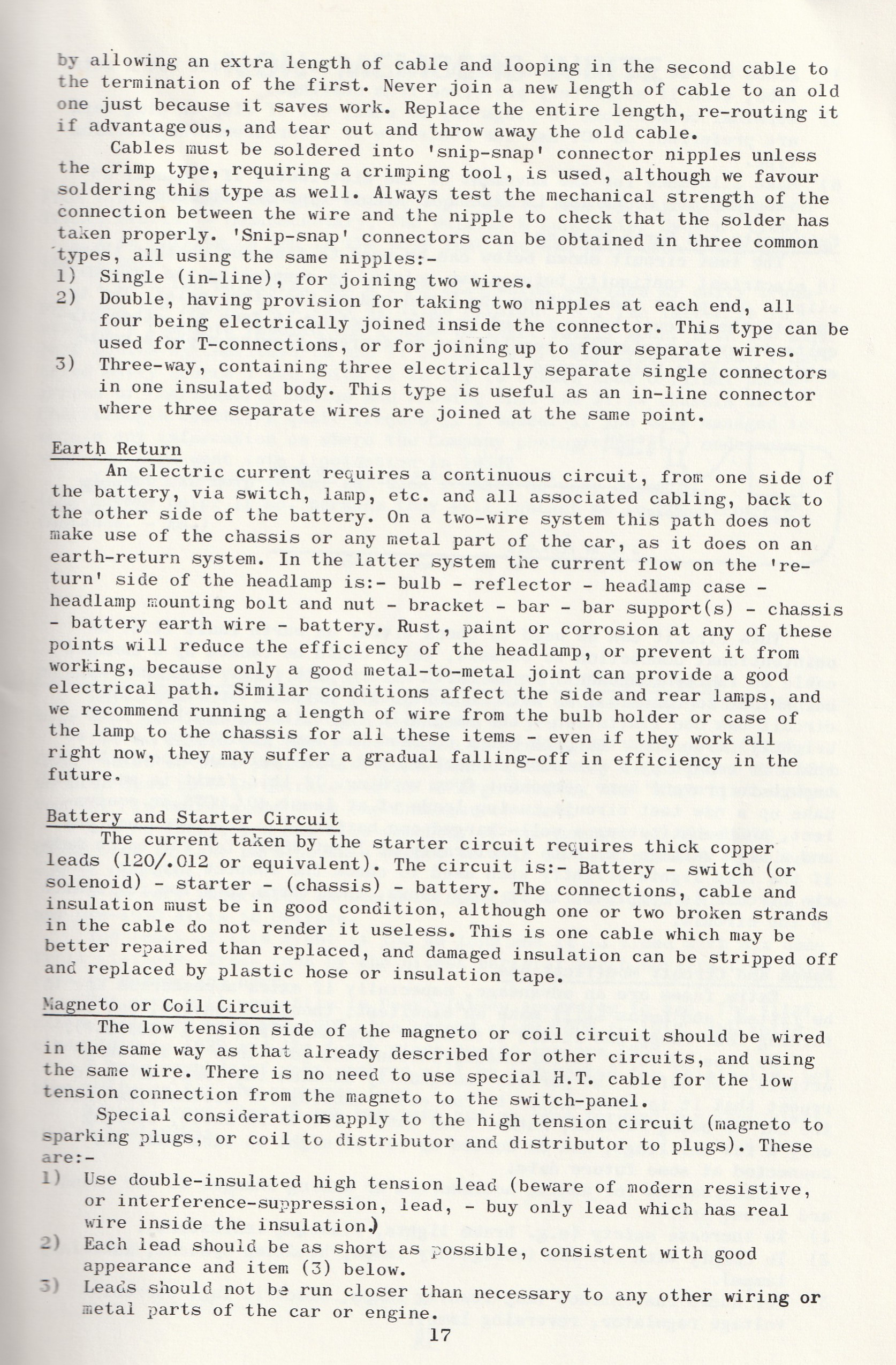
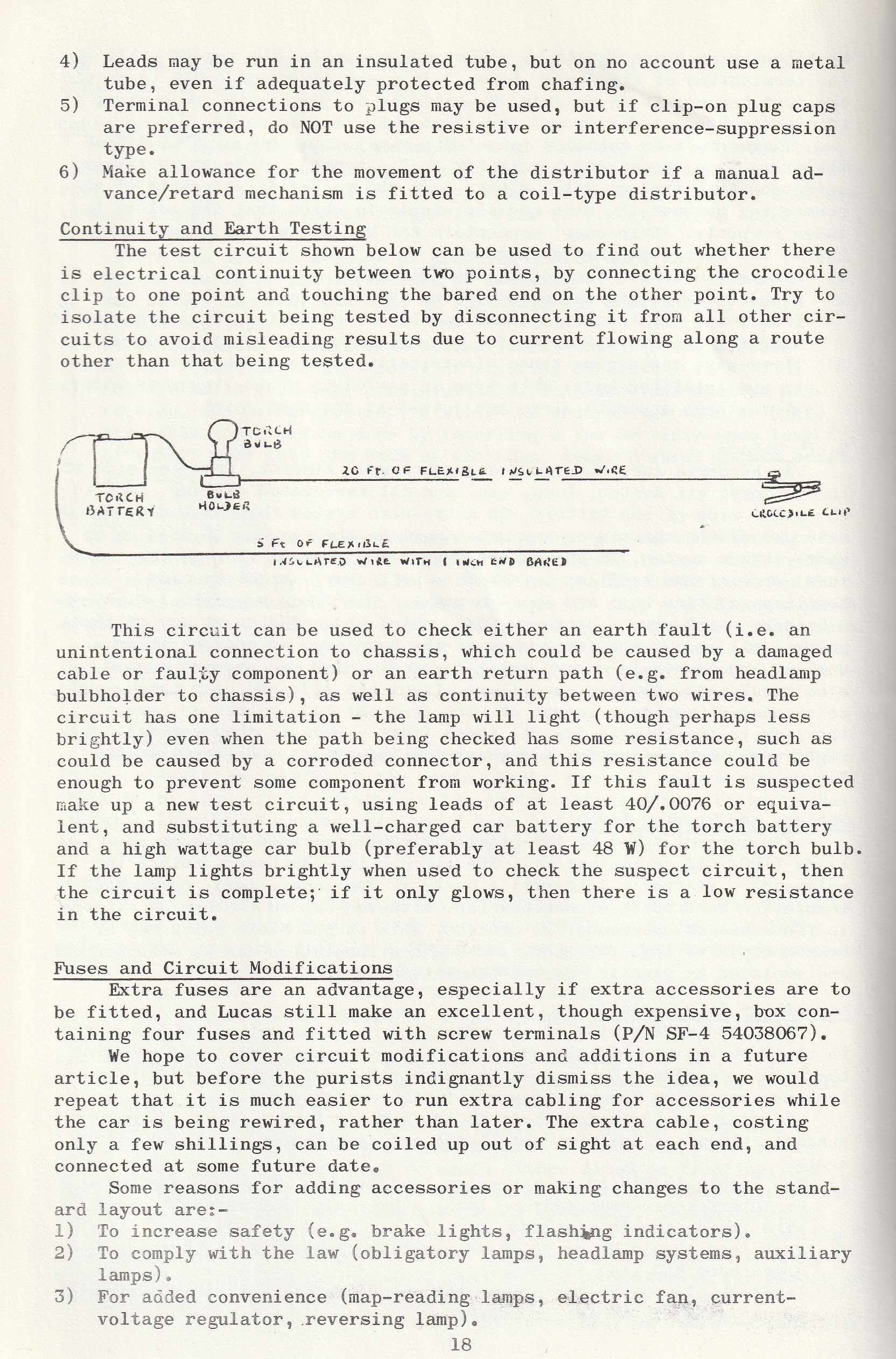


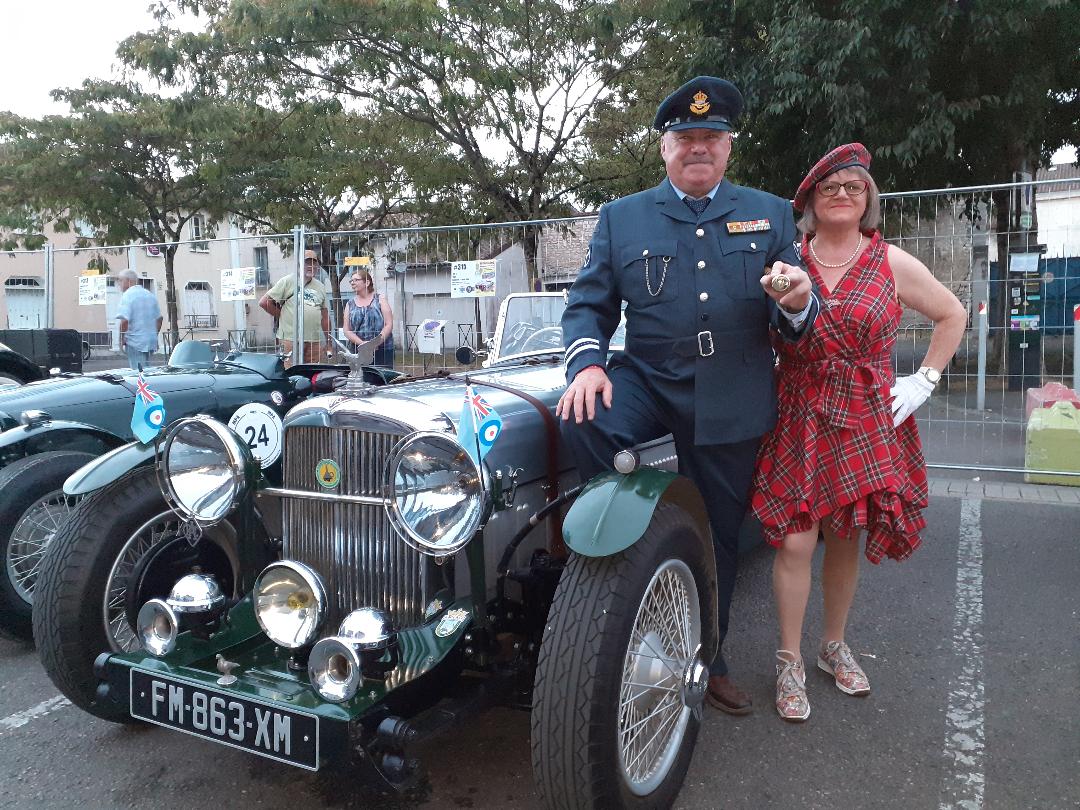

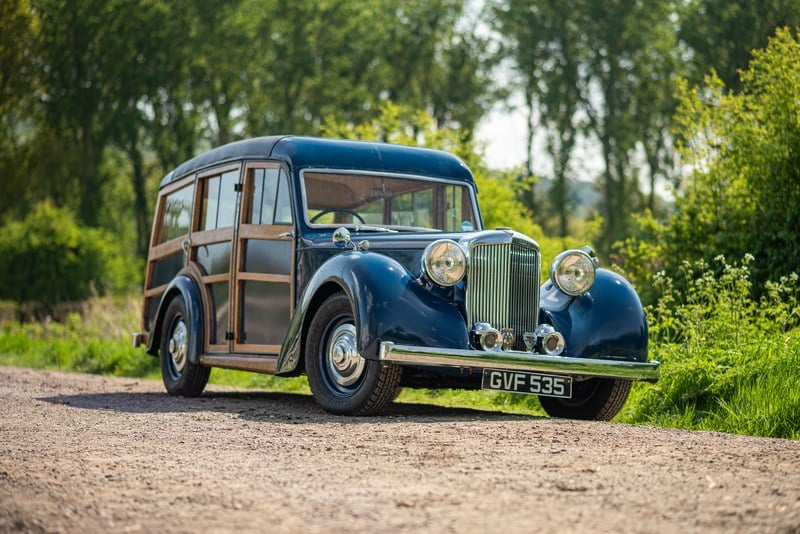
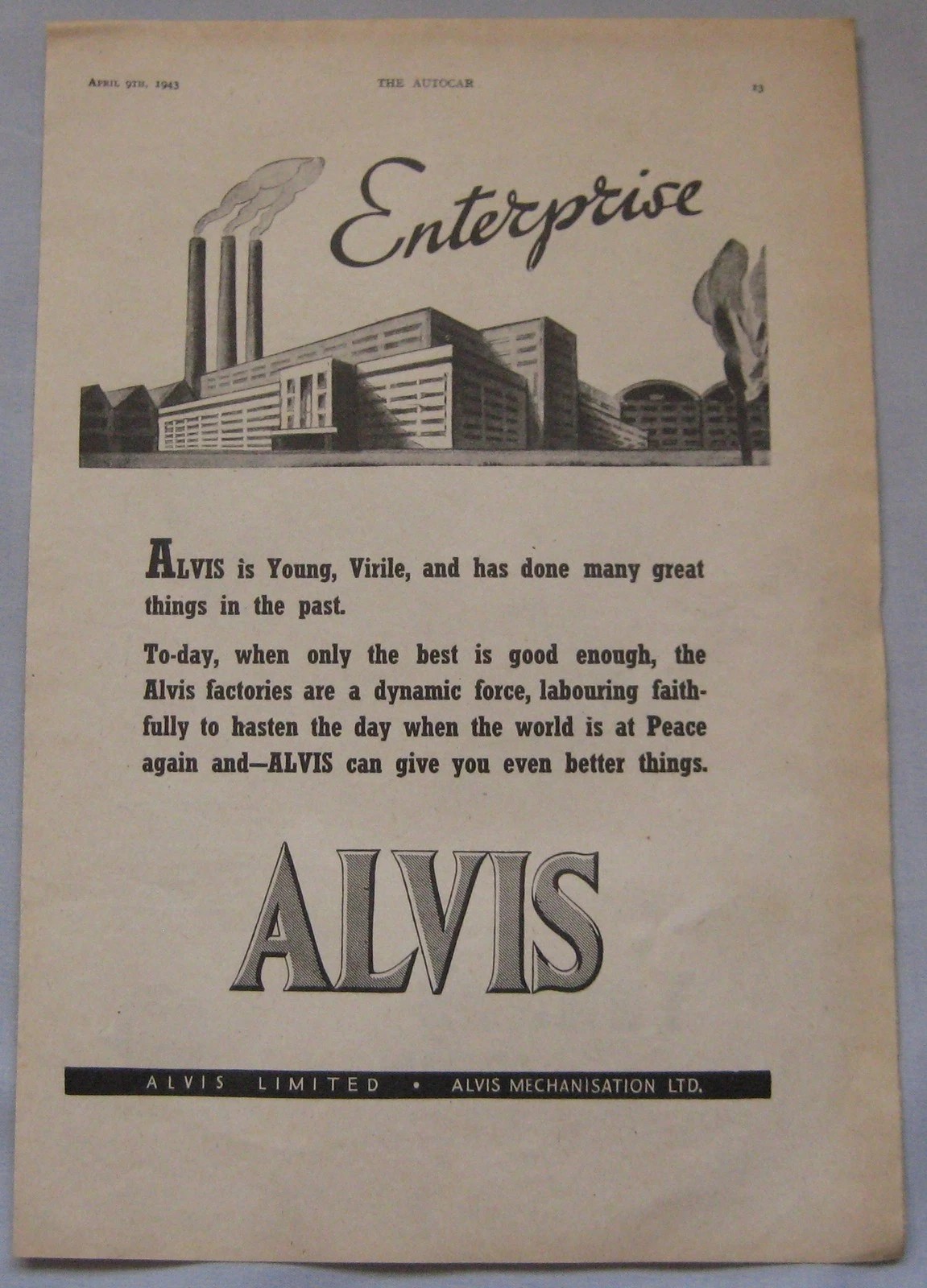


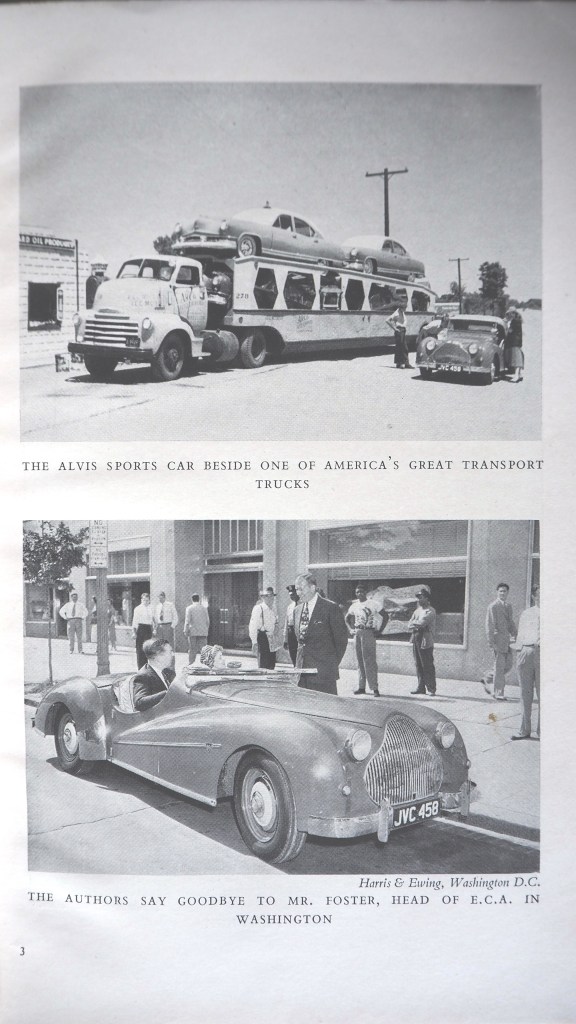


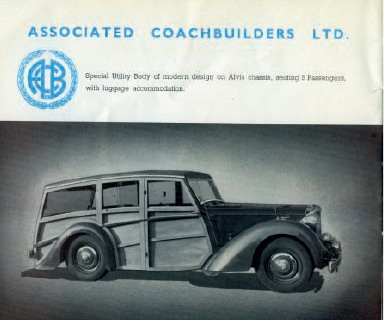
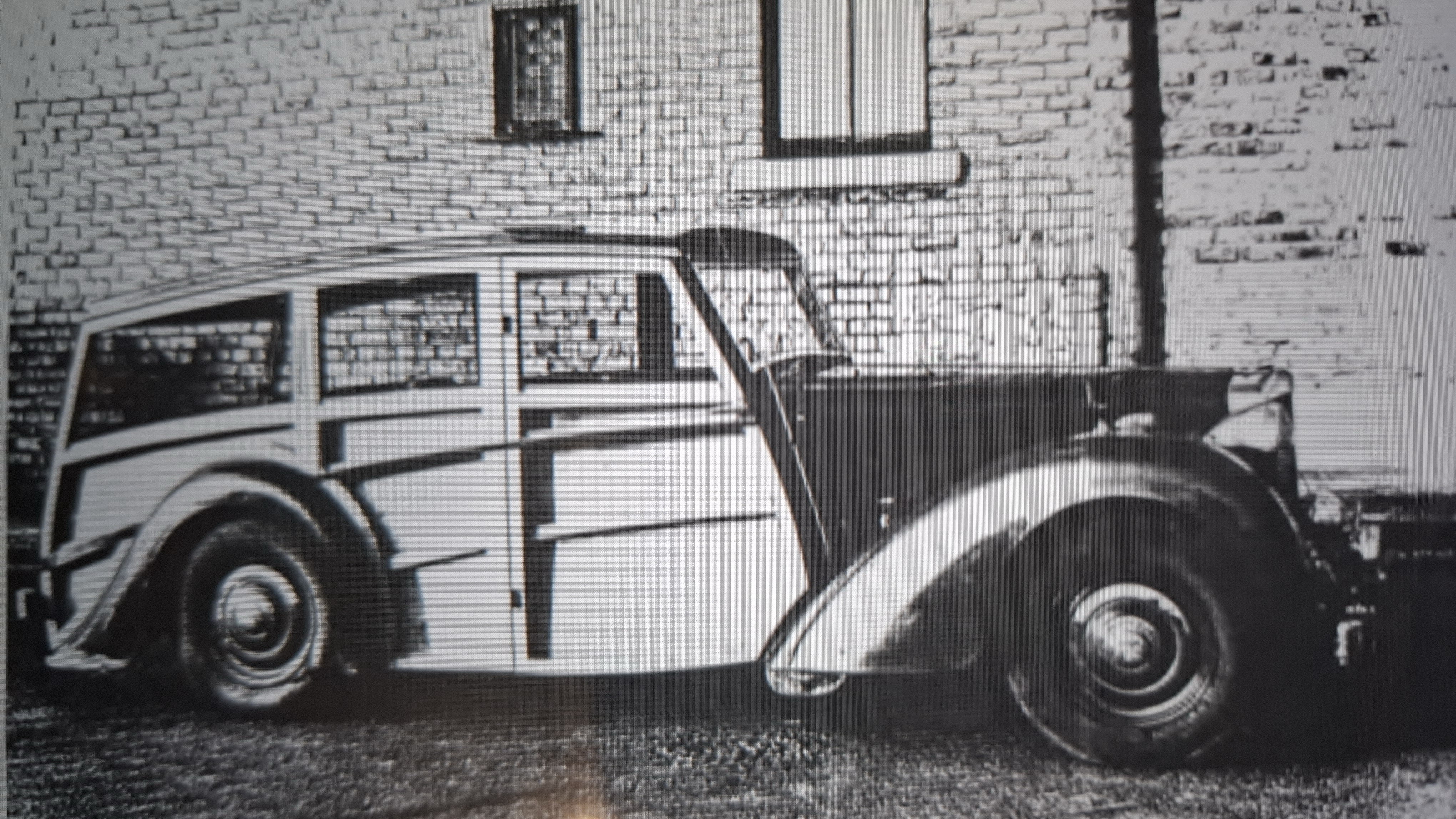
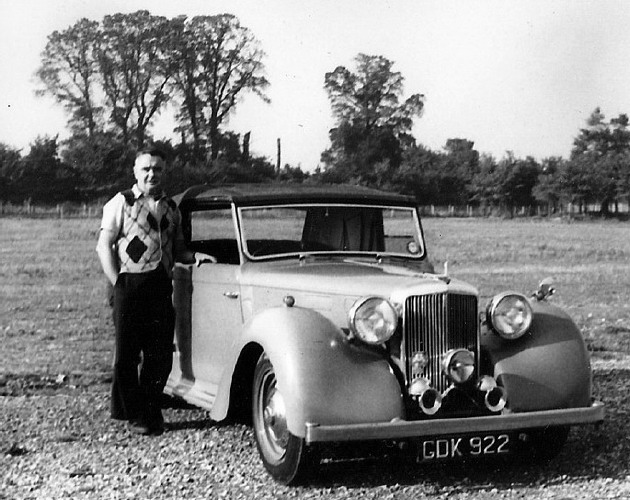


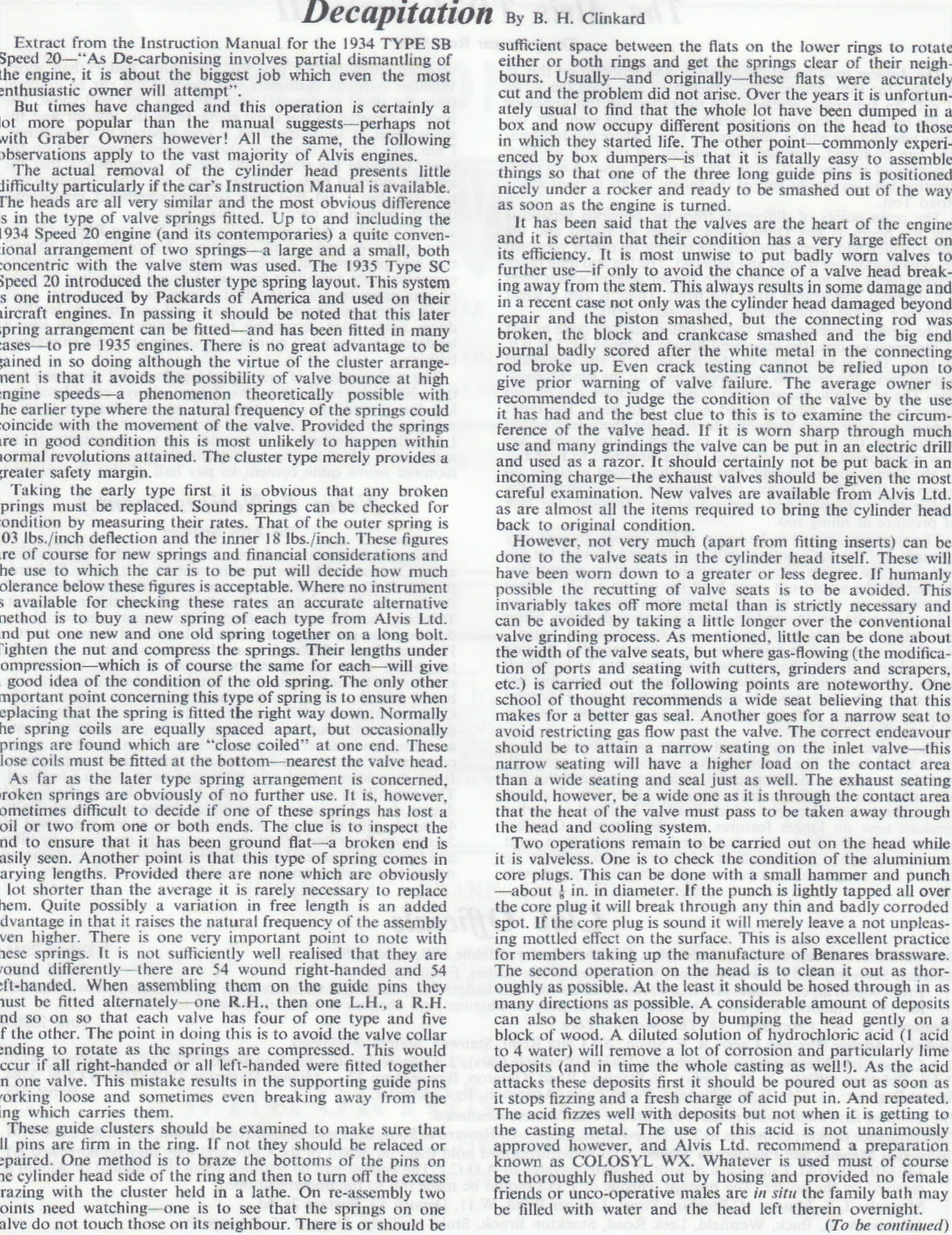




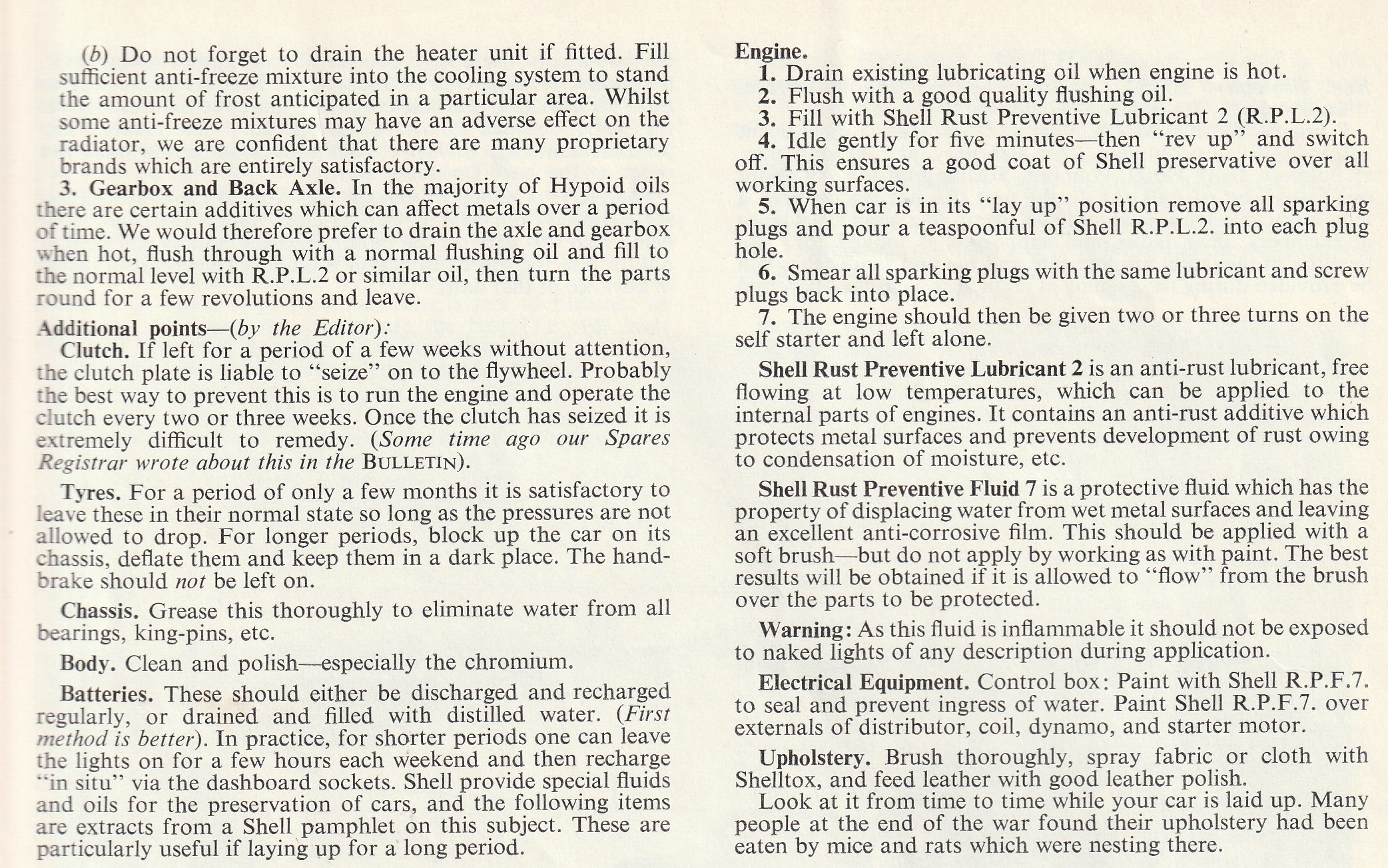


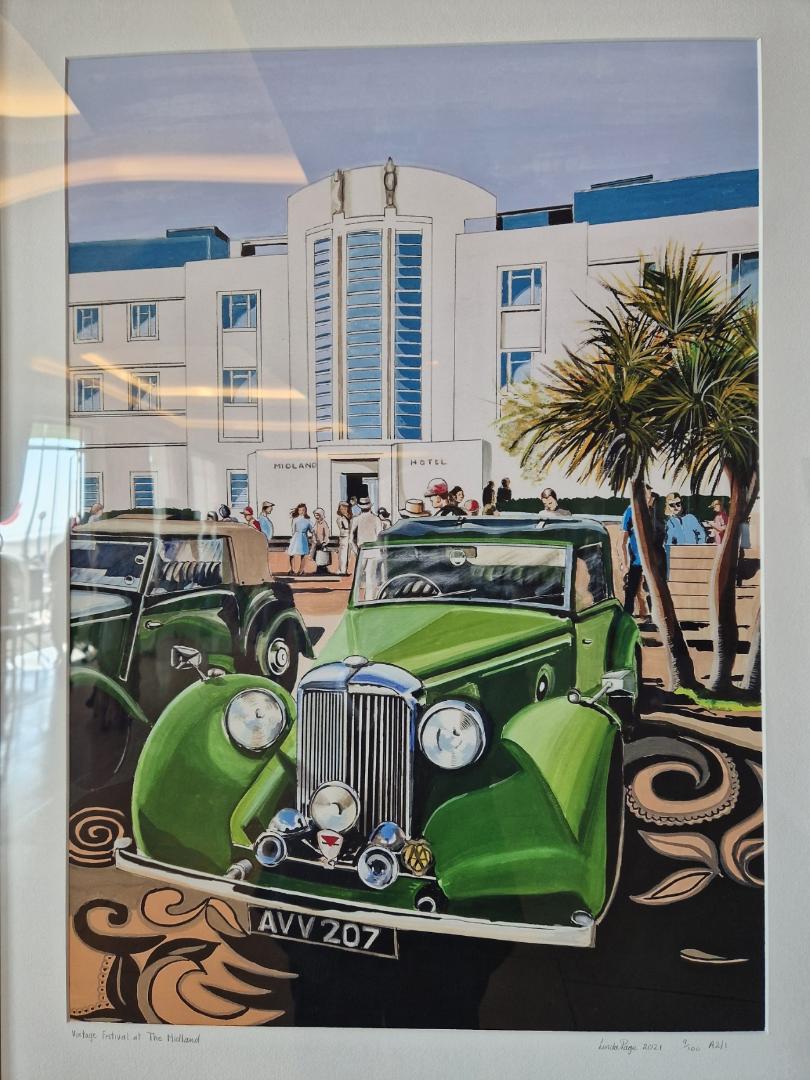

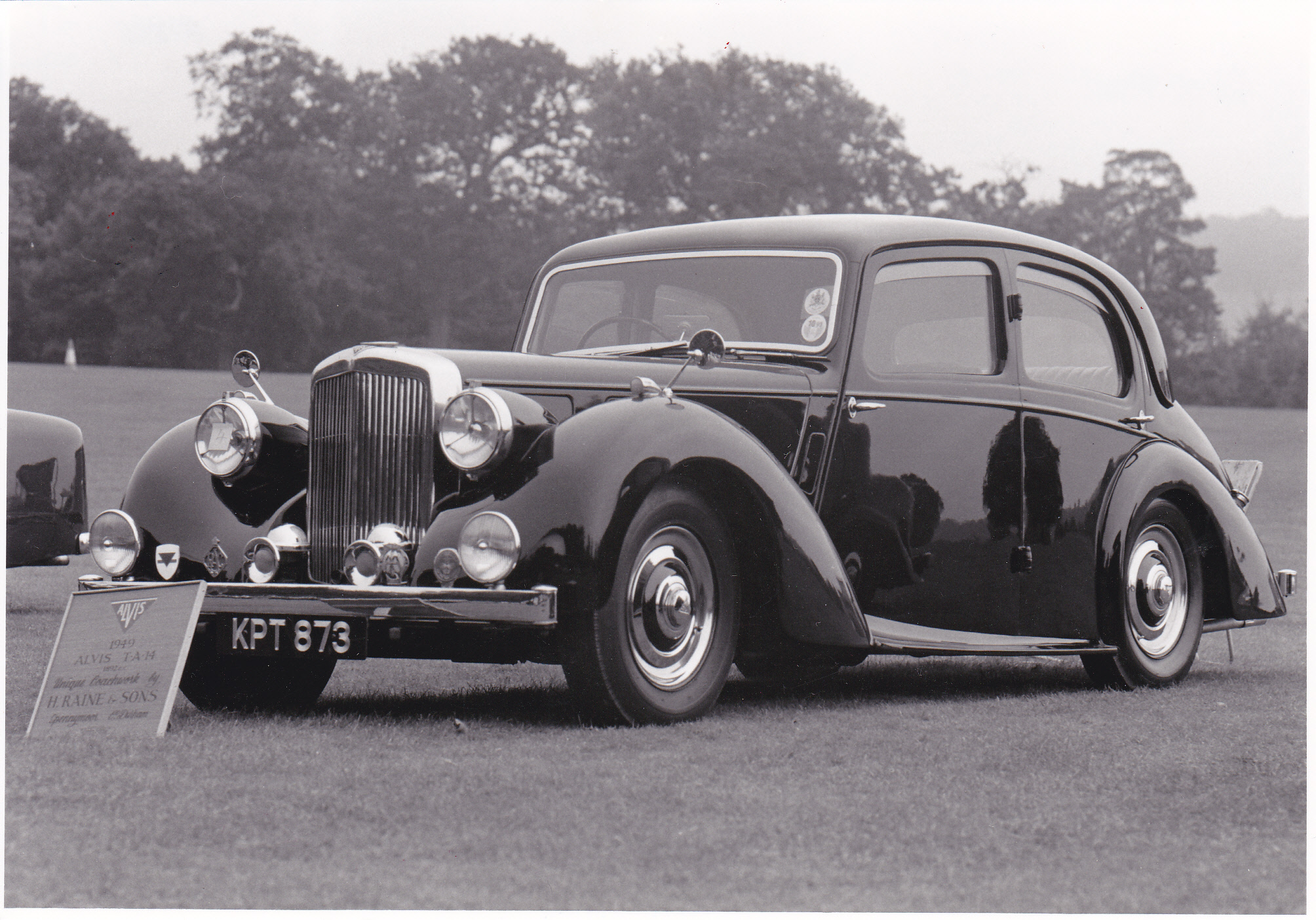


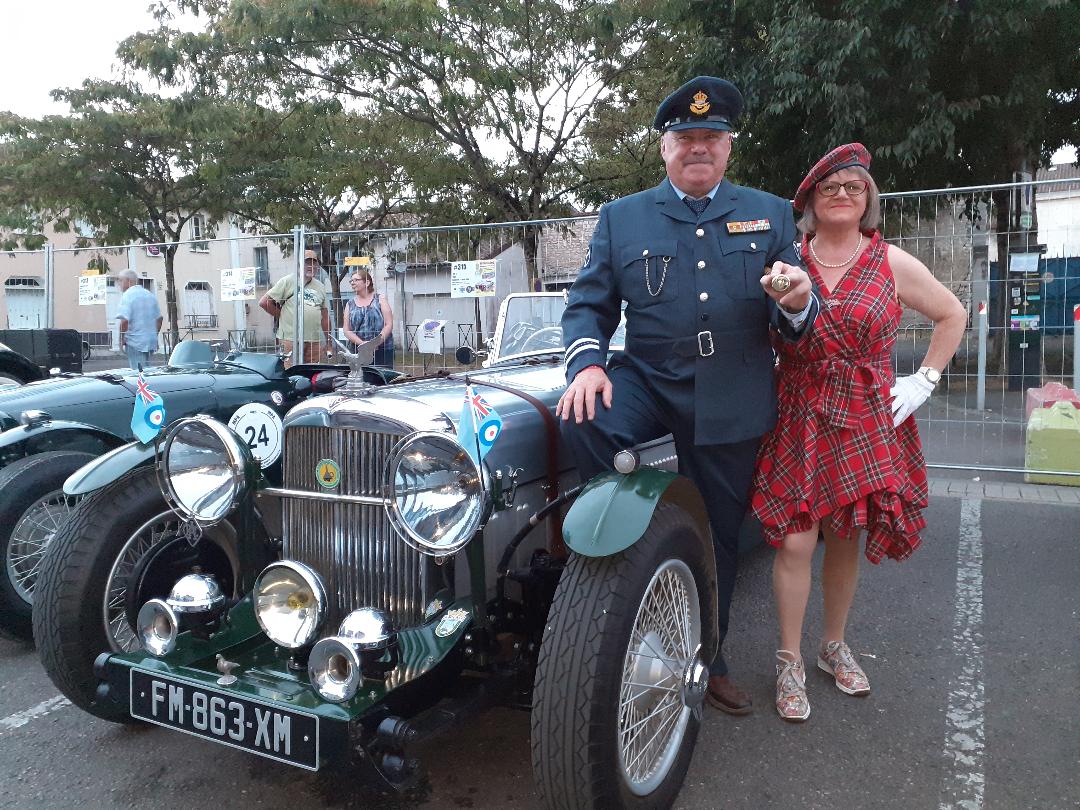

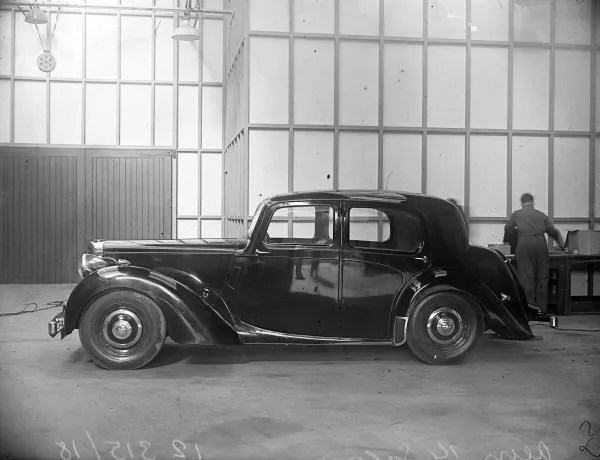


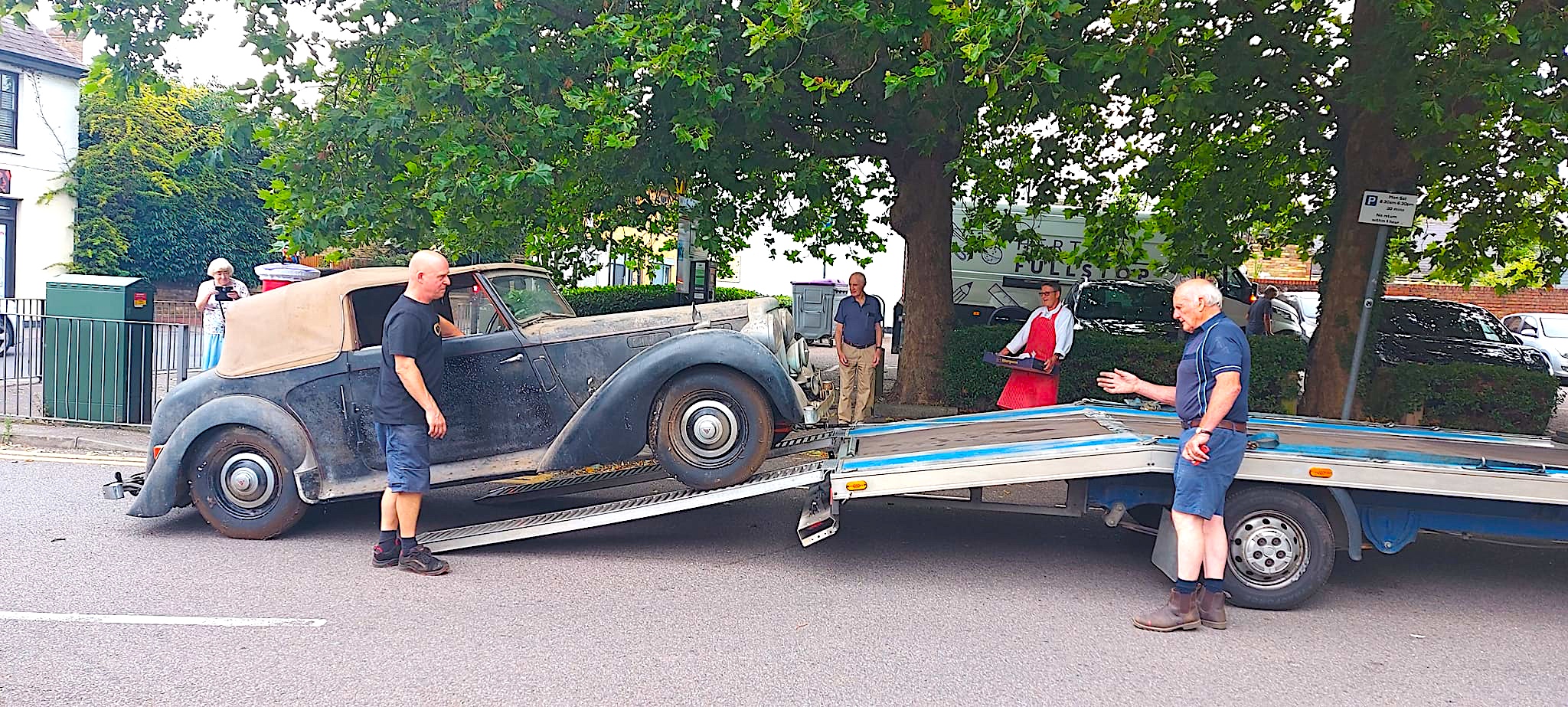


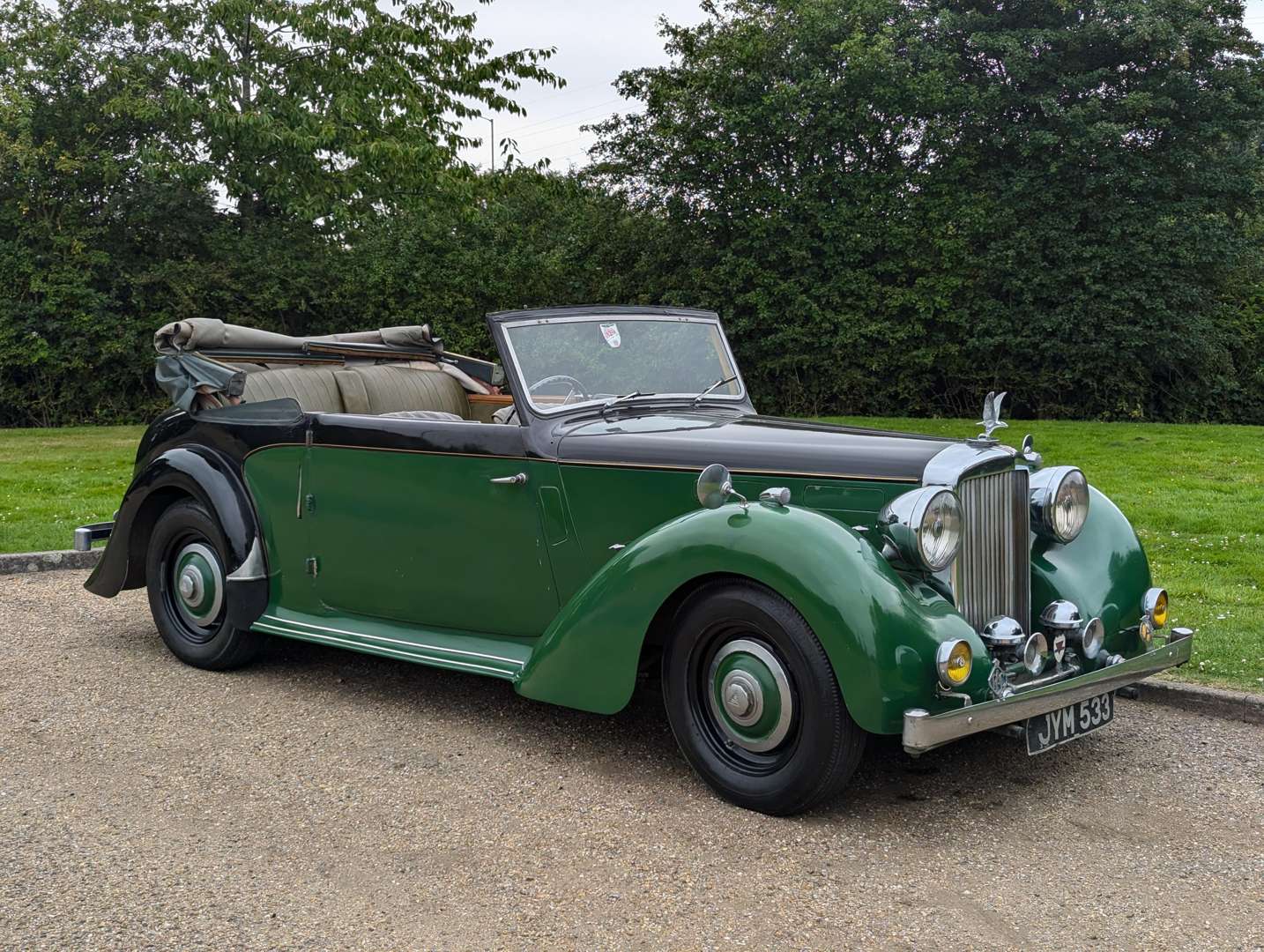
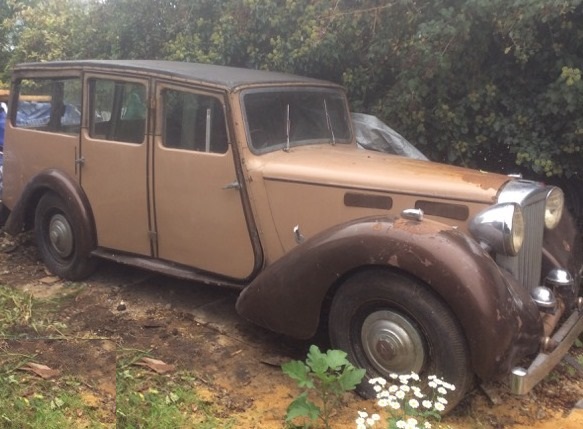


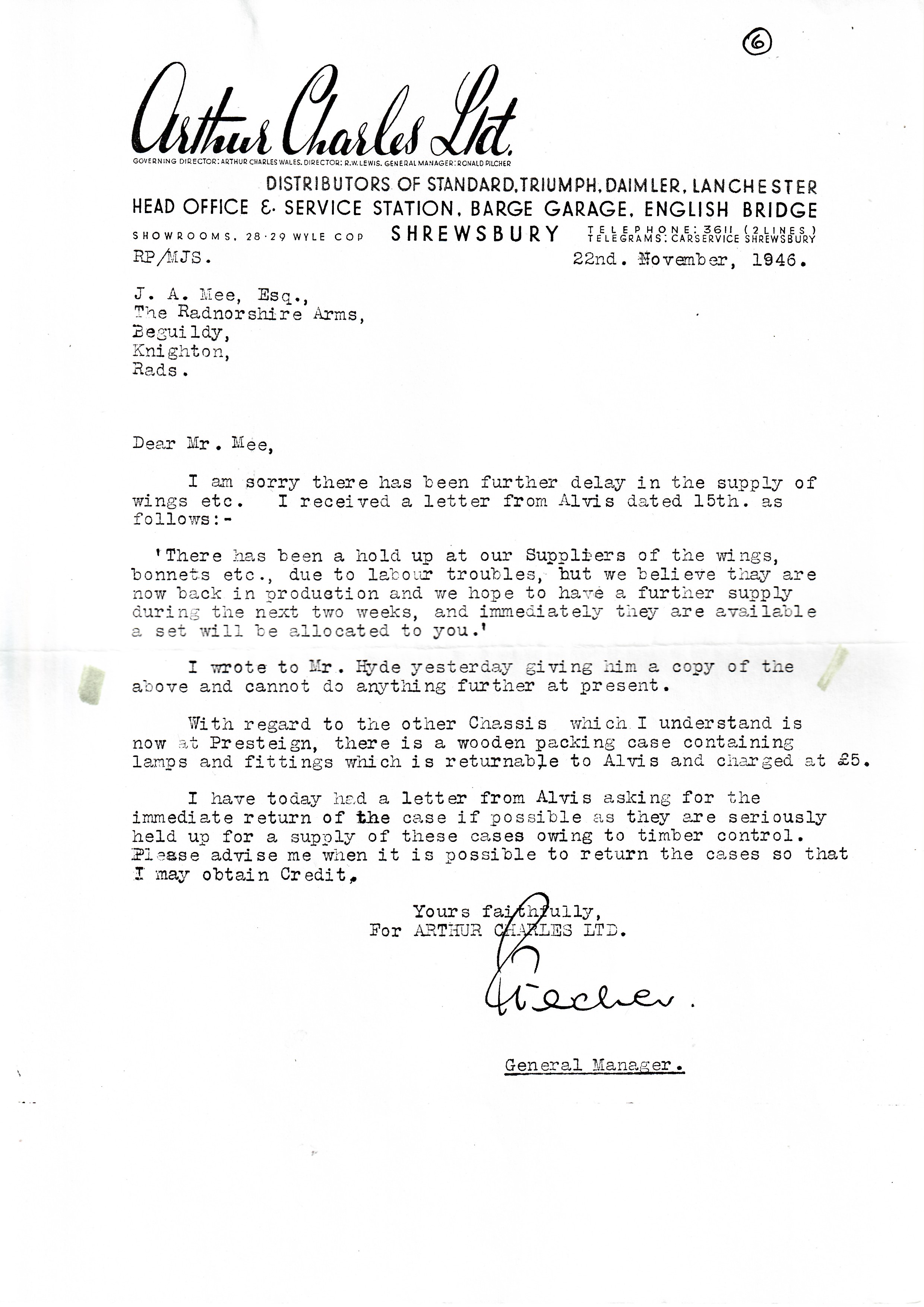


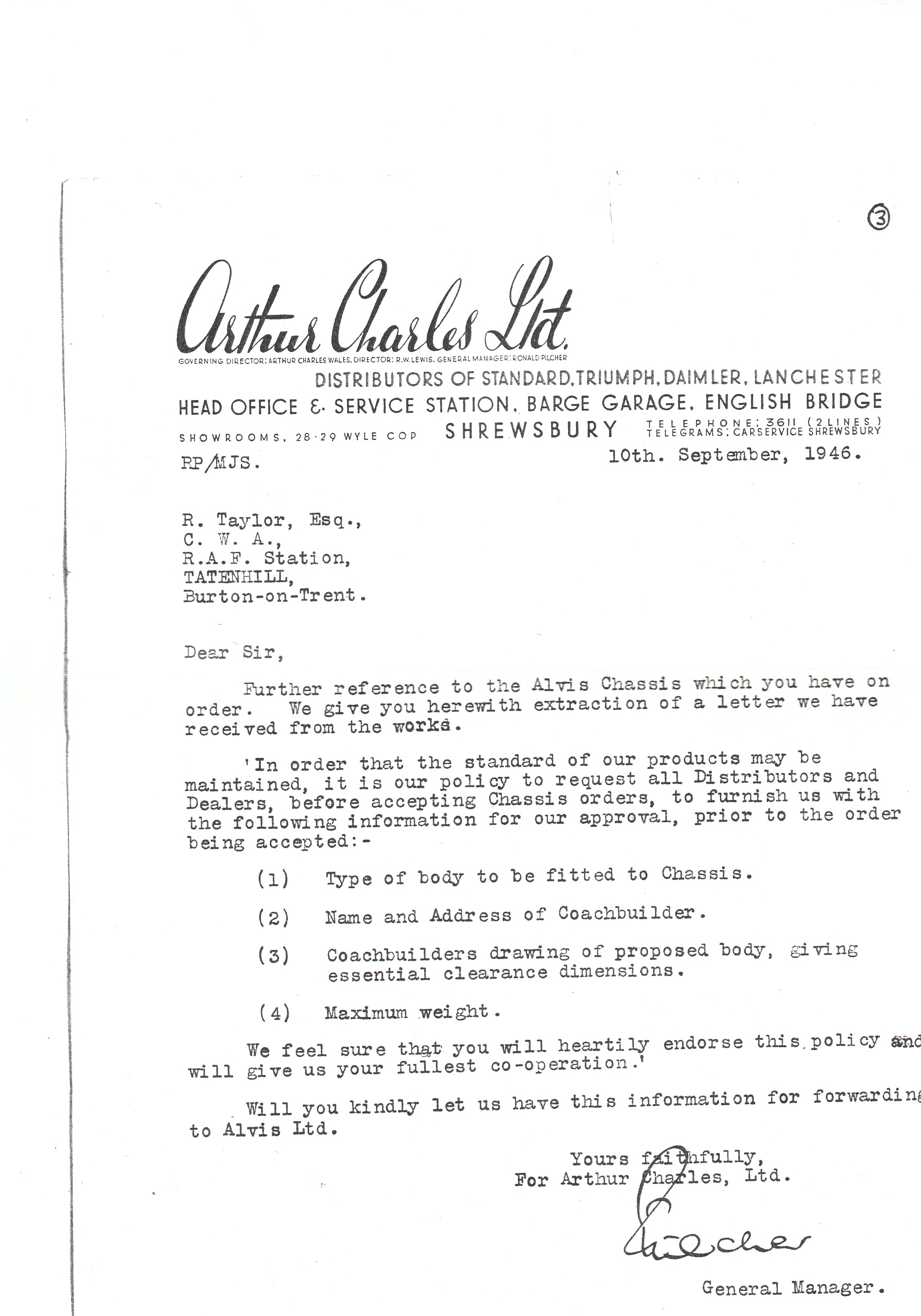


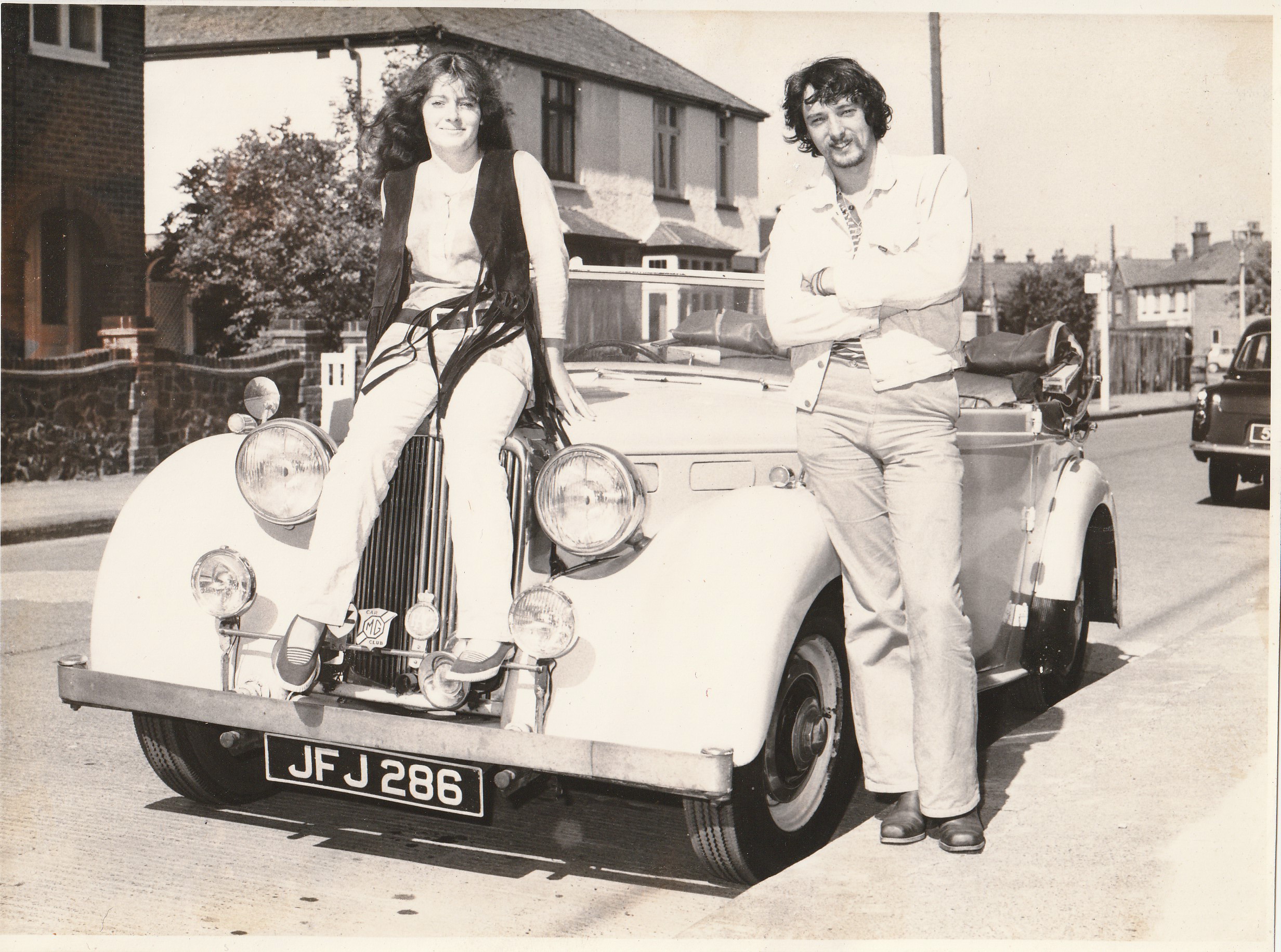

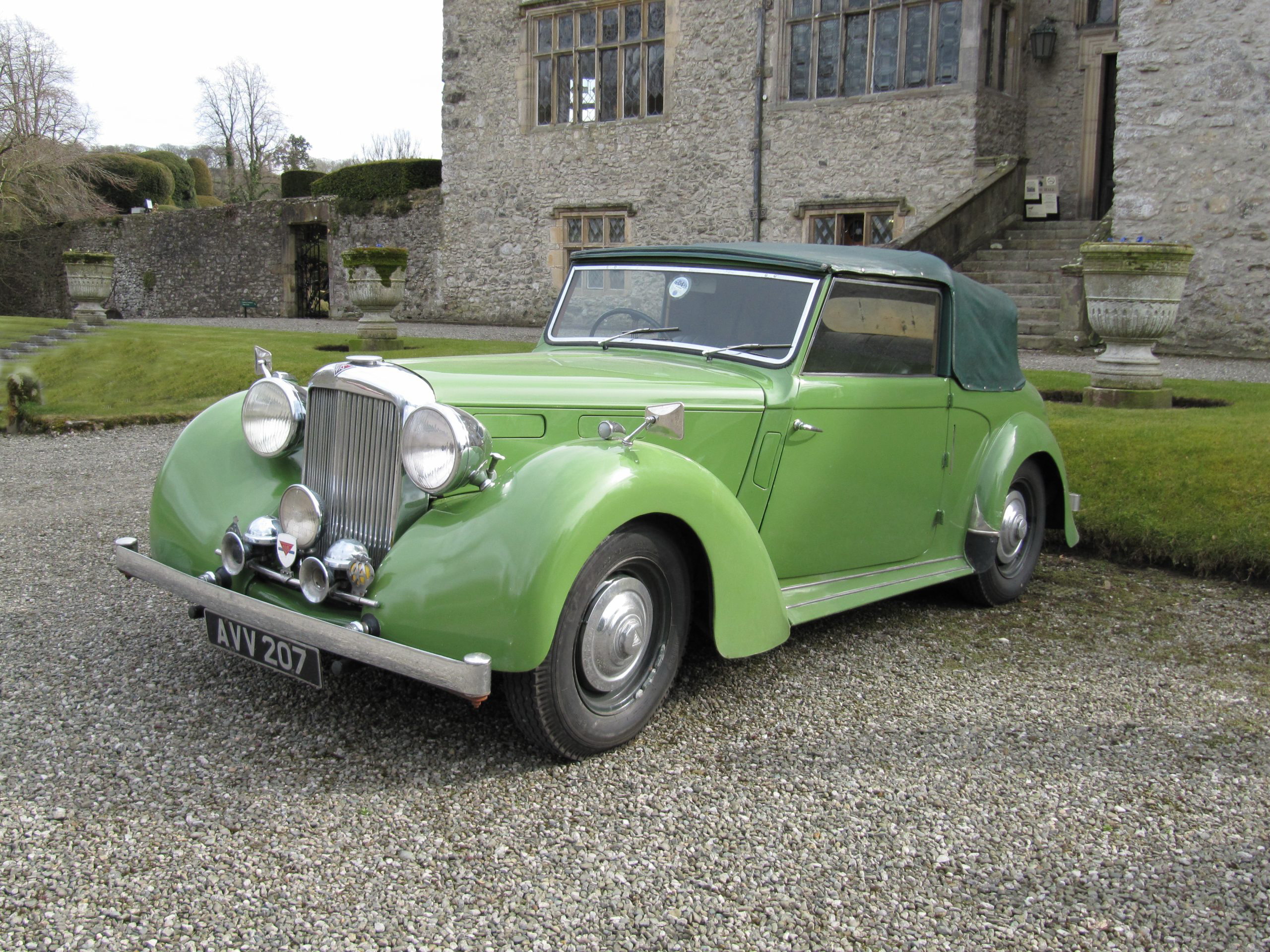

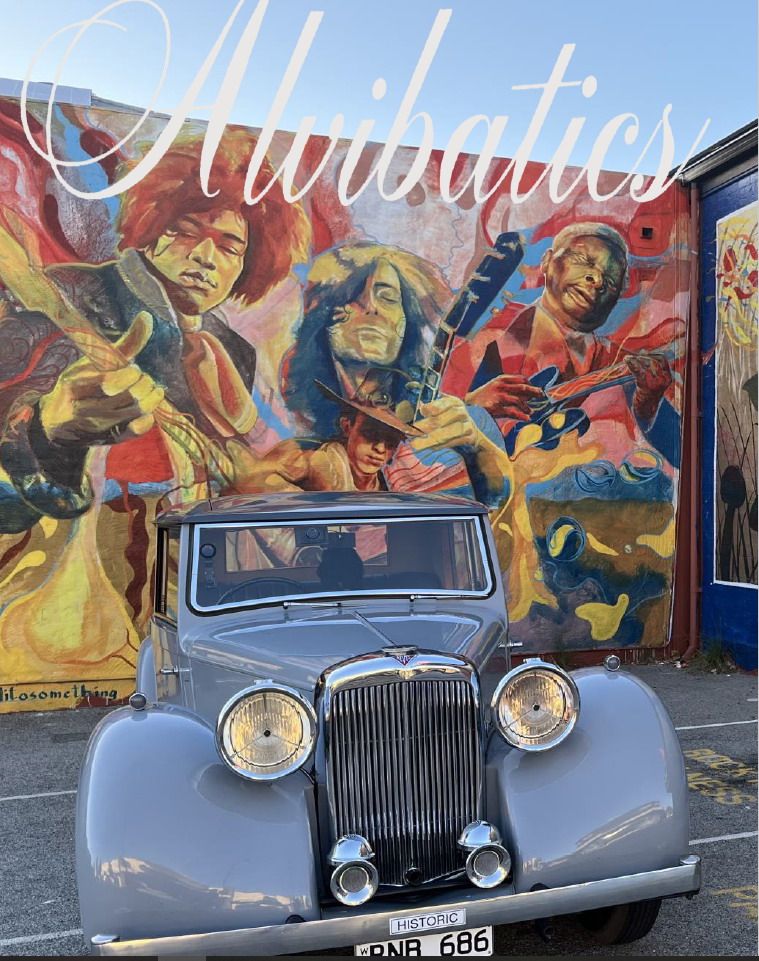


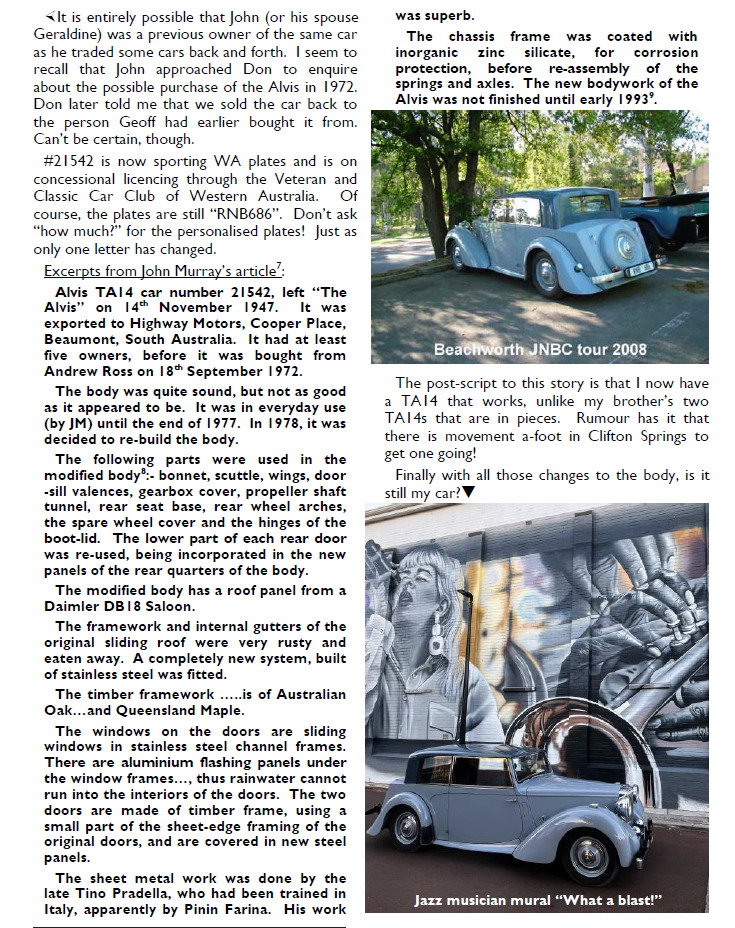


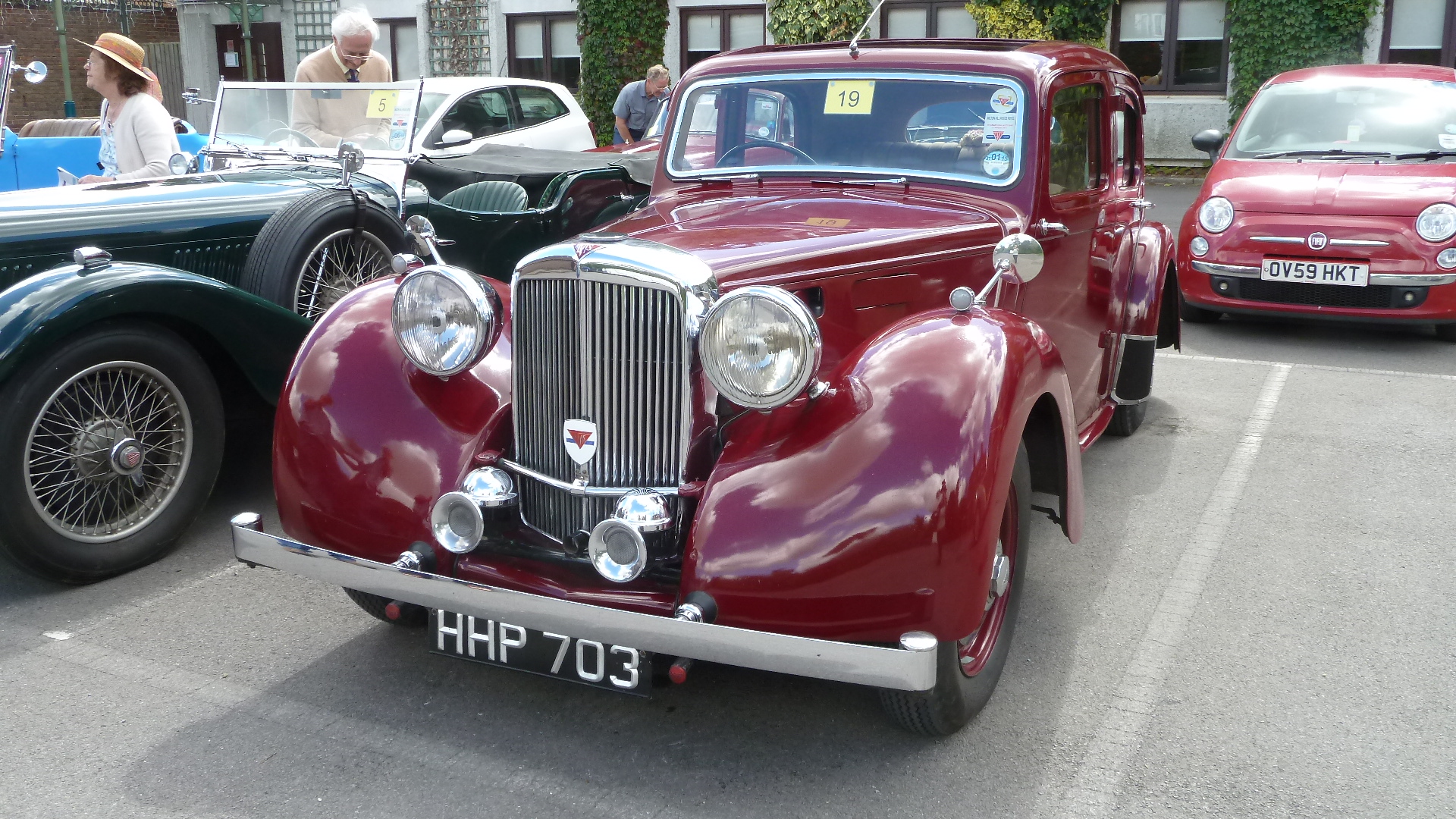


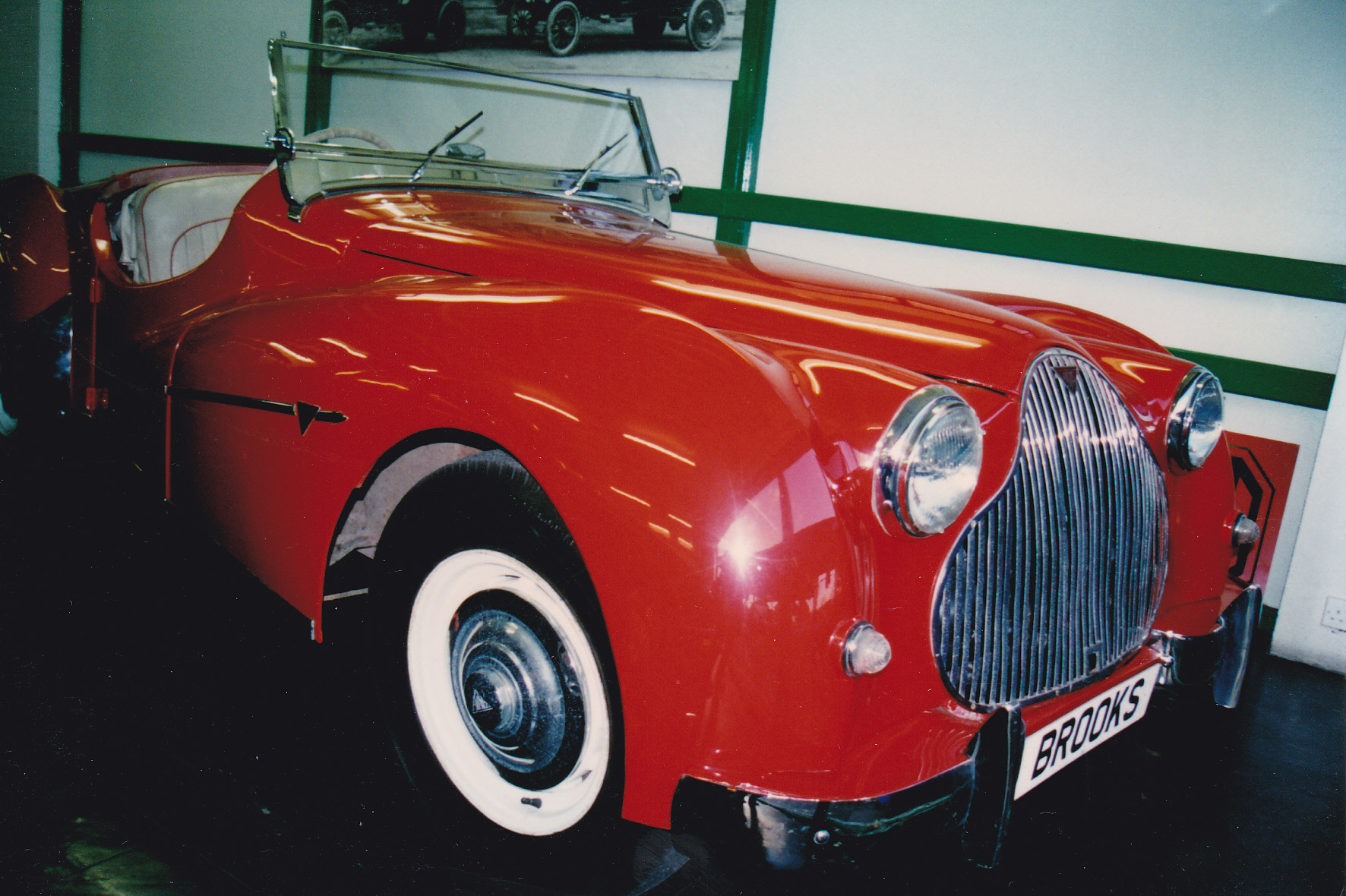


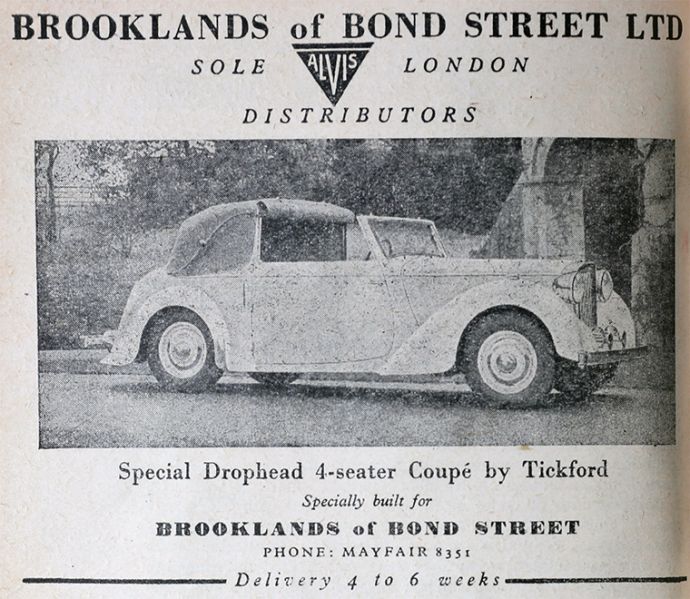

 Alvis Fourteen